
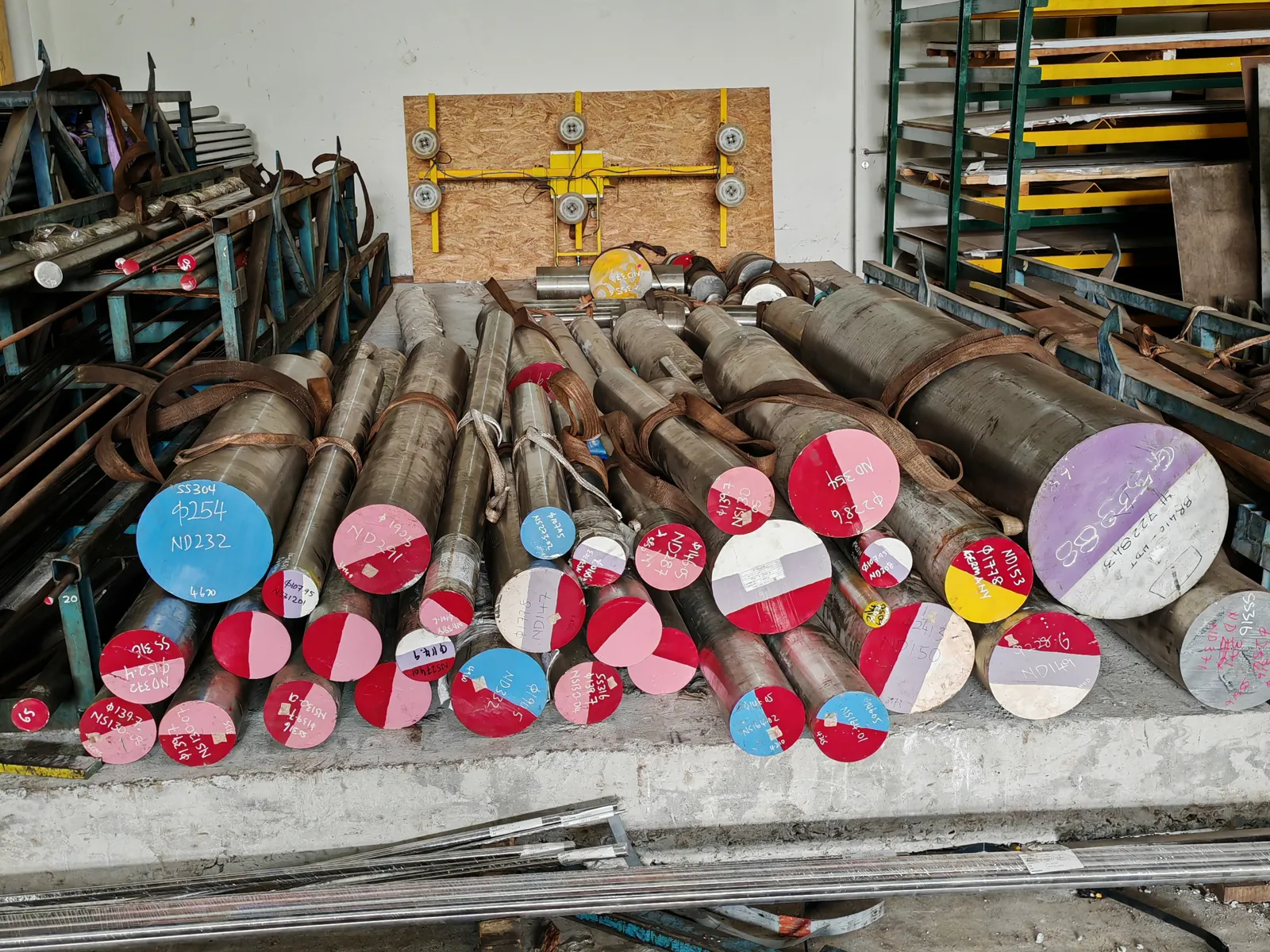
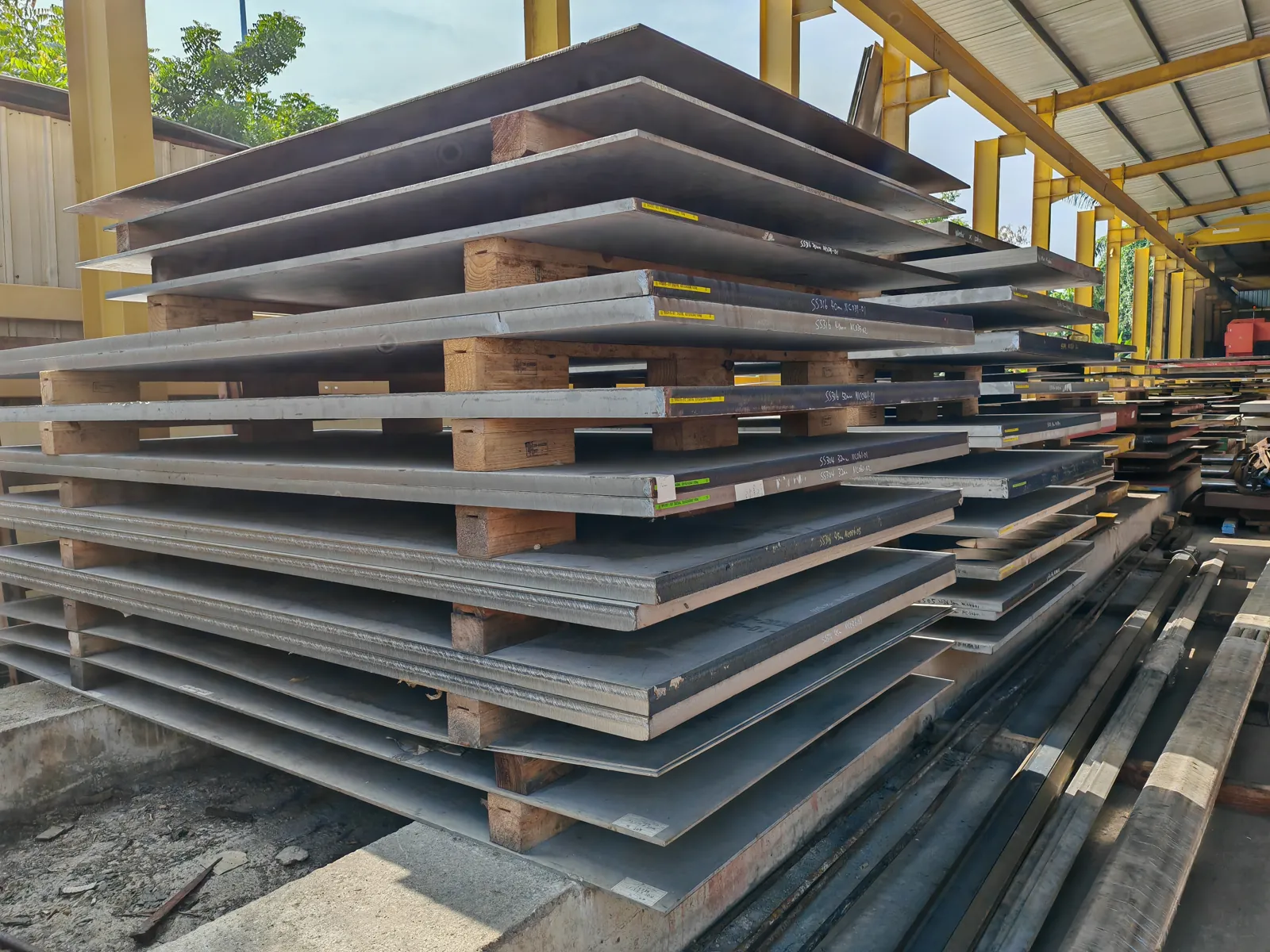
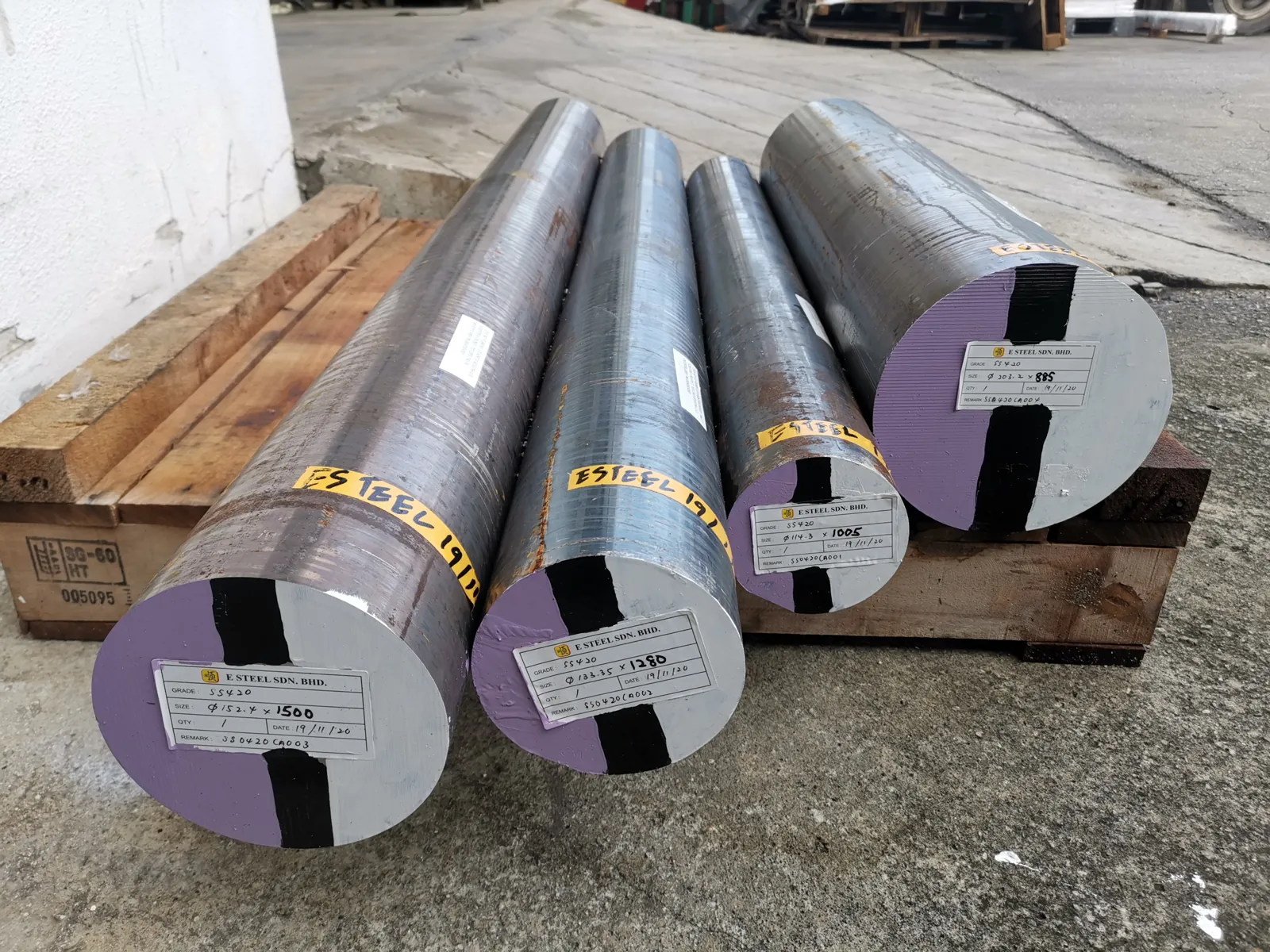
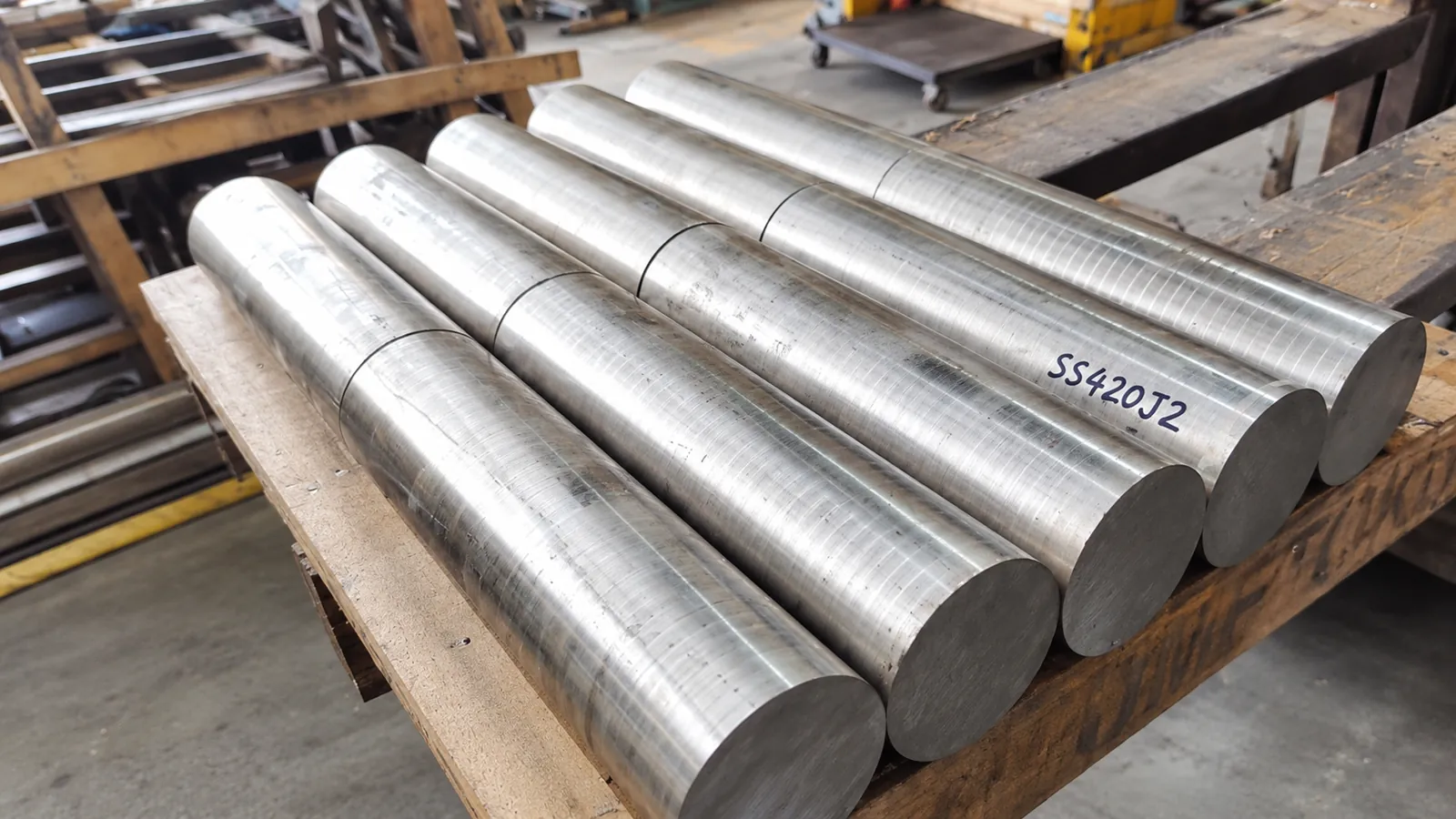
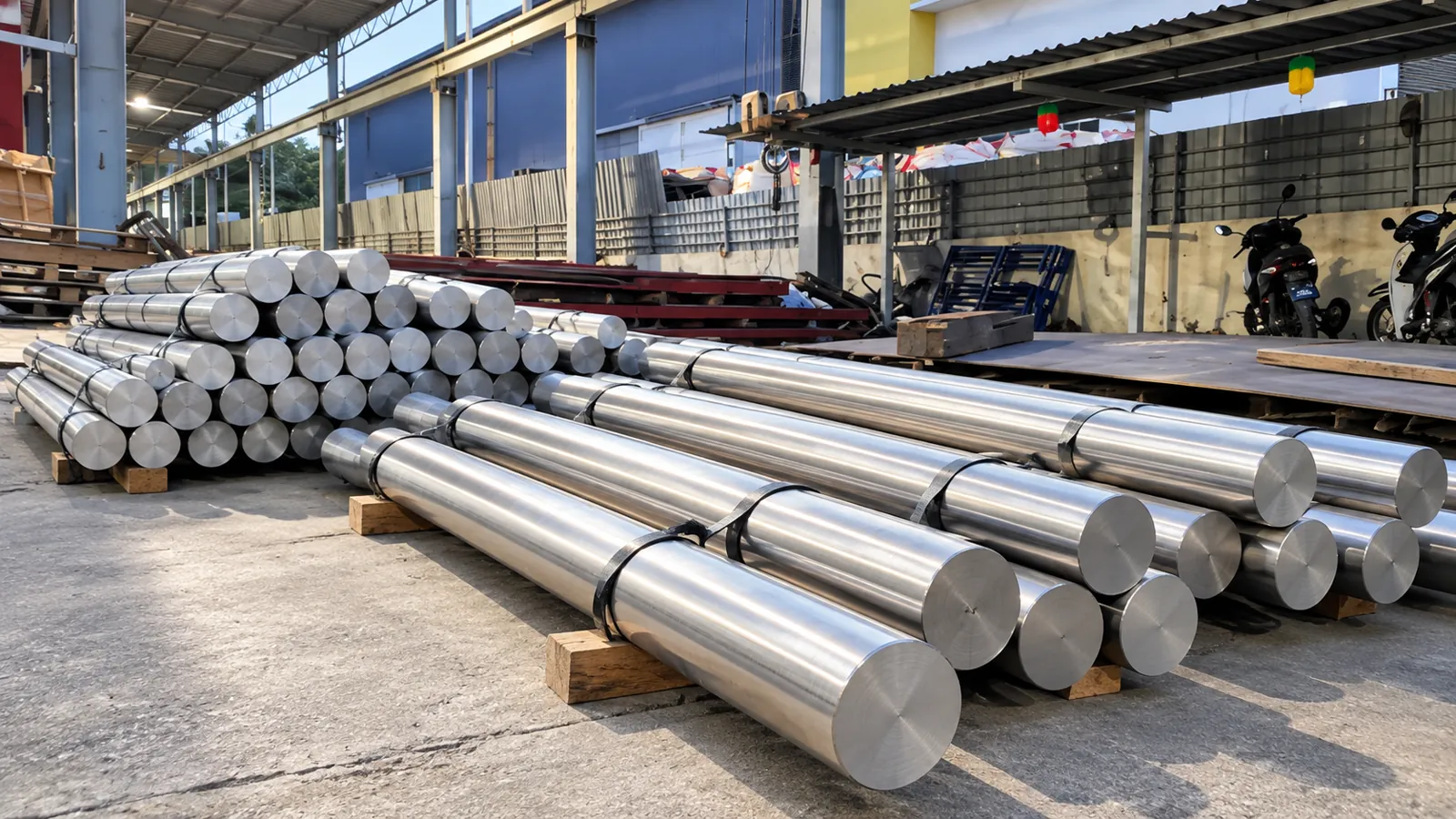
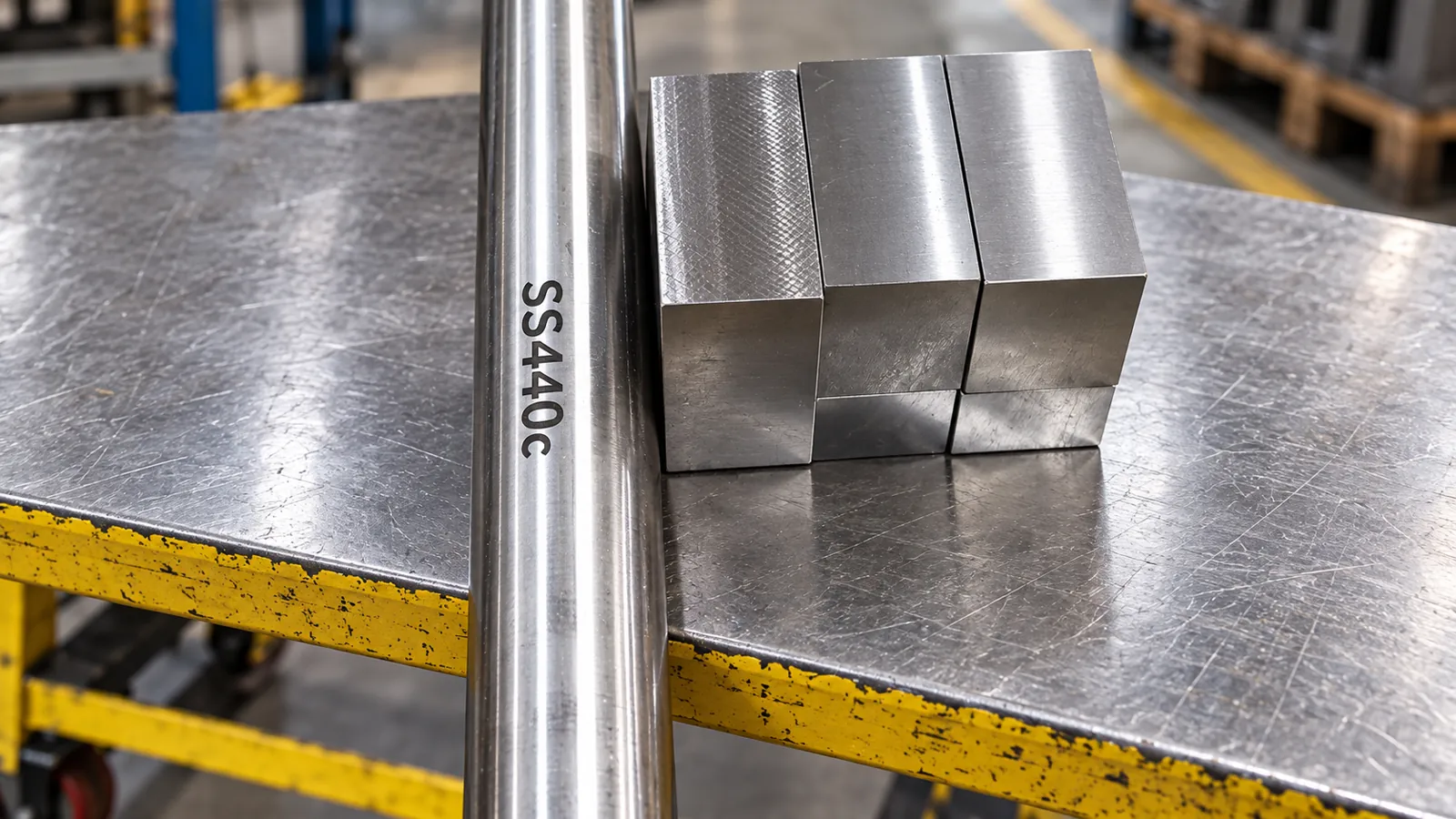
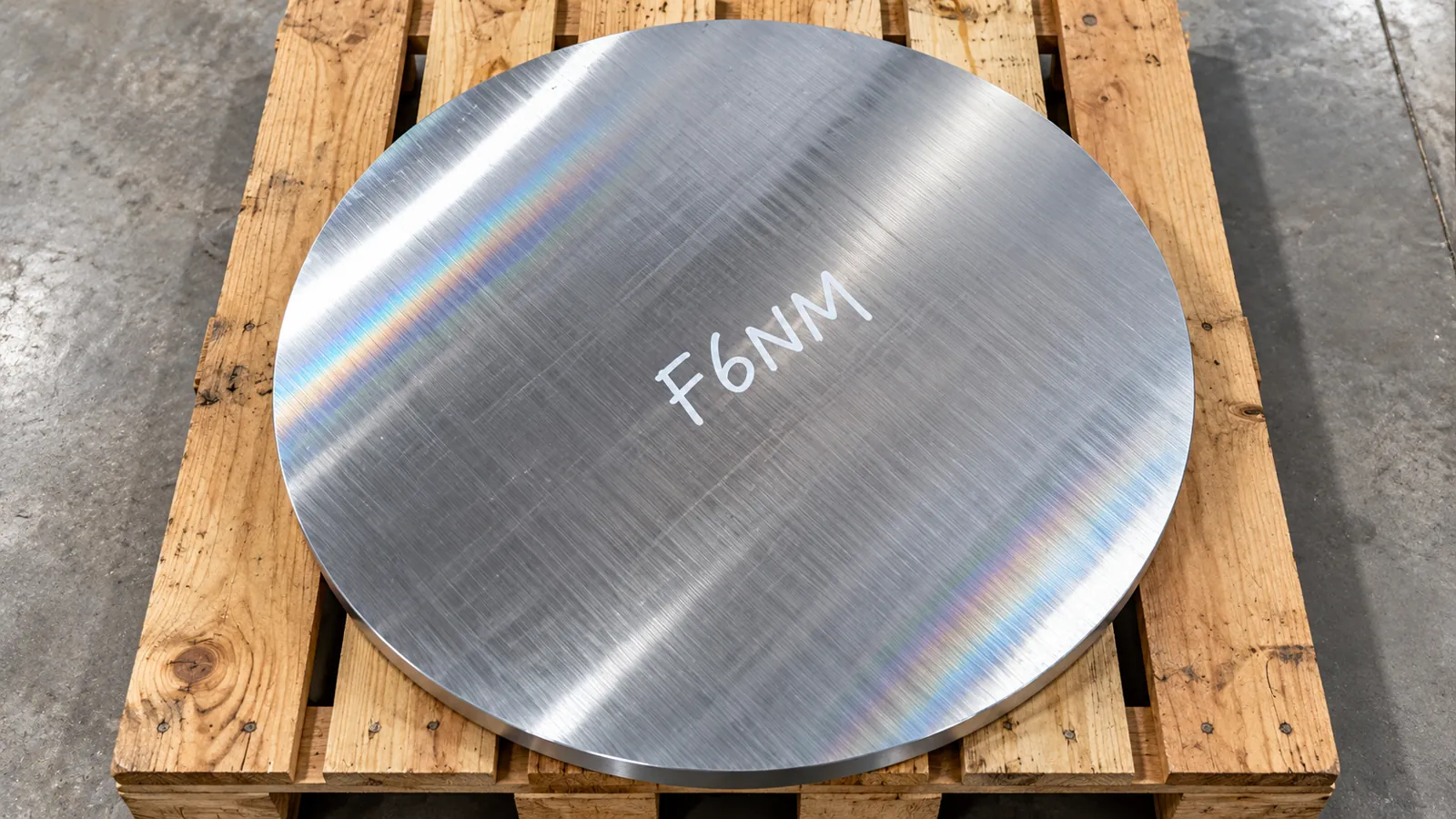
Hardenable martensitic stainless steel grades 403, 410, 410S, 416, 420, 420J2, 431, 440C and F6NM in bar and plate. Cut to size with no MOQ, shipped globally from Malaysia.
Martensitic stainless steels are chromium steels that can be heat treated to high strength and hardness while keeping useful corrosion resistance. They are used for shafts, valve parts, fasteners, cutlery and tooling. E STEEL SDN BHD supplies the grades below as bar and plate, cut to size with no minimum order quantity.
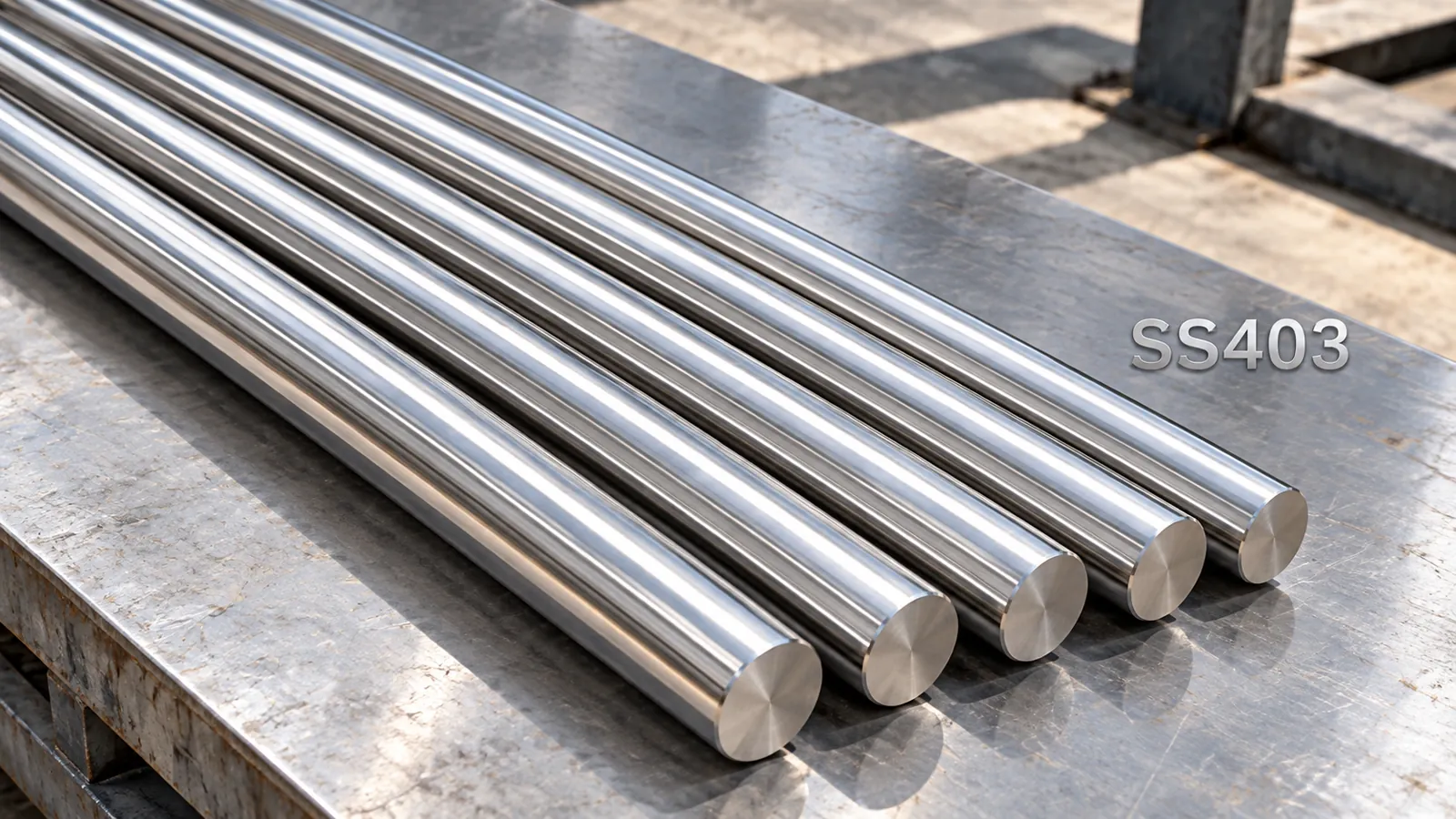
Stainless Steel 403 vs 410: Specifications, Equivalents, and Applications
Stainless Steel 403 and 410 are martensitic grades known for their magnetic properties, heat-treatability, and moderate corrosion resistance. While similar, they cater to distinct industrial needs. Below, we break down their differences to help you choose the right grade.
Key Differences : SS403 has a lower maximum silicon and chromium content than SS410. This difference in composition can influence the specific properties and applications of each grade.
| Element | SS 403 | SS 410 |
|---|---|---|
| Chromium (Cr) | 11.5–13% | 11.5–13.5% |
| Carbon (C) | 0.08–0.15% | 0.08–0.15% |
| Silicon (Si) | max 0.5% | max 1.00% |
| Manganese (Mn) | ≤1.0% | ≤1.0% |
Key Takeaway: SS 403’s silicon improves high-temperature oxidation; SS 410 prioritizes strength.
| Property | SS 403 (Annealed) | SS 410 (Heat-Treated) |
|---|---|---|
| Tensile Strength | 550–760 MPa | 480–1650 MPa |
| Hardness (HRC) | ≤25 | Up to 40 |
| Elongation (%) | 20–25 | 15–20 |
Why It Matters: SS 410 achieves higher hardness for wear resistance; SS 403 excels in thermal stability.
| SS 403 | SS 410 |
|---|---|
| Steam turbine blades | Surgical instruments |
| High-temperature bolts | Valve components |
| Aerospace fasteners | Cutlery & knife blades |
| Grade | UNS | EN (EU) | JIS (Japan) | GB (China) |
|---|---|---|---|---|
| 403 | S40300 | – | SUS 403 | 1Cr12 |
| 410 | S41000 | 1.4006 | SUS 410 | 12Cr13 |
| Grade | Corrosion Resistance | Max Temp | Best For |
|---|---|---|---|
| 403 | Moderate | 650°C | Steam turbines |
| 410 | Moderate | 600°C | Cutlery, fasteners |
| 420 | Low | 500°C | Surgical tools |
8. Need Custom-Cut 403 or 410 Stainless Steel? Contact E STEEL SDN BHD Today! Email: sales@esteelsuppliers.com WhatsApp: +6016-3283359 for an instant quote. Export-ready, shipped globally from Malaysia.
Stainless Steel 410 vs 410S: Specifications, Properties, and Uses
Compare stainless steel 410 vs 410S: chemical composition, mechanical properties, global equivalents, and applications. E STEEL SDN BHD supplies precision-cut grades with bandsaw fine cutting. No MOQ, global shipping.
Expert Supplier of Martensitic Stainless Steel 410 & 410S E STEEL SDN BHD – Precision Bandsaw-Cut Steel for Engineering Excellence. Custom Sizes, Zero MOQ, ISO-Certified.
Stainless Steel 410 and 410S are martensitic grades with distinct applications. While both offer moderate corrosion resistance and magnetic properties, SS 410S is a low-carbon variant optimized for weldability.
Key Highlights:
| Element | SS 410 (ASTM A240) | SS 410S (ASTM A240) |
|---|---|---|
| Chromium (Cr) | 11.5–13.5% | 11.5–13.5% |
| Carbon (C) | 0.08–0.15% | ≤0.08% |
| Silicon (Si) | ≤1.0% | ≤1.0% |
| Manganese (Mn) | ≤1.0% | ≤1.0% |
Key Insight: SS 410S’s reduced carbon minimizes weld decay, making it ideal for welded assemblies.
| Property | SS 410 (Heat-Treated) | SS 410S (Annealed) |
|---|---|---|
| Tensile Strength | 480–1650 MPa | 450–650 MPa |
| Yield Strength | 275–1350 MPa | 240–345 MPa |
| Hardness (HRC) | Up to 40 | ≤25 |
| Elongation (%) | 15–20 | 20–25 |
Why It Matters: SS 410 achieves higher hardness for wear resistance; SS 410S prioritizes ductility.
| Grade | UNS | EN (EU) | JIS (Japan) | GB (China) |
|---|---|---|---|---|
| 410 | S41000 | 1.4006 | SUS 410 | 12Cr13 |
| 410S | S41008 | 1.4003 | SUS 410S | 06Cr13 |
| SS 410 | SS 410S |
|---|---|
| – Cutlery & knife blades | – Welded heat exchangers |
| – Pump shafts & valves | – Food processing equipment |
| – Fasteners & bolts | – Architectural trim |
| – Turbine components | – Automotive exhaust systems |
Some grades of stainless steel will form light rust when exposed to mild atmospheric conditions. Most 400 series stainless steels fall into this category and it is particularly true of type 410 which only contains about 11% chromium. The martensitic PH stainless grades like 17-4 and 15-5 will also rust.
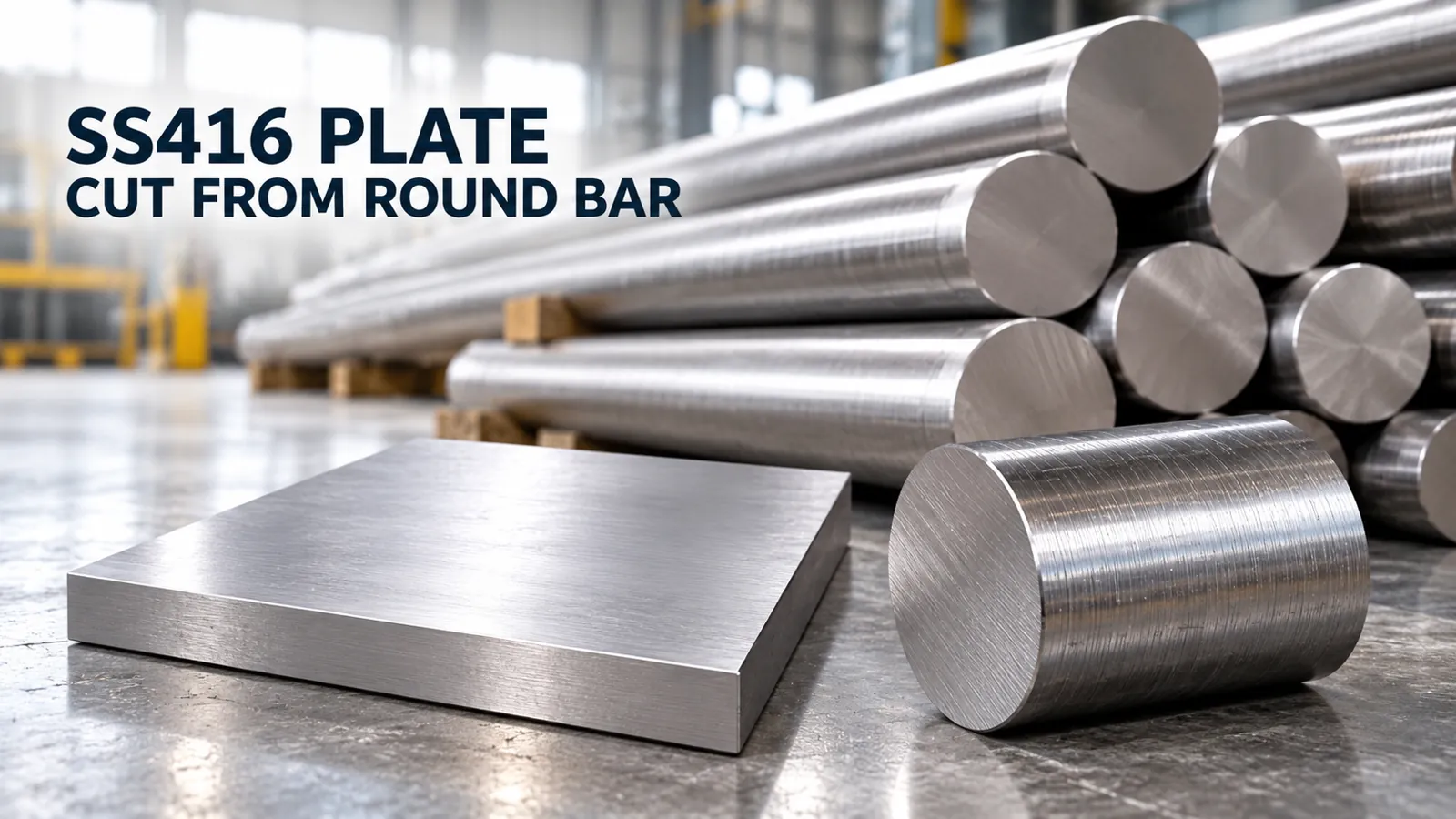
Stainless Steel 416 plate, UNS S41600, SUS416, 1.4005
Stainless Steel 416 (UNS S41600) is a martensitic, free-machining grade renowned for its exceptional machinability and moderate corrosion resistance. Enhanced with sulfur, it is ideal for high-volume production of complex components in automotive, aerospace, and industrial sectors. E STEEL SDN BHD, a leading Malaysia-based supplier of martensitic stainless steels, offers cut-to-size 416 with no MOQ, precision bandsaw cutting, and rapid global air freight via DHL/FedEx.
| Element | Composition (%) | Role |
|---|---|---|
| Chromium (Cr) | 12.0–14.0 | Corrosion resistance, hardness |
| Carbon (C) | ≤0.15 | Enhances strength and hardenability |
| Sulfur (S) | 0.15–0.35 | Improves machinability (free-cutting) |
| Manganese (Mn) | ≤1.25 | Supports hardenability |
| Silicon (Si) | ≤1.0 | Deoxidizer and strength booster |
Key Insight: The high sulfur content in SS 416 enables superior machinability but slightly reduces corrosion resistance compared to grades like 410 or 420.
| Property | Annealed Condition | Hardened Condition |
|---|---|---|
| Tensile Strength | 515–690 MPa | 760–1030 MPa |
| Yield Strength | 275 MPa (min) | 550 MPa (min) |
| Elongation | 30% (min) | 12% (min) |
| Hardness (Brinell) | 160–220 HB | 250–350 HB |
| Standard | Grade | Equivalent |
|---|---|---|
| UNS | S41600 | 416 |
| EN | 1.4005 | X12CrS13 |
| JIS | SUS416 | – |
| DIN | 1.4005 | X12CrS13 |
| Grade | Type | Key Difference | Best For |
|---|---|---|---|
| 416 | Free-machining | Sulfur-enhanced for CNC efficiency | High-volume precision parts |
| 410 | Martensitic | Better corrosion resistance | General-purpose fasteners |
| 303 | Austenitic | Superior corrosion resistance | Marine/chemical components |
Although Alloy 416 and other martensitic stainless steels are not as resistant as austenitic or ferritic stainless, it still demonstrates good corrosion and oxidation resistance plus high strength in the hardened and tempered condition.
Type 416 Stainless Steel is a stainless steel which is martensitic and can be hardened by heat treatment to higher strength and hardness levels. … Type 416 is somewhat inferior in corrosion resistance to other 12% chromium stainless steels, such as type 410.
416 Stainless Steel (SS) is a martensitic free machining grade of stainless that can be hardened by heat treatment to achieve elevated strength and hardness. Due to its low cost and ready machinability, 416 stainless steel is readily used in its highly tempered state.
Need SS 420 Delivered to Your Specifications
Explore Stainless Steel 420: chemical composition, mechanical properties, global equivalents, and industrial uses. E STEEL SDN BHD delivers precision-cut martensitic steel with bandsaw fine cutting. No MOQ, global shipping.
Premium Martensitic Stainless Steel Supplier E STEEL SDN BHD – Precision Bandsaw-Cut SS 420 for Engineering Excellence. Custom Sizes, Zero MOQ, ISO-Certified.
SUS420 grade is a martensitic, higher carbon version of SUS410. Available in different variations of carbon content 420 stainless steel is suitable for heat treatment. 420 stainless has a 13% chromium content which gives the specification a level of corrosion resistance properties. British standard grades available are 420S29, 420S37, 420S45.Some other European stainless steel specifications 1.2083 , 1.2316 and 1.4034, both which have a higher carbon content and achieve a good Rockwell hardness when heat treated.
1.4021 , 1.4028, 1.4034, 1.2083, ASTM A276 , S42000, 1.2316
Stainless Steel 420 is a martensitic grade known for its high hardness, moderate corrosion resistance, and excellent polishability. Ideal for applications requiring wear resistance and sharp edges, SS 420 is widely used in cutlery, medical tools, and industrial components.
| Element | SS 420 Composition |
|---|---|
| Chromium (Cr) | 12–14% |
| Carbon (C) | 0.15–0.40% |
| Silicon (Si) | ≤1.0% |
| Manganese (Mn) | ≤1.0% |
| Sulfur (S) | ≤0.03% |
| Phosphorus (P) | ≤0.04% |
Key Insight: Higher carbon content (vs. SS 410) enhances hardness but reduces weldability.
| Property | Annealed State | Hardened State (QT*) |
|---|---|---|
| Tensile Strength | 655 MPa | 1,600–1,900 MPa |
| Yield Strength | 345 MPa | 1,200–1,450 MPa |
| Hardness (HRC) | ≤25 | 50–55 |
| Elongation (%) | 25 | 10–12 |
*Quenched & Tempered
| Standard | Equivalent Grade |
|---|---|
| UNS | S42000 |
| EN (EU) | 1.4021 (X20Cr13) |
| JIS (Japan) | SUS 420J1 |
| GB (China) | 20Cr13 |
| ISO | X20Cr13 |
SS 420 is favored for its balance of hardness, corrosion resistance, and polishability:
| Grade | Carbon (%) | Hardness (HRC) | Best For |
|---|---|---|---|
| 420 | 0.15–0.40 | 50–55 | Sharp edges, medical tools |
| 410 | 0.08–0.15 | 40–45 | Bolts, fasteners |
| 440C | 0.95–1.20 | 58–60 | Bearings, high-wear parts |
420 stainless steel is widely used in the medical and cutlery industries. It is suitable for applications such as instruments, knives, hand tools, pump shafts and plastic moulds. SS420 is not recommended for use in temperatures above the relevant tempering temperature, because of the reduction in mechanical properties.
Best corrosion resistance of 420 stainless steel is achieved when SUS420 is hardened and surface ground or polished. In the hardened condition SUS420 has good corrosion resistance to atmosphere, foods, fresh water, mild alkalis and acids, steam, crude oil and other similar corrosive media.
Heat treatment temperatures, including rate of heating, cooling and soaking times will vary due to factors such as the shape and size of each 420 stainless steel component. Other considerations during the heat treatment process include the type of furnace, quenching medium and work piece transfer facilities. Please consult your heat treatment provider for full guidance on heat treatment of stainless steel 420 grade.
“Discover Stainless Steel 420 and 420J2: Specifications, properties, and applications. E STEEL SDN BHD supplies cut-to-size grades globally with no MOQ—ideal for medical, cutlery, and automotive industries. Request a quote now!”
Stainless Steel 420 vs. 420J2: Specifications, Properties, and Applications Your Guide to Selecting the Right Martensitic Stainless Steel for Precision Engineering
Stainless Steel 420 and 420J2 are martensitic grades valued for their hardness, wear resistance, and moderate corrosion resistance. While both are ideal for cutlery, surgical tools, and industrial components, their differences in carbon content and performance make them suited for distinct applications. E STEEL SDN BHD, a Malaysia-based supplier offering cut-to-size services with no MOQ, provides these grades for industries requiring precision and durability.
| Grade | Key Feature |
|---|---|
| 420 | Moderate carbon for balanced hardness and corrosion resistance |
| 420J2 | Higher carbon for enhanced hardness and edge retention |
| Element | 420 | 420J2 |
|---|---|---|
| Chromium (Cr) | 12–14% | 12–14% |
| Carbon (C) | 0.15–0.40% | 0.26–0.40% |
| Manganese (Mn) | ≤1.0% | ≤1.0% |
| Silicon (Si) | ≤1.0% | ≤1.0% |
| Phosphorus (P) | ≤0.04% | ≤0.04% |
| Sulfur (S) | ≤0.03% | ≤0.03% |
Key Insight:
| Property | 420 (Hardened) | 420J2 (Hardened) |
|---|---|---|
| Tensile Strength | 760–1030 MPa | 850–1100 MPa |
| Yield Strength | 550 MPa (min) | 650 MPa (min) |
| Elongation | 15% (min) | 12% (min) |
| Hardness (HRC) | 50–55 | 52–58 |
| Impact Toughness | Moderate | Lower than 420 |
| Standard | 420 | 420J2 |
|---|---|---|
| UNS | S42000 | S42020 |
| EN | 1.4021 | 1.4028 |
| JIS | SUS420 | SUS420J2 |
| ASTM | A240 | A240 |
| Industry | 420 Applications | 420J2 Applications |
|---|---|---|
| Medical | Scalpels, forceps | Dental instruments, biopsy tools |
| Cutlery | Knife blades, kitchen utensils | High-end chef knives, scissors |
| Industrial | Valve components, pump shafts | Cutting dies, bearing races |
| Automotive | Gears, fasteners | Precision engine components |
| Factor | 420 | 420J2 |
|---|---|---|
| Hardness (HRC) | 50–55 | 52–58 |
| Corrosion Resistance | Moderate | Slightly lower |
| Best For | Surgical tools, valves | Blades, cutting dies |
| Cost | Lower | Higher |
Welding of stainless steel grade 420J2 is easy. It is recommended that welding in annealed or hardened and tempered conditions should be avoided as it causes formation of brittleness, resulting in cold cracking due to contraction stresses.
Pre-heating and inter-pass temperature control during welding, followed by very slow cooling and post-weld annealing are good measures to take to prevent cracking.
Stainless steel grade 420J2 is inexpensive and highly corrosion resistant steel. Stainless steel grade 420J2 is known to possess good strength and reasonable impact resistant properties in hardened and tempered conditions when compared with 440 grades.
420j2 stainless steel contains medium quality carbon content. It has good corrosion resistance in salt-free atmospheres and in most industrial environments. It is resistant to many chemicals and household cleaners; and, it is also a more durable steel compared to the 440 grades.
Stainless Steel 431, 1.4057, SUS431, SS 431, S43100, AISI 431
Precision Engineering. Global Excellence. Trust E STEEL SDN BHD.
Stainless Steel 431 (UNS S43100) is a martensitic stainless steel known for its exceptional strength, moderate corrosion resistance, and excellent toughness. Part of the 400 series, it is ideal for applications requiring high mechanical performance in mildly corrosive environments. E STEEL SDN BHD, a leading Malaysia-based supplier, offers cut-to-size 431 with no MOQ, precision bandsaw cutting, and global air freight via DHL/FedEx.
| Element | Composition (%) | Role |
|---|---|---|
| Chromium (Cr) | 15–17 | Corrosion resistance, hardness |
| Nickel (Ni) | 1.25–2.50 | Enhances toughness and ductility |
| Carbon (C) | 0.12–0.22 | Boosts strength and hardenability |
| Manganese (Mn) | ≤1.0 | Improves hardenability |
| Silicon (Si) | ≤1.0 | Deoxidizer and strength enhancer |
| Property | Value | Condition |
|---|---|---|
| Tensile Strength | 850–1000 MPa | Quenched & Tempered |
| Yield Strength | 650 MPa (min) | Quenched & Tempered |
| Elongation | 15–20% | 50mm gauge |
| Hardness (HRC) | 28–35 | Post-heat treatment |
| Impact Toughness | 50 J (min) | Charpy V-notch at 20°C |
| Standard | Grade | Equivalent |
|---|---|---|
| UNS | S43100 | 431 |
| EN | 1.4057 | X17CrNi16-2 |
| JIS | SUS431 | – |
| DIN | 1.4057 | X17CrNi16-2 |
| Grade | Type | Key Difference | Best For |
|---|---|---|---|
| 431 | Martensitic | Balanced strength, toughness, and corrosion resistance | High-stress mechanical parts |
| 410 | Martensitic | Lower Ni, less toughness | General-purpose fasteners |
| 17-4PH | Precipitation-Hardening | Higher strength (up to 1300 MPa) | Aerospace, nuclear components |
Stainless Steel 440C, S44004, SUS440C, 1.4125
Precision. Durability. Global Reach. Trust E STEEL SDN BHD.
Stainless Steel 440C (UNS S44004) is a high-carbon martensitic stainless steel renowned for its exceptional hardness, wear resistance, and moderate corrosion resistance. As part of the 400 series, it is ideal for applications requiring durability under high stress and abrasive conditions. E STEEL SDN BHD, a leading Malaysia-based supplier of 400 series stainless steel, offers cut-to-size 440C with no MOQ, precision bandsaw cutting, and rapid global delivery via DHL/FedEx.
| Element | Composition (%) | Role |
|---|---|---|
| Chromium (Cr) | 16–18 | Corrosion resistance, hardness |
| Carbon (C) | 0.95–1.20 | Enhances hardness and wear resistance |
| Molybdenum (Mo) | 0.40–0.65 | Improves strength and toughness |
| Manganese (Mn) | ≤1.0 | Enhances hardenability |
| Silicon (Si) | ≤1.0 | Deoxidizer and strength booster |
| Property | Value | Condition |
|---|---|---|
| Tensile Strength | 1850–2000 MPa | Quenched & Tempered |
| Yield Strength | 1650 MPa (min) | Quenched & Tempered |
| Elongation | 2% (min) | 50mm gauge |
| Hardness | 55–60 HRC | Post-heat treatment |
| Impact Toughness | Low (brittle) | Notch-sensitive |
| Standard | Grade | Equivalent |
|---|---|---|
| UNS | S44004 | 440C |
| EN | 1.4125 | X105CrMo17 |
| JIS | SUS440C | – |
| DIN | 1.4125 | X105CrMo17-1 |
| Grade | Type | Key Difference | Best For |
|---|---|---|---|
| 440C | High-carbon | Maximum hardness (60 HRC) | Precision blades, bearings |
| 440A | Low-carbon | Better corrosion resistance, lower hardness (55 HRC) | Cutlery, kitchen tools |
| 420 | Martensitic | Lower carbon (0.15–0.40%), softer | Surgical instruments, valves |
440C is a high carbon martensitic stainless steel that belongs to the 440 steel series. … This steel is loved by both knife makers and knife users due to its really high corrosion resistance. It also takes and holds a great mirror-like finish longer and requires very minimal care.
440C (UNS designation S44004) is a martensitic 400 series stainless steel, and is the highest carbon content from 400 stainless steel series. It is usually heat treated to reach hardness of 56–58 HRC. It is a bearing steel, and used in rolling contact stainless bearings, e.g. ball bearings and roller bearings.
Type 440C Stainless Steel is widely used in antifriction bearings, in valves and in many other applications where high hardness and reasonable corrosion resistance is required. This material is much more resistant to abrasion and wear than others stainless steel. sus440c is strongly attracted by a magnetic field.
ASTM A182 F6NM, AISI CA6-NM, UNS S41500, SGS6X, JIS SCS5, SS 2384, B.S. 425C11, AFNOR Z4CND13.4M
Discover Stainless Steel F6NM: Specifications, equivalents, and applications for oil & gas, power, and marine industries. E STEEL SDN BHD supplies cut-to-size F6NM globally with no MOQ. Request a quote today!
AISI CA6-NM, UNS S41500, SGS6X, JIS SCS5, ASTM A182 F6NM, SS 2384, B.S. 425C11, AFNOR Z4CND13.4M
1.4313 | F6NM | UNS S41500 is a corrosion and acid resistant, soft martensitic chromium-nickel steel with added molybdenum designed for exceptional strength, corrosion resistance, and weldability in harsh environments. Widely used in oil & gas, power generation, and marine industries, it combines the toughness of martensitic steels with improved resistance to pitting and stress corrosion cracking. E STEEL SDN BHD, a Malaysia-based supplier offering cut-to-size services with no MOQ, provides F6NM for critical applications demanding reliability and precision.
| Element | Composition (%) | Role |
|---|---|---|
| Chromium (Cr) | 11.5–14.0 | Corrosion resistance, hardness |
| Nickel (Ni) | 3.5–5.5 | Toughness, weldability |
| Molybdenum (Mo) | 0.5–1.0 | Pitting resistance |
| Carbon (C) | ≤0.05 | Reduces carbide precipitation |
| Manganese (Mn) | ≤1.0 | Strength and hardenability |
| Silicon (Si) | ≤0.7 | Deoxidizer, strength |
Key Insight: Low carbon and balanced nickel/molybdenum enhance weldability and resistance to chloride-induced corrosion.
| Property | Value | Condition |
|---|---|---|
| Tensile Strength | 930–1130 MPa | Quenched & Tempered |
| Yield Strength | 760 MPa (min) | Quenched & Tempered |
| Elongation | 15% (min) | 50mm gauge |
| Hardness | 28–32 HRC | Post-heat treatment |
| Impact Toughness | 40 J (min) at -46°C | Charpy V-notch |
| Standard | Grade | Equivalent |
|---|---|---|
| UNS | S41500 | F6NM |
| EN | 1.4313 | X3CrNiMo13-4 |
| ASTM | A564 (Type 630M) | – |
| Others | – | Similar to 13Cr-4Ni (modified) |
| Grade | Type | Key Difference | Best For |
|---|---|---|---|
| F6NM | Martensitic | Superior weldability, low-temperature toughness | Sour service, cryogenic |
| 17-4PH | Precipitation-Hardening | Higher strength (up to 1300 MPa) | Aerospace, high-stress parts |
| 410 | Martensitic | Lower corrosion resistance, cheaper | General-purpose tools |
Bandsaw technology ensures minimal kerf loss and clean, burr-free edges.
Cut to the size your job needs. No minimum order quantity.
Mill test reports (MTRs) for traceability.
Fast air and sea shipping with real-time tracking.
Yes, both are martensitic and fully magnetic.
Only in non-corrosive environments. For marine/chemical use, consider 316 or duplex steels.
EN 1.4006 (Germany) and X12Cr13 (ISO).
Moderate resistance in mild environments. Avoid chloride exposure (e.g., marine settings).
Limited due to low carbon; it’s typically used in annealed or as-welded conditions.
SS 410 (up to 650°C) due to higher carbon stability.
Yes, but sulfur inclusions may affect surface quality. Electropolishing is recommended.
Yes, all martensitic grades are magnetic.
Both are free-machining, but 303 (austenitic) offers better corrosion resistance.
Moderate resistance; suitable for mild environments. Avoid chlorides or acidic conditions.
Only for short-term exposure. For prolonged contact, use austenitic grades.
3–5 working days for most orders.
Limited use; avoid prolonged chloride exposure. Opt for duplex or 316L for marine applications.
431 offers better toughness and weldability; 440C has higher hardness (up to 60 HRC).
Yes, all martensitic grades are magnetic.
No—opt for grades like 316L or duplex steels for chloride exposure.
Less brittle than ceramics but requires regular maintenance to prevent rust.
Not recommended due to poor corrosion resistance in acidic foods.
Yes, for components requiring high strength and moderate corrosion resistance at lower cost.
Yes, it maintains toughness down to -46°C (Charpy impact tested).
F6NM offers better weldability and corrosion resistance; 17-4PH has higher strength.
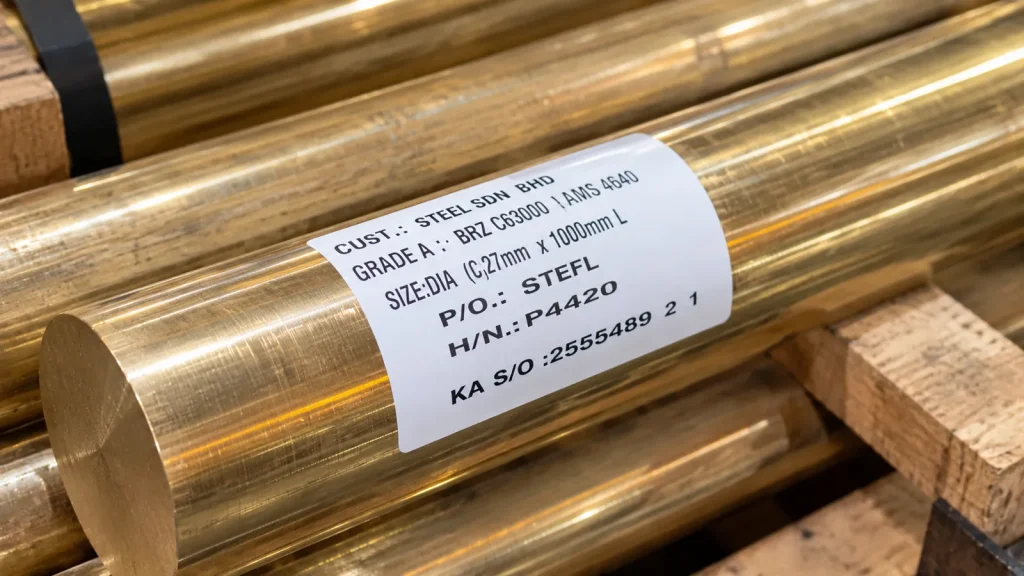
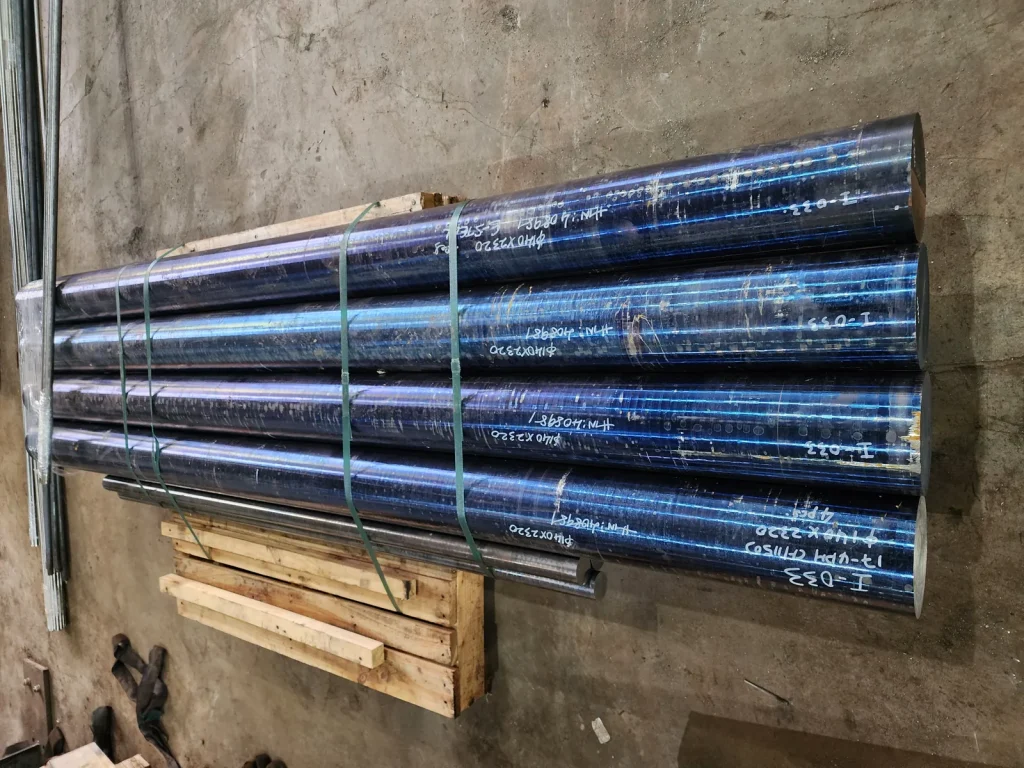
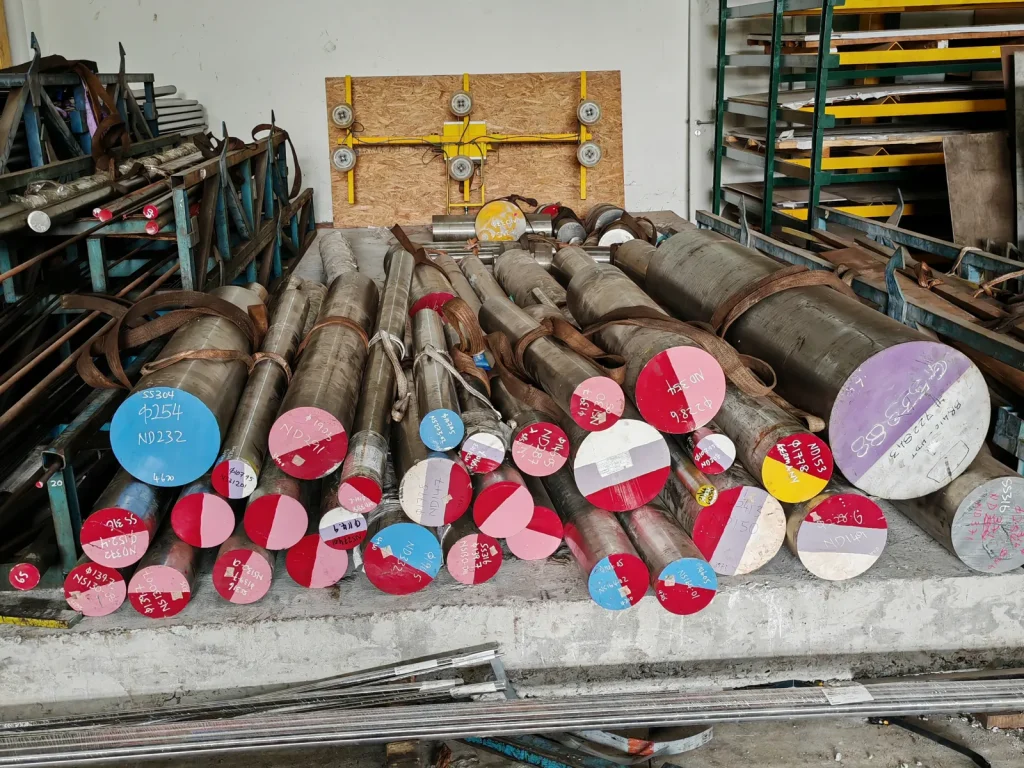
No MOQ, shipped globally from Malaysia. Send us the size and we will cut it.