
Home › Knowledgebase
Grade equivalents across AISI, DIN, JIS and EN. Stainless and tool steel selectors. Hardness conversion. What a Mill Test Certificate should tell you. Everything on this page is here so you can check a specification without leaving the site.
Most of the problems we are asked to fix are not supply problems. They are specification problems — a drawing written to a DIN number, a stock list written in AISI, and a substitution made somewhere in between that nobody documented.
These tables are the ones our sales desk works from. They cover the grades E STEEL SDN BHD actually holds, so if something appears here it is a grade we can quote, cut and certify.
A grade name means nothing without the standard it belongs to. 420 in AISI is not 1.4021 in every condition.
Cross-reference tables match chemistry and intent. Always confirm the mechanical properties your application depends on.
The same grade annealed, quenched and tempered, or age hardened behaves like three different materials.
Documentation is far cheaper to request before despatch than to reconstruct afterwards.
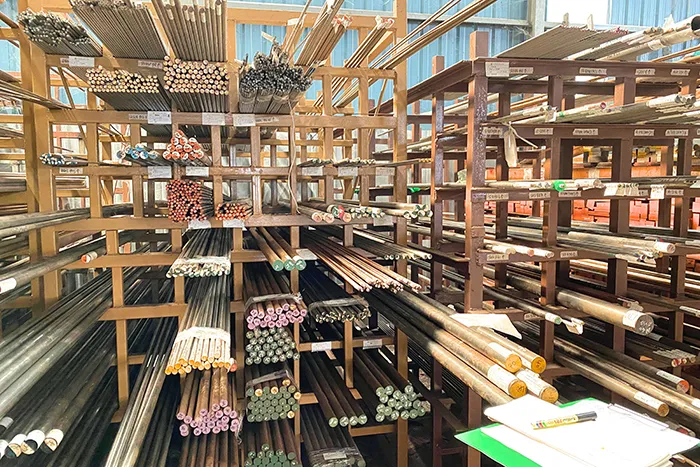
Reading a drawing in DIN when your stock list is in AISI is the single most common source of a wrong order. Start here.
| AISI / ASTM | DIN (W.-Nr.) | EN | JIS | Typical use |
|---|---|---|---|---|
| AISI 1020 | 1.0402 | C22 | S20C | General fabrication, low-stress parts |
| AISI 1045 | 1.0503 | C45 | S45C | Shafts, axles, machined components |
| AISI 4130 | 1.7218 | 25CrMo4 | SCM430 | Thin-wall tube, weldable high-strength parts |
| AISI 4140 | 1.7225 | 42CrMo4 | SCM440 | Shafts, gears, general Q&T engineering steel |
| AISI 4340 | 1.6582 | 34CrNiMo6 | SNCM439 | Heavily loaded shafts, deep hardening sections |
| AISI 8620 | 1.6523 | 21NiCrMo2 | SNCM220 | Case hardening — gears, pins, bushes |
| ASTM A105 | 1.0460 | C22.8 | — | Forged flanges and pipe fittings |
| AISI / UNS | W.-Nr. | EN | JIS | Notes |
|---|---|---|---|---|
| 304 / S30400 | 1.4301 | X5CrNi18-10 | SUS304 | The default austenitic grade |
| 304L / S30403 | 1.4307 | X2CrNi18-9 | SUS304L | Low carbon — better as-welded corrosion resistance |
| 316 / S31600 | 1.4401 | X5CrNiMo17-12-2 | SUS316 | 2–3% Mo for chloride resistance |
| 316L / S31603 | 1.4404 | X2CrNiMo17-12-2 | SUS316L | Low carbon version of 316 |
| 321 / S32100 | 1.4541 | X6CrNiTi18-10 | SUS321 | Titanium stabilised for high temperature |
| 347 / S34700 | 1.4550 | X6CrNiNb18-10 | SUS347 | Niobium stabilised |
| 310S / S31008 | 1.4845 | X8CrNi25-21 | SUS310S | Heat resisting to ~1,050 °C |
| 410 / S41000 | 1.4006 | X12Cr13 | SUS410 | Martensitic, hardenable |
| 420 / S42000 | 1.4021 | X20Cr13 | SUS420J1 | Higher carbon martensitic |
| 430 / S43000 | 1.4016 | X6Cr17 | SUS430 | Ferritic, non-hardenable |
| 440C / S44004 | 1.4125 | X105CrMo17 | SUS440C | Highest hardness stainless |
| 17-4PH / S17400 | 1.4542 | X5CrNiCuNb16-4 | SUS630 | Precipitation hardening, H900–H1150 |
| 2205 / S31803, S32205 | 1.4462 | X2CrNiMoN22-5-3 | SUS329J3L | Duplex |
| 2507 / S32750 | 1.4410 | X2CrNiMoN25-7-4 | SUS329J4L | Super duplex |
| 904L / N08904 | 1.4539 | X1NiCrMoCu25-20-5 | SUS890L | High alloy austenitic, acid service |
| Trade / W.-Nr. | AISI | DIN | JIS | Type |
|---|---|---|---|---|
| 1.2379 | D2 | X153CrMoV12 | SKD11 | Cold work |
| 1.2510 | O1 | 100MnCrW4 | SKS3 | Cold work / gauge plate |
| 1.2344 | H13 | X40CrMoV5-1 | SKD61 | Hot work |
| 1.2311 | P20 | 40CrMnMo7 | — | Plastic mould, pre-hardened |
| 1.2312 | P20+S | 40CrMnMoS8-6 | — | Plastic mould, free machining |
| 1.2316 | — | X36CrMo17 | — | Corrosion resistant mould steel |
| 1.2083 | 420 mod. | X42Cr13 | SUS420J2 | High polish mould steel |
| 1.2738 | P20+Ni | 40CrMnNiMo8-6-4 | — | Large mould bases, pre-hardened |
| Trade name | UNS | W.-Nr. | Known for |
|---|---|---|---|
| Monel 400 | N04400 | 2.4360 | Seawater and hydrofluoric acid resistance |
| Inconel 600 | N06600 | 2.4816 | High temperature oxidation resistance |
| Inconel 625 | N06625 | 2.4856 | Strength plus broad corrosion resistance |
| Inconel 718 | N07718 | 2.4668 | Age hardenable, high strength to 700 °C |
| Incoloy 800 | N08800 | 1.4876 | Heat resisting, furnace and heat exchanger parts |
| Incoloy 825 | N08825 | 2.4858 | Sulphuric and phosphoric acid service |
| Hastelloy C276 | N10276 | 2.4819 | Severe reducing and oxidising media |
| Hastelloy C22 | N06022 | 2.4602 | Wider corrosion range than C276 |
| Titanium Grade 2 | R50400 | 3.7035 | Commercially pure, excellent corrosion resistance |
| Titanium Grade 5 (Ti-6Al-4V) | R56400 | 3.7165 | High strength to weight, medical and aerospace |
| Grade | Standard | W.-Nr. | Min yield | Impact test |
|---|---|---|---|---|
| ASTM A36 | ASTM A36/A36M | — | 250 MPa | Not required |
| S235JR | EN 10025-2 | 1.0038 | 235 MPa | 27 J at +20 °C |
| S275JR | EN 10025-2 | 1.0044 | 275 MPa | 27 J at +20 °C |
| S355JR | EN 10025-2 | 1.0045 | 355 MPa | 27 J at +20 °C |
| S355J2 | EN 10025-2 | 1.0577 | 355 MPa | 27 J at −20 °C |
| A516 Gr. 60 | ASTM A516/A516M | — | 220 MPa | Pressure vessel plate |
| A516 Gr. 70 | ASTM A516/A516M | — | 260 MPa | Pressure vessel plate |
| ABS Grade A | ABS Rules | — | 235 MPa | Shipbuilding, class approved |
Stainless is five different metals wearing the same name. Pick the family first from how the part must behave, then pick the grade.
| Family | Grades we stock | Magnetic | Corrosion resistance | Max service temp | Hardenable by |
|---|---|---|---|---|---|
| Austenitic (300) | 304, 304L, 316, 316L, 321, 347, 310S | No* | Good to excellent | Up to ~1,050 °C (310S) | Cold work only |
| Ferritic (400) | 430, 409 | Yes | Moderate | ~815 °C | Not hardenable |
| Martensitic (400) | 410, 416, 420, 440C | Yes | Moderate | ~650 °C | Quench and temper |
| Precipitation hardening | 17-4PH (630), 15-5PH | Yes | Good | ~300 °C | Single ageing treatment |
| Duplex / super duplex | 2205, 2507, S32760, Ferralium 255 | Yes | Excellent in chlorides | ~300 °C** | Not hardenable |
* Austenitic grades are non-magnetic in the annealed condition; cold working can make them slightly magnetic. ** Duplex grades are limited to about 300 °C in service because of 475 °C embrittlement, despite their high strength at room temperature.
Pairs of grades that look interchangeable on a stock list and are not. Open the one you need.
| SS304 (1.4301) | SS316 (1.4401) | |
|---|---|---|
| Chromium | 18–20% | 16–18% |
| Nickel | 8–10.5% | 10–14% |
| Molybdenum | None | 2–3% |
| Chloride pitting | Vulnerable | Markedly better |
| Relative cost | Baseline | Higher |
| Use it for | Indoor, food, general engineering | Coastal, marine, chemical, sterilising |
| S355JR (1.0045) | S355J2 (1.0577) | |
|---|---|---|
| Minimum yield | 355 MPa | 355 MPa |
| Impact energy | 27 J | 27 J |
| Tested at | +20 °C | −20 °C |
| Carbon equivalent | Higher | Tighter, better weldability |
| Use it for | General structures at ambient | Thick sections, cold service, dynamic loading |
| A516 Gr. 60 | A516 Gr. 70 | |
|---|---|---|
| Tensile strength | 415–550 MPa | 485–620 MPa |
| Minimum yield | 220 MPa | 260 MPa |
| Carbon content | Lower | Higher |
| Weldability | Easier, less preheat | More care on thick sections |
| Use it for | Formability and welding priority | Thinner walls for the same pressure |
| AISI 4130 | AISI 8620 | |
|---|---|---|
| Carbon | ~0.30% | 0.18–0.23% |
| Hardening route | Through hardening (quench & temper) | Case hardening (carburise) |
| Result | Uniform properties across section | Hard case, tough core |
| Weldability | Good for its strength | Good before carburising |
| Use it for | Tube, brackets, welded high-strength parts | Gears, pins, bushes, splines |
| AISI 4140 (1.7225) | 1.2311 (P20) | |
|---|---|---|
| Supplied condition | Quenched and tempered | Pre-hardened for moulds |
| Typical hardness | ~28–32 HRC | ~28–32 HRC |
| Cleanliness / homogeneity | Engineering grade | Controlled for mould work |
| Polishability | Adequate | Good |
| Use it for | Machine parts, shafts, structural blocks | Mould bases, cavity plates, holder blocks |
| 17-4PH (SUS630) | 17-7PH (SUS631) | |
|---|---|---|
| Structure | Martensitic | Semi-austenitic |
| Usual product form | Bar, plate, forgings | Strip, sheet, wire |
| Peak hardness | Up to ~44 HRC (H900) | Lower |
| Formability | Machined, not formed | Formed then hardened |
| Use it for | Shafts, valve parts, pump components | Springs, clips, formed components |
Cold work, hot work or plastic mould — the failure mode decides the family long before the grade number does.
| Family | Grades | Working hardness | Chosen for | Typical failure it resists |
|---|---|---|---|---|
| Cold work | 1.2379 (D2), 1.2510 (O1), 2363, 2436 | 58–62 HRC | Wear resistance, edge retention | Abrasion and edge chipping |
| Hot work | H13 / 1.2344 | 44–52 HRC | Toughness at temperature | Thermal fatigue and heat checking |
| Plastic mould, pre-hardened | 1.2311, 1.2312, 1.2738 | 28–32 HRC | Machine straight from stock | Deformation under clamping load |
| Plastic mould, corrosion resistant | 1.2083, 1.2316 | 30–52 HRC | Polish and chemical resistance | Corrosion from PVC and humid moulding |
| Precision ground flat stock | 2510 gauge plate | As supplied, hardenable | Dimensional accuracy off the shelf | Setup time on jigs and gauges |
| Condition | Ageing | Tensile (MPa) | Yield 0.2% (MPa) | Elongation | Hardness |
|---|---|---|---|---|---|
| Condition A | Solution annealed | 1,000 min | 760 min | 10% | 38 HRC max |
| H900 | 480 °C / 1 hr | 1,310 min | 1,170 min | 10% | 40–44 HRC |
| H1025 | 550 °C / 4 hr | 1,070 min | 1,000 min | 12% | 35–38 HRC |
| H1075 | 580 °C / 4 hr | 1,000 min | 860 min | 13% | 32–36 HRC |
| H1150 | 620 °C / 4 hr | 930 min | 725 min | 16% | 28–33 HRC |
The conversion every drawing review needs: Rockwell C against Vickers, Brinell and approximate tensile strength for steels.
| HRC | HV (Vickers) | HB (Brinell) | Approx. tensile | Where you meet it |
|---|---|---|---|---|
| 60 | 697 | 654 | ~2,180 MPa | D2 cutting tools, 440C |
| 55 | 595 | 560 | ~1,955 MPa | Hardened cold work tooling |
| 50 | 513 | 481 | ~1,740 MPa | H13 die casting dies |
| 45 | 446 | 421 | ~1,480 MPa | 17-4PH H900, hot work tooling |
| 40 | 392 | 371 | ~1,290 MPa | High-strength shafting |
| 35 | 345 | 327 | ~1,110 MPa | 17-4PH H1025, 2083 moulds |
| 30 | 302 | 286 | ~950 MPa | 4140 Q&T, 2311 mould base |
| 25 | 266 | 253 | ~840 MPa | Lightly tempered alloy steel |
| 20 | 238 | 226 | ~770 MPa | Normalised carbon steel |
Thermal cutting is excellent on thin sheet. Once the section gets thick, the heat-affected zone and the wide kerf start costing more than the cut saves — the hardened edge has to be machined away before finishing can start.
| Factor | Bandsaw | Plasma | Laser |
|---|---|---|---|
| Accuracy | ±1.0 mm | ±1.5–3 mm | Tight on thin sheet |
| Max thickness | Up to Ø1,000 mm | ~100 mm | ~100 mm |
| Kerf | 1–2 mm | 3–6 mm | 3–6 mm |
| Heat-affected zone | None — cold cut | Yes | Yes |
| Best for | Thick sections, volume | Thin sheet | Intricate thin profiles |
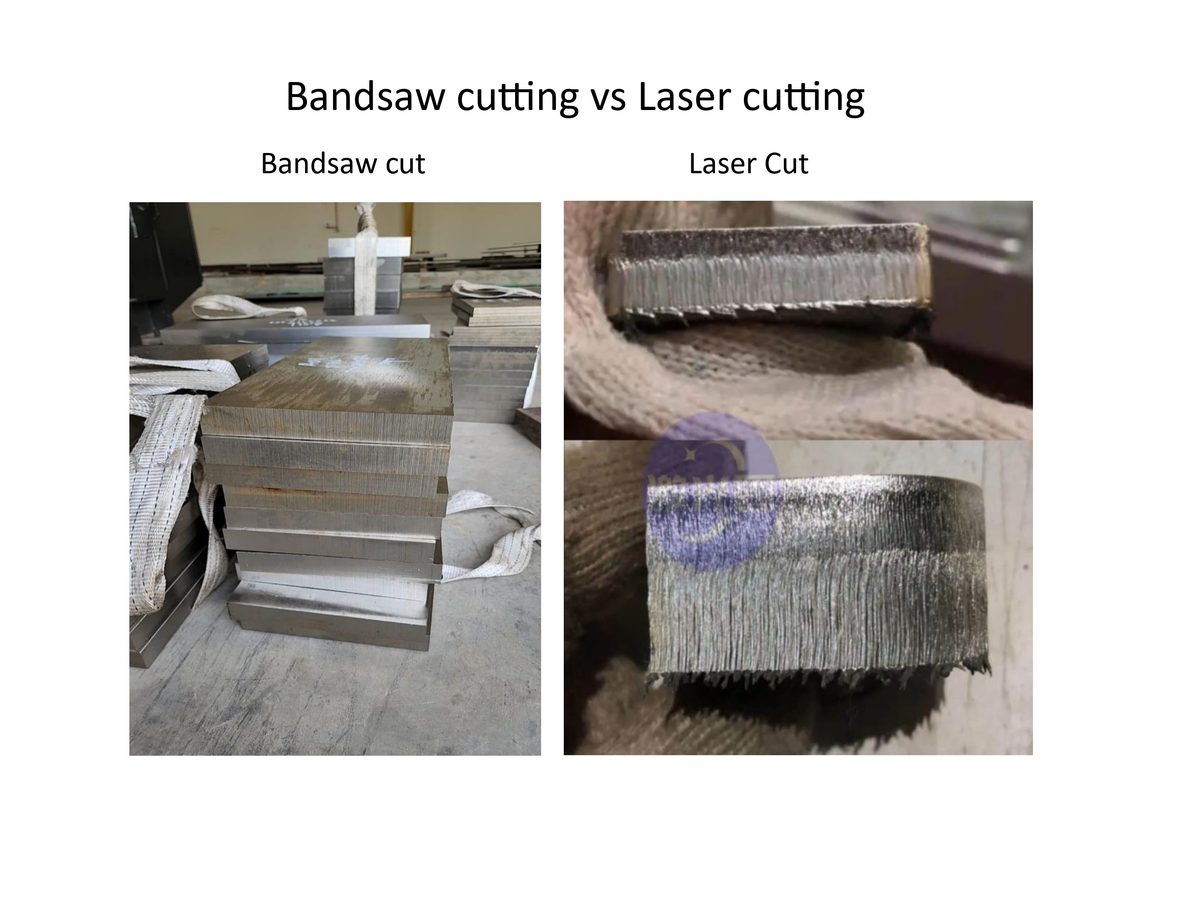
A laser cutting thick stainless melts and vaporises the metal. The rapid heating and cooling leaves a hardened, oxidised layer at the edge, often with dross and a slight taper on thick plate.
That layer is abrasive, so the CNC toolpath has to remove 1–3 mm before finishing can begin — a roughing pass that adds nothing to the part but consumes cycle time and tooling.
A cold-cut blank has no such layer. That is why semiconductor and vacuum-component work specifies bandsaw-cut stock: no microstructural change, no recast material, no surface contamination to clean off.
A certificate is only useful if you know which type you were given and what it does not cover.
| Type | Name | Based on | Signed by | Traceable to your batch? |
|---|---|---|---|---|
| 2.1 | Declaration of compliance | Order requirements | Manufacturer | No test results |
| 2.2 | Test report | Non-specific inspection | Manufacturer | Not your specific batch |
| 3.1 | Inspection certificate 3.1 | Specific inspection | Manufacturer’s authorised inspector | Yes — your cast / heat |
| 3.2 | Inspection certificate 3.2 | Specific inspection | Manufacturer plus independent or purchaser representative | Yes, dual signed |
E STEEL SDN BHD supplies an EN 10204 3.1 Mill Test Certificate with every order as standard. A 3.2 certificate, PMI testing or a Certificate of Conformity can be arranged on request — ask before despatch, not after.
The number on the certificate should be stamped or painted on the piece itself. If it is not, you have a certificate for something, but not necessarily for this.
"316" alone is not a specification. Look for the standard and the product form alongside it.
Check the elements your application depends on — molybdenum for chloride service, carbon for weldability.
Including impact energy and test temperature where the design calls for them.
Annealed, quenched and tempered, or aged — this changes how the material behaves more than most people expect.
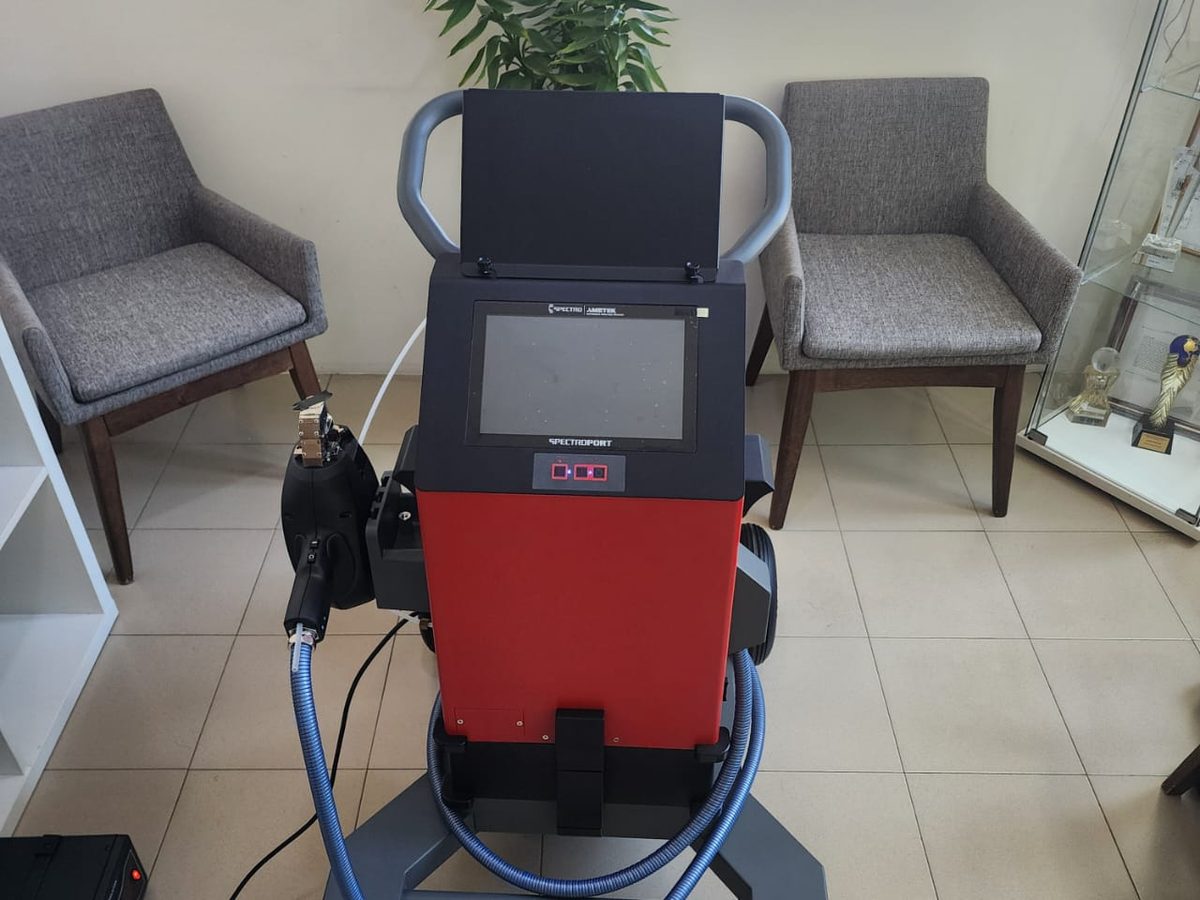
A Mill Test Certificate records what the mill says it poured. Positive Material Identification tells you what is on your pallet right now — a handheld analyser reads the alloying elements on the actual piece.
It is how a substituted or mixed grade gets caught before it reaches a weld or a pressure boundary, and it is quick enough to do on receipt.
One limitation worth knowing: handheld XRF reads alloying elements but cannot measure carbon. Where carbon content is the deciding factor — separating 316 from 316L, for example — the check has to be done by optical emission spectrometry or taken from the certificate.
Shorthand that appears on quotations, certificates and drawings, in plain language.
Mill Test Certificate. The mill’s record of chemistry and mechanical properties for a specific heat of material, issued to EN 10204 type 3.1 as standard.
Positive Material Identification. On-the-spot verification of alloy composition using a handheld analyser, confirming the piece matches its paperwork.
Certificate of Conformity. A supplier’s formal statement that the goods supplied meet the stated order requirements and specification.
Heat-Affected Zone. The band beside a thermal cut or weld where the metal’s structure has been altered by heat — hardened, oxidised, and usually abrasive.
The width of material removed by the cut itself. A narrow kerf means less waste, which matters most on expensive alloys.
Quenched and Tempered. Hardened by rapid cooling then reheated to a lower temperature to restore toughness. The usual delivery condition for 4140.
Precipitation Hardening. Strengthened by a single low-temperature ageing treatment rather than quenching, so parts distort very little. 17-4PH is the common example.
Solution annealed. The softest, most machinable state a precipitation hardening stainless is supplied in, ready to be aged after rough machining.
Unified Numbering System. The North American alloy designation, such as S31600 for 316 or N06625 for Inconel 625.
Werkstoffnummer — the German material number, written as 1.4401 for 316 or 1.7225 for 42CrMo4. Common on European drawings.
Minimum Order Quantity — the smallest amount a supplier will sell. E STEEL SDN BHD does not apply one; material is cut to the length you need.
Rockwell C, Brinell and Vickers hardness scales. Different indenters and loads, so always quote the scale along with the number.
Send the drawing or the application. Our sales desk will confirm the grade, the equivalent and the delivery condition — and quote the cutting with it.