
Home › Quality Assurance
ISO 9001:2015 certified, with an EN 10204 3.1 Mill Test Certificate on every order as standard. PMI verification and a Certificate of Conformity are available on request — arranged before despatch, not reconstructed afterwards.
A grade written on a label is a claim. A Mill Test Certificate is the mill’s record of what it poured. Positive Material Identification is what confirms the metal actually on your pallet. E STEEL SDN BHD supplies all three so a transaction moves from “trust the label” to “verify the metal”.
We are equally clear about what each document proves and what it does not. A supplier who tells you PMI proves everything is overselling it; one who explains exactly what it confirms, and pairs it with the right mill documentation for mechanical properties, understands the material.
Our quality management system is certified to the current ISO 9001 standard.
Every order ships with a 3.1 Mill Test Certificate traceable to your cast or heat number.
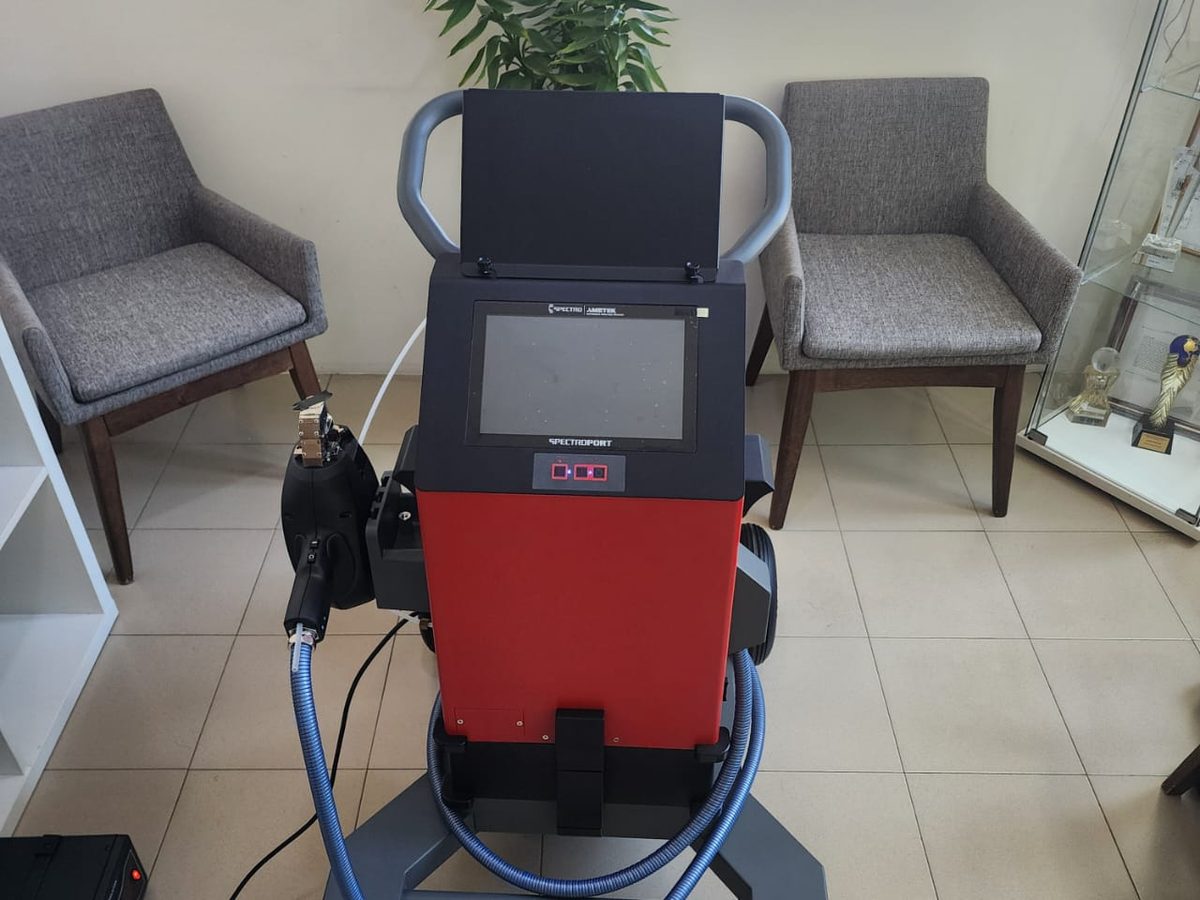
Handheld XRF confirms the alloy on the piece being shipped, not just on the paperwork.
Cutting is inspected before despatch, and the material certificate travels with it.
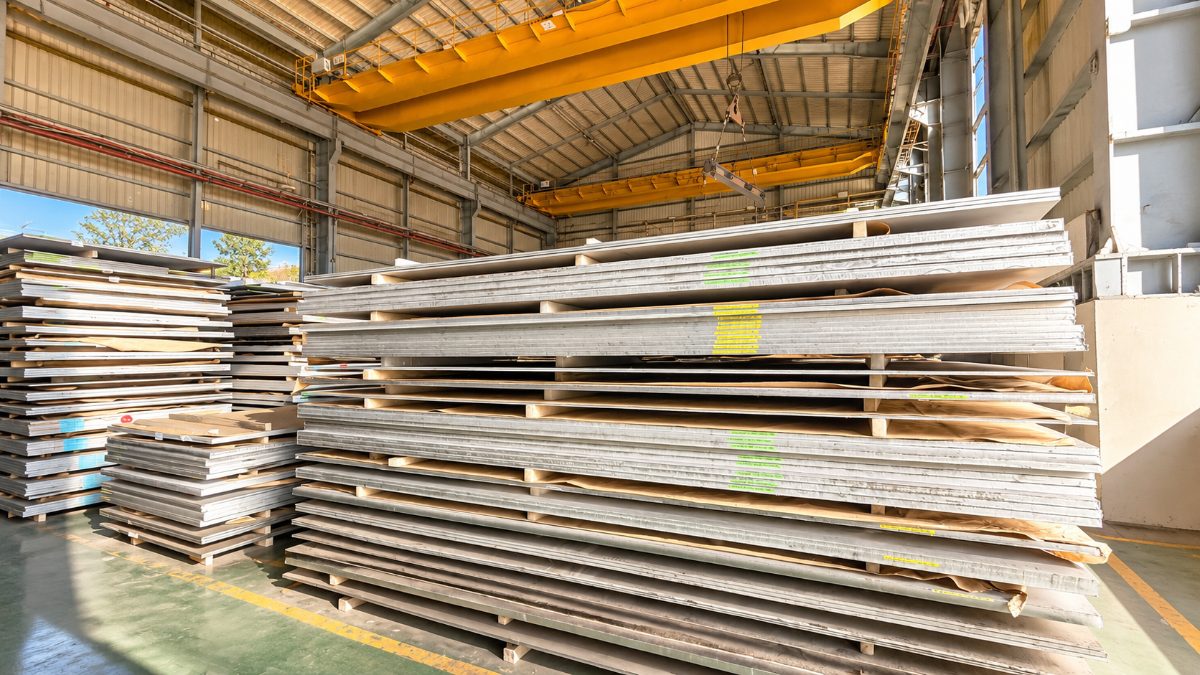
Orders shipped with a Mill Test Certificate
EN 10204 certificate types supported
Stainless grades held and verified
Customers served
EN 10204 defines four certificate types. Only 3.1 and 3.2 are tied to the specific batch you received — the distinction matters when an auditor asks.
| Type | Name | Based on | Signed by | Traceable to your batch? |
|---|---|---|---|---|
| 2.1 | Declaration of compliance | Order requirements | Manufacturer | No test results |
| 2.2 | Test report | Non-specific inspection | Manufacturer | Not your specific batch |
| 3.1 | Inspection certificate 3.1 | Specific inspection | Manufacturer’s authorised inspector | Yes — your cast / heat |
| 3.2 | Inspection certificate 3.2 | Specific inspection | Manufacturer plus independent or purchaser representative | Yes, dual signed |
E STEEL SDN BHD supplies an EN 10204 3.1 Mill Test Certificate with every order as standard. A 3.2 certificate, PMI testing or a Certificate of Conformity can be arranged on request — ask before despatch, not after.
| Document | Who issues it | What it actually proves |
|---|---|---|
| Mill Test Certificate (EN 10204 3.1) | The manufacturing mill | The heat’s actual chemical composition and mechanical test results. The primary traceability document. |
| Certificate of Conformity (CoC) | The supplier | A declaration that the delivered material conforms to the order — strengthened when backed by PMI on the stock being shipped. |
| PMI test report | The supplier, on the material | Confirmation that the chemistry matches the claimed grade at the point of supply. |
Together these move a transaction from “trust the label” to “verify the metal” — it de-risks your incoming inspection, satisfies your quality auditors, and closes the loop on traceability.
A handheld XRF analyser fires low-energy X-rays at the metal; the atoms fluoresce and emit a signature the device reads to identify the alloying elements present. It separates 304 from 316 by molybdenum content, and identifies nickel alloys, duplex and tool steels by their signatures.
| Handheld XRF | OES (spark) | |
|---|---|---|
| Speed | Reading in seconds | Slower, bench or mobile unit |
| Destructive? | No mark, no sample removed | Leaves a small burn mark |
| Portability | Gun goes to the material | Less portable |
| Reads carbon? | No | Yes |
| Best used for | Confirming alloy and stainless grades on stock | When carbon content or higher precision decides the grade |
The practical rule: XRF confirms alloy and stainless grades quickly and non-destructively; OES is brought in when carbon content or higher analytical precision is required.
PMI reads chemistry, not mechanical properties. It confirms which elements are in the metal, but it does not measure yield strength, tensile strength, hardness or impact toughness.
Where it is decisive: grades that differ by alloying elements — 304 vs 316, duplex vs austenitic, Inconel vs Monel. XRF catches these cleanly.
Where it is not enough alone: plain carbon structural grades such as S275 vs S355, which are chemically similar and differ mainly in mechanical performance. Telling those apart reliably needs mill certificates and mechanical test data.
The same checklist our own goods-in desk works from. Run it on any supplier, including us.
The number on the certificate should be stamped or painted on the piece itself. If it is not, you have a certificate for something, but not necessarily for this.
“316” alone is not a specification. Look for the standard and the product form alongside it.
Check the elements your application depends on — molybdenum for chloride service, carbon for weldability.
Including impact energy and test temperature where the design calls for them.
Annealed, quenched and tempered, or aged — this changes how the material behaves more than most people expect.
Corrosion-critical alloys where the choice between 316, 304 and duplex is safety-driven, not commercial.
Chloride environments demanding verified molybdenum-bearing and duplex grades.
Code-governed materials with strict conformity requirements and full documentation.
Zero tolerance for material substitution anywhere in the supply chain.
Stock free of any heat-affected zone, with chemistry confirmed on the piece supplied.
Mixed structural grades that must be traced back to mechanical certification.
Included. An EN 10204 3.1 Mill Test Certificate ships with every order as standard, traceable to the cast or heat number of the material you received.
Yes, both on request. Ask before despatch rather than after — PMI has to be performed on the stock while it is still with us, and a CoC backed by an actual PMI report is far stronger than a declaration on its own.
No, and any supplier who says otherwise is overselling it. PMI reads chemistry, not mechanical properties. It is decisive for grades that differ by alloying elements, such as 304 versus 316. For chemically similar structural grades like S275 versus S355, the mill certificate and mechanical test data are what settle it.
Handheld XRF reads alloying elements by fluorescence, and carbon is too light for the technique to quantify reliably. Where carbon is the deciding factor — separating 316 from 316L, for example — the check has to be done by optical emission spectrometry or taken from the certificate.
±1.0 mm as standard across the bandsaw fleet, checked before despatch. For blanks going straight to CNC we commonly work to +1 / −0 mm so the part is always oversize, never undersize.
Yes. E STEEL SDN BHD operates an ISO 9001:2015 certified quality management system.
Tell us the grade, the quantity and the certification you need — 3.1 as standard, or 3.2, PMI and a Certificate of Conformity on request. We will confirm it with the quotation.