
Tool steel for dies, moulds and cutting tools: A2 (1.2363), D6 (1.2436), O1 (1.2510), 1.2767, H13, SKH9 (M2), SUJ2, silver steel and more. Cut to size, no MOQ.
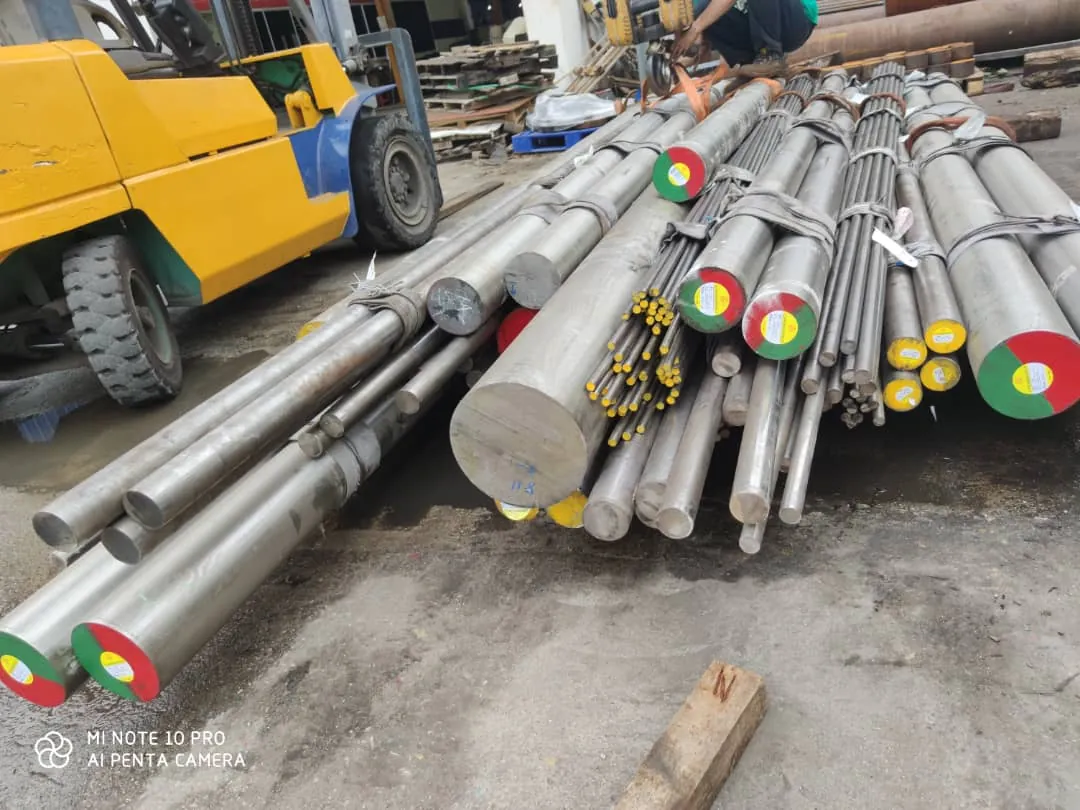
Tool steels are hardened for cutting, forming and shaping other materials. E STEEL SDN BHD supplies cold work, hot work, shock-resisting and high-speed grades as plate and bar, cut to size with no minimum order quantity.
Tool steel refers to a variety of carbon and alloy steels that are particularly well-suited to be made into tools. Their suitability comes from their distinctive hardness, resistance to abrasion, their ability to hold a cutting edge, and/or their resistance to deformation at elevated temperatures (red-hardness). Tool steel is generally used in a heat-treated state.
With a carbon content between 0.7% and 1.4%, tool steels are manufactured under carefully controlled conditions to produce the required quality. The manganese content is often kept low to minimize the possibility of cracking during water quenching. However, proper heat treating of these steels is important for adequate performance, and there are many suppliers who provide tooling blanks intended for oil quenching.
Tool steels are made to a number of grades for different applications. Choice of grade depends on, among other things, whether a keen cutting edge is necessary, as in stamping dies, or whether the tool has to withstand impact loading and service conditions encountered with such hand tools as axes, pickaxes, and quarrying implements. In general, the edge temperature under expected use is an important determinant of both composition and required heat treatment. The higher carbon grades are typically used for such applications as stamping dies, metal cutting tools, etc.
Tool steels are also used for special applications like injection molding because the resistance to abrasion is an important criterion for a mold that will be used to produce hundreds of thousands of parts.
W-grade tool steel gets its name from its defining property of having to be water quenched. W-grade steel is essentially high carbon plain-carbon steel. This type of tool steel is the most commonly used tool steel because of its low cost compared to other tool steels. They work well for small parts and applications where high temperatures are not encountered; above 150 °C (302 °F) it begins to soften to a noticeable degree. Hardenability is low so W-grade tool steels must be quenched in water. These steels can attain high hardness (above HRC 60) and are rather brittle compared to other tool steels.
The toughness of W-grade tool steels are increased by alloying with manganese, silicon and molybdenum. Up to 0.20% of vanadium is used to retain fine grain sizes during heat treating.
Air-hardening grades
The first air hardening grade tool steel:
A2 is the most common air hardening grade currently used.
Grade-O refers to oil hardening tool steels, while grade-A refers to air hardening tool steels. These tool steels are used on larger parts or parts that require minimal distortion during hardening. The use of oil quenching and air hardening helps reducing distortion as opposed to higher stress caused by quicker water quenching. More alloying elements are used in these steels, as compared to water-hardening grades. These alloys increase the steels’ hardenability, and thus require a less severe quenching process. These steels are also less likely to crack and are often used to make knife blades.
D-grade tool steels contain between 10% and 18% chromium. These steels retain their hardness up to a temperature of 425 °C (797 °F). Common applications for these grade of tool steel is forging dies, die-casting die blocks, and drawing dies. Due to high chromium content, certain D-grade tool steel grades are often considered stainless or semi-stainless tool steels.
Composition
Here are composition for some of the most common cold-working tool steels, quantities of minor ingredients may vary slightly with manufacturer:
O-1 steel contains 0.90% carbon 1.0%–1.4% manganese, 0.50% chromium, 0.50% nickel, and 0.50% tungsten. It is a very good cold work steel and also makes very good knives. It can be hardened to about 57-61 HRC.
A-2 steel contains 1.0% carbon, 5.0% chromium, and 1.0% molybdenum.
D-2 steel contains 1.5% carbon and 11.0 – 13.0% chromium; additionally it is composed of 0.45% manganese, 0.030% max phosphorus, 0.030% max sulfur, 1.0% vanadium, 0.7% molybdenum, and 0.30% silicon. D2 is very wear resistant but not as tough as lower alloyed steels. It is widely used for shear blades, planer blades and industrial cutting tools, sometimes used for knives.
S-grade tool steel are designed to resist shock at both low and high temperatures. A low carbon content is required for the necessary toughness (approximately 0.5% carbon). Carbide-forming alloys provide the necessary abrasion resistance, hardenability, and hot-working characteristics. This family of steels displays very high impact toughness and relatively low abrasion resistance, it can attain relatively high hardness (HRC 58/60). This type of steel is used in applications such as jackhammer bits.
T-grade and M-grade tool steels are used for cutting tools where strength and hardness must be retained at temperatures up to or exceeding 760 °C (1,400 °F). M-grade tool steels were developed to reduce the amount of tungsten and chromium required.
T1 (also known as 18-4-1) is a common T-grade alloy. Its composition is 0.7% carbon, 18% tungsten, 4% chromium, and 1% vanadium. M2 is a common M-grade alloy.
H-grade tool steels were developed for strength and hardness during prolonged exposure to elevated temperatures. All of these tool steels use a substantial amount of carbide forming alloys. H1 to H19 are based on a chromium content of 5%; H20 to H39 are based on a tungsten content of 9%-18% and a chromium content of 3%–4%; H40 to H59 are molybdenum based.
A2 Tool Steel, 1.2363, SKD12, XW10
AISI A2 tool steel is one of ‘A’ group cold works steel in ASTM A681 standard. A2 Tool Steel is a versatile, air hardening chromium alloy tool steel that replaces O1 tool steel when safer hardening, less distortion and increased wear resistance are required. AISI type A2 steel is intermediate in wear resistance between O1 oil-hardening tool steel and D2 high-carbon, high-chromium tool steel.
AISI Steel A2 is heat treatable and will offer a hardness in the range 57-62 HRC. ASTM grade A2 steel delivers good toughness with medium wear resistance and is relatively easy to machine. Tool Steels A2 are used in many applications which require good wear resistance as well as good toughness.
| Element | Content (%) |
|---|---|
| C | 0.95-1.05 |
| Mn | 1 |
| Si | 0.5 |
| Cr | 4.75-5.50 |
| Ni | 0.3 |
| Mo | 0.90-1.40 |
| V | 0.15-0.50 |
| Cu | 0.25 |
| P | 0.03 |
| S | 0.03 |
| Country | USA | German | Japan | British |
|---|---|---|---|---|
| Standard | ASTM A681 | DIN EN ISO 4957 | JIS G4404 | BS 4659 |
| Grades | A2/T30102 | 1.2363/X100CrMoV5 | SKD12 | BA2 |
SKD12 tool steels are heat treated at temperatures ranging from 177°C (350°F) for Rockwell C 62 to 538°C (1000°F) for Rockwell C 56 and then tempered.
A2 tool steels are annealed at 857°C (1575°F) and then cooled slowly in the furnace at a rate of 4°C (40°F) per hour or less.
1.2363 tool steels are heated slowly to 788°C (1450°F) and this is followed by increasing the temperature to 954°C (1750°F). A2 tool steels are further held at 954°C (1750°F) for 30 to 45 minutes and finally removed from the furnace and cooled.
2363 tool steel takes a place between AISI O1 and AISI D2, offering an excellent combination of good wear resistance and toughness. It may be regarded, therefore, as a“universal” cold work steel.
For cutting operations the good toughness of AISI A2 steel gives excellent resistance to chipping of the cutting edge. In many cases tools made from this A2 steel have given better tooling economy than high-carbon, high-chromium steels of the D3/ W.-Nr. 2080 type. AISI steel A2 has much better machining and grinding properties
Typical Applications for AISI/ASTM A2 steels materials: Blanking dies, block and ring gauges, coining, cold forming, cold trimming and forming dies, cold shears, rolls, knurls and knurling tools, machine parts, mandrels, punches and punch plates, reamers, shear and slitter blades, stamping dies and threading tapes.
| D2 Tool Steel (X153CrMoV12), 1.2379, XW41, SKD11, D2, XW42 |
|---|
| Chrome steel 12%, very high resistance against abrasive and adhesive wear due to a high volume of hard carbides in the steel matrix, good toughness, very good dimensional stability, high compressive strength, very good base material for PVD/CVD coating as well as nitriding due to its secondary hardening properties. Similar to SKD11 / 2379 Applications: Cutting, punching, stamping tools, shear blades, thread rolling dies, cold extrusion dies, drawing and bending tools, flanging and straightening rolls, fine cutting tools, deep drawing tools, plastic moulds for abrasive polymers. Chemical Composition % Carbon 1.55 Chromium 12.00 Molybdenum 0.80 Vanadium 0.90 Relevant D2 Steel Specifications Country USA German Japan Standard ASTM A681 DIN EN ISO 4957 JIS G4404 Grades D2 1.2379/X153CrMo12 SKD11 2379 Steel Mechanical Properties Mechanical Properties Metric Imperial Hardness, Knoop (converted from Rockwell C hardness) 769 769 Hardness, Rockwell C 62 62 Hardness, Vickers 748 748 Izod impact unnotched 77.0 J 56.8 ft-lb Poisson’s ratio 0.27-0.30 0.27-0.30 Elastic modulus 190-210 GPa 27557-30457 ksi |
2436 / D6 / XW5 / SKD2 Cold Work Tool Steel
| Standards | DIN | AISI | JIS | ГОСТ |
|---|---|---|---|---|
| X210CrW12 | 1.2436 | D6 | SKD2 | X12B |
Chemical composition (typical analysis in %)
| C | Si | Mn | P | S | Cr | W |
|---|---|---|---|---|---|---|
| 2.00-2.30 | 0.10-0.40 | 0.15-0.45 | ≤0.030 | ≤0.030 | 11.0-12.0 | 0.60-0.80 |
| Steel properties : | High carbon high chromium tool steel in flat and round bar. This is a tool steel grade offering very high wear resistance with edge holding quality. It is an air hardening alloy tool steel with excellent resistance to wear and abrasion. As a high carbon high chromium tool steel 1.2436 has good through hardening properties and dimensional stability combined with high resistance to tempering. |
|---|---|
| Applications : | Woodworking tools, thread rolling dies, deep drawing and cold extrusion tools, measuring tools, scraping and trimming tools, deburring tools, moulds for abrasive plastics. |
|---|---|
| Delivery condition : | Soft annealed to max. 255 HB |
|---|---|
| Properties | Metric | Imperial |
|---|---|---|
| Compressive strength | 1320 MPa | 191000 psi |
| Modulus of elasticity | 194 GPa | 28100 ksi |
| Hardness, Rockwell C | 46 | 46 |
| Soft annealing ℃ | Cooling | Hardness HB | |||||
|---|---|---|---|---|---|---|---|
| 800 – 840 | Cool sloly in furnace | max. 255 | |||||
| Hardening from ℃ | in | Hardness after quenching HRC | |||||
| 940 – 980 | oil, air or warm bath | 64 – 66 | |||||
| 960 – 1000 | 500 – 550 C | 64 – 66 | |||||
| Tempering | ℃ | 100 | 200 | 300 | 400 | 500 | 600 |
| HRC | 63 | 62 | 60 | 58 | 56 | 48 |
2510, 100MnCrW4, O1, SKS3, DF2, DF3
2510 with chromium-manganese content possessed good machinability,
mechanical wear resistance and edge holding quality. Vanadium-Wolfram content
reduces high working temperature wear and retention of temper temperature.
| DIN | AISI | JIS | Chemical Composition | |||||||||||
|---|---|---|---|---|---|---|---|---|---|---|---|---|---|---|
| C | Si | Mn | P | S | Co | Cr | Mo | Ni | V | W | Cu | |||
| 1.2510 | O1 | SKS3 | 0.90 to 1.05 | 0.15 to 0.35 | 1.00 to 1.20 | < 0.035 | < 0.035 | – | 0.15 to 0.35 | – | – | 0.05 to 0.15 | 0.50 to 0.70 | – |
| Country | USA | German | Japan |
|---|---|---|---|
| Standard | ASTM A681 | DIN EN ISO 4957 | JIS G4404 |
| Grades | O1 | 1.2510/100MnCrW4 | SKS3 |
| Properties | Metric | Imperial |
|---|---|---|
| Hardness, Brinell (soft annealed -delivery condition) | 190 | 190 |
| Hardness, Rockwell C (tempering temp 300-1200°F) | 34.0-64.0 | 34.0-64.0 |
| Elastic modulus (hardened to 62 HRC) | 193 GPa | 28000 ksi |
| Elastic modulus (@399°C/750°F, hardened to 62 HRC ) | 172 GPa | 25000 ksi |
| Elastic modulus (@191°C/375°F, hardened to 62 HRC) | 186 GPa | 27000 ksi |
| Compressive yield strength (0.2%, hardened to 50 HRC) | 1350 MPa | 196000 psi |
| Compressive yield strength (0.2%, hardened to 55 HRC) | 1800 MPa | 261000 psi |
| Compressive yield strength (0.2%, hardened to 60 HRC) | 2150 MPa | 312000 psi |
| Compressive yield strength (0.2%, hardened to 62 HRC) | 2200 MPa | 319000 p |
General purpose oil hardening medium alloyed cold work tool steel with minimum size change, high impact strength
and hardenability, good edge holding, abrasion resistance and machinability properties, dimensionally stable during
heat treatment, high surface hardness and sufficent toughness after hardening and tempering.
Cutting, blanking, punching and stamping tools and dies up to 6 mm sheet thickness, thread cutting tools, chasers, cold forming tools, arbors, drill bushings, collets, drawing punches, machine knives for the wood, paper and metal working industries, woodworking tools, cold trimming dies, shaping wheels, measuring tools and gauges, milling cutters, drills, reamers, taps, broaches, calipers, profile rollers, coining tools, industrial blades, moulds for the plastics industry, knurling tools, medium run blanking dies, cold working manrdrels, master engraving rolls and taps, guide rails, plug gages.
Stress relieving Temperature : Approx. 650 °C in the annealed state
Duration : 1 hour per 50 mm wall thickness
Soft annealing Temperature : 750 °C
Duration : 1 hour per 25 mm wall thickness
Hardening Temperature : 830 °C
Duration : 1 minute per mm wall thickness
Quenching hardness Max. 64 HRC in oil, hot bath or vacuum
Tempering Temperature : See tempering curve
Duration : 1 hour per 25 mm wall thickness
Cooling : Air
Working hardness 58–62 HRC
2767 X45NiCrMo4 Cold Work Tool Steel
1.2767 is a Alloy cold working steel with very high hardenability, ductility, resistance to pressure, abrasion and high impact strength. The material is used for the production of shears for cutting steel sheets and sections, stamping dies, hydraulic chisels, cold forging dies, hardened knives, stamps, punches or moulds for the production of plastics. The grade is characterized by high strength, load resistance, tempering and fatigue resistance.
Material properties: Due to the high nickel and corresponding carbon content, this material is a very evenly hardening, dimensionally stable steel with high toughness and resistance to impact and compressive stress.
Mould plates and inserts for the processing of thermo- plastics and thermosets, especially for high gloss polishes, e.g. for transparent melts and components with high surface requirements, mould components with high compressive and flexural stresses, embossing tools and other uses for which the above requirements are needed.
| Standards | DIN | AISI | JIS |
|---|---|---|---|
| X45NiCrMo16 | 1.2767 | 6F7 | SKT6 |
| Chemical composition (typical analysis in %) | |||||||
|---|---|---|---|---|---|---|---|
| C | Si | Mn | P | S | Cr | Mo | Ni |
| 0.40-0.50 | 0.10-0.40 | 0.15-0.45 | ≤0.030 | ≤0.030 | 1.20-1.50 | 0.15-0.35 | 3.80-4.30 |
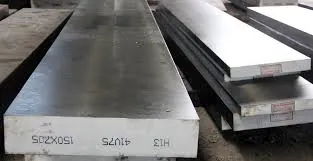
| H13 Tool Steel , 2344, SKD61, 8407 |
|---|
| AISI H13 Hot Work Tool Steel air hardening, with good toughness, resistance to abrasion and high red hardness. It resists softening to 550°C and has good resistance to heat checking. Will Nitride with a case hardness over 1000 V.P.N. Generally supplied annealed to HB 230 max. Typical Applications: Hot punches and dies for blanking, bending, swaging and forging, hot extrusion dies for aluminium, cores, ejector pins, inserts and nozzles for aluminium, tin and lead die casting. 2344 Tool Steel Chemical Composition C Si Mn Cr Mo Ni V 0.32 to 0.42 0.8-1.2 ≤ 0.50 1.80 to 2.10 0.15 to 0.25 – 0.80-1.20 Common H13 Tool Steel Related Specifications Country USA German Japan Standard ASTM A681 DIN EN ISO 4957 JIS G4404 Grades H13 1.2344/X40CrMoV5-1 SKD61 AISI H13 Steel Mechanical Properties Properties Metric Imperial Tensile strength, ultimate (@20°C/68°F, varies with heat treatment) 1200 – 1590 MPa 174000 – 231000 psi Tensile strength, yield (@20°C/68°F, varies with heat treatment) 1000 – 1380 MPa 145000 – 200000 psi Reduction of area (@20°C/68°F) 50.00% 50.00% Modulus of elasticity (@20°C/68°F) 215 GPa 31200 ksi Poisson’s ratio 0.27-0.30 0.27-0.30 |
| Machinability | Machinability of H13 is medium to good. It rates as 75% that of the W group water hardening tool steels which are low alloy and of generally good machinability. |
|---|---|
| Heat Treatment Preheat to 1500 f and then heat to 1850 F. Hold at 1850 f for 15 to 40 minutes and then air cool (air quench). |
|---|
| Tempering | Temper at 1000 F to 1200 F for Rockwell C of 53 to 38. It is advisable to do a double temper by repeating the process and use 1 hour at temperature each time. |
|---|---|
| Hardening | See “Heat Treating” and “Tempering”. |
|---|---|
| Thermal Cycle Diagram |
|---|
| Continuous Cooling Transformation Diagram (CCT) |
| Tempering Diagram |
| Part | Aluminium, magnesium alloys, HRC | Copper alloys HRC | Stainless steel HRC |
|---|---|---|---|
| Dies, Backers, die-holders, liners, dummy blocks, stems | 44-50 | 43-47 | 45-50 |
| 41-50 | 40-48 | 40-48 | |
| Austenitizing temperature | 1,870-1,885°F | 1,900-1,920°F | |
| (1,020-1,030°C) | (1,040-1,050°C) |
| Part | Austenitizing temp. | HRC |
|---|---|---|
| Injection molds Compression/ transfer molds | 1,870-1,885°F (1,020-1,030°C) | 50-52 |
| Tempering 480°F (250°C) |
| S1 Tool Steel (100MnCrW4) | ||
|---|---|---|
| Germany | DIN 1.2550 | |
| USA | AISI S1 | |
| Chemical Composition | % | |
| Carbon | 0.60 | |
| Tungsten | 2.00 | |
| Chromium | 1.00 | |
| Vanadium | 0.15 |
Cold work steel with very good toughness, dimensionally stable, impact resistant, high hardening capacity. Applications: Cold shear knives, paper and wood cutting knives, cutting tools for plates up to 10 mm, ejector pins, air hammers.
Related Specifications
| C(%) | Si(%) | Mn(%) | P(%) | S(%) | Cr(%) | Ni(%) | Mo(%) | V(%) | Ti(%) |
|---|---|---|---|---|---|---|---|---|---|
| 1.00-1.10 | 0.15-0.35 | 0.15-0.50 | Max 0.030 | Max 0.030 |
| Annealing hardness HBS | Cold pull hardness HBS | Preheating temperature ℃ | Quenching temperature ℃ | Holding time min | Hardening medium | Temper temperature ℃ | After tempering hardness ≥HRC | |
|---|---|---|---|---|---|---|---|---|
| salt-bath furnace | controlled atmosphere furnace | |||||||
| 235 | 262 | 788 | 1191 | 1204 | 5~15 | air cooling | 522 | 60 |
| Steel plate/Sheet thickness / mm | σb MPa | σs ≥/MPa | δ Samples from the standard for 50 mm (2 in) | 180 ° of cold bending test | |
|---|---|---|---|---|---|
| longitudinal | horizontal | ||||
| Hot-rolled/Cold rolling:5 – 150 | 520 | 415 | 16~18 | 2a | 3.5a |
SKH9 High Speed Steel, SKH51, M2
SKH9 High Speed Steel (M2) is a tungsten-molybdenum high speed steel with a well balanced composition suitable for a wide variety of applications. World wide, the M2 type is by far the most popular high speed steel having replaced T1 high speed in most applications because of its superior properties and relative economy.
APPLICATIONS: Twist drills, taps, milling cutters, reamers, broaches, saws, and knives.
| C | Mn | Si | Cr | W | Mo | V |
|---|---|---|---|---|---|---|
| 0.85 | 0.28 | 0.30 | 4.15 | 6.15 | 5.00 | 1.85 |
| Country | USA | German | Japan |
|---|---|---|---|
| Standard | ASTM A600 | DIN EN ISO 4957 | JIS G4403 |
| Grades | M2 | 1.3343 | SKH51 |
| Mechanical properties | Metric | Imperial |
|---|---|---|
| Hardness, Rockwell C (tempered at 1150°F, quenched at 2200°F) | 62 | 62 |
| Hardness, Rockwell C (as hardened, quenched at 2200°F) | 65 | 65 |
| Compressive yield strength (when tempered at 300°F) | 3250 MPa | 471000 psi |
| Izod impact unnotched (when tempered at 300°F) | 67 J | 49.4 ft-lb |
| Abrasion (loss in mm3, as-hardened; ASTM G65) | 25.8 | 25.8 |
| Abrasion (loss in mm3, tempered at 1275°F; ASTM G65) | 77.7 | 77.7 |
| Poisson’s ratio | 0.27-0.30 | 0.27-0.30 |
| Elastic modulus | 190-210 GPa | 27557-30458 ksi |
| HARDENING HSS SKH9 / SKH51 |
|---|
Preheating: To minimize distortion and stresses in large or complex tools use a double preheat. Heat at a rate not exceeding 400°F per hour (222°C per hour) to 1100°F (593°C) equalize, then heat to 1450-1550°F (788-843°C). For normal tools, use only the second temperature range as a single preheating treatment.
Austenitizing (High Heat): Heat rapidly from the preheat. For Cutting Tools: Furnace: 2200-2250°F (1204-1232°C) Salt: 2175-2225°F (1191-1218°C) To maximize toughness, use the lowest temperature. To maximize hot hardness, use the highest temperature. For punches, dies, and tools that require maximum toughness without hot hardness: Furnace: 2075-2175°F (1175-1191°C) Salt: 2050-2150°F (1121-1177°C)
Quenching: Pressurized gas, warm oil, or salt. For pressurized gas, a rapid quench rate to below 1000°F (538°C) is critical to obtain the desired properties. For oil, quench until black, about 900°F (482°C), then cool in still air to 150 -125°F (66-51°C). For salt maintained at 1000-1100°F (538-593°C), equalize, then cool in still air to 150 -125°F (66-51°C).
Tempering: Temper immediately after quenching. Typical tempering range is 1025-1050°F (552-566°C). Hold at temperature for 2 hours, then air cool to ambient temperature. Double tempering is required. For large cross sections, and especially for blanks from which tools will be cut by wire EDM, triple tempering is strongly recommended.
Description
Bearing steel 52100 is one kind of special steel with features of high wear resistance and rolling fatigue strength. High-carbon chromium bearing steel, engineering steel and some types of stainless steel and heat resistant steel are used as materials of bearings and for other purposes.
Advantages of Chrome Bearing Steel 52100:
| Country | USA | German | Japan | British |
|---|---|---|---|---|
| Standard | ASTM A295 | DIN 17230 | JIS G4805 | BS 970 |
| Grades | 52100 | 100Cr6/1.3505 | SUJ2 | 535A99/EN31 |
| Element | Content (%) |
|---|---|
| Iron, Fe | 96.5 – 97.32 |
| Chromium, Cr | 1.30 – 1.60 |
| Carbon, C | 0.980 – 1.10 |
| Manganese, Mn | 0.250 – 0.450 |
| Silicon, Si | 0.150 – 0.300 |
| Sulfur, S | ≤ 0.0250 |
| Phosphorous, P | ≤ 0.0250 |
| Properties | Metric | Imperial |
|---|---|---|
| Bulk modulus (typical for steel) | 140 GPa | 20300 ksi |
| Shear modulus (typical for steel) | 80 GPa | 11600 ksi |
| Elastic modulus | 190-210 GPa | 27557-30458 ksi |
| Poisson’s ratio | 0.27-0.30 | 0.27-0.30 |
| Hardness, Brinell | – | – |
| Hardness, Knoop (converted from Rockwell C hardness) | 875 | 875 |
| Hardness, Rockwell C (quenched in oil from 150°C tempered) | 62 | 62 |
EN31 alloy steel is forged at 927 to 1205°C, and should not be forged below 925ºC. A post-forge equalization treatment is recommended at 745ºC for 4-6 hours followed by air cooling for SAE/AISI 52100 steel.
SUJ 2 alloy steel is heated at 816°C (1500°F) followed by quenching in oil. Before performing this process, it is subjected to normalizing heat treatment at 872°C (1600°F) followed by slowly cooling in order to reduce the machining stress.
100Cr6 alloy steel is hardened by cold working, or heating and quenching. It can be carburized at 913°C (1675°F) followed by quenching. It is again heated at 788°C (1450°F) followed by quenching for the second time.
Alloy steel 52100 grade bearing steel is mainly used for the manufacture of aircraft bearings and other highly stressed parts. This steel grade 52100 steel is preferably vacuum arc re-melted to give optimum performance.
Typical applications: Bearing Manufacture, CV joints, ball screws, gauges, knife etc.
Silver steel is common tool steel that is supplied as a centerless ground round bar (with tolerances similar to that of drill bit). The name comes from the highly polished appearance of the rods; there is no silver in the alloy.
Silver Steel is a high carbon steel supplied in precision ground bar form produced to BS1407 specification. It is supplied in the annealed condition . To obtain full wear resisting hardness with toughness it may be heat treated up to a maximum hardness of Rockwell C62. As a stockholder stocks are held in standard sizes in 2m lengths.
| DIN | AISI | JIS | Silver Steel Chemical Composition | |||||||||||
|---|---|---|---|---|---|---|---|---|---|---|---|---|---|---|
| C | Si | Mn | P | S | Co | Cr | Mo | Ni | V | W | Cu | |||
| 1.2510 | O1 | SKS3 | 0.90 to 1.05 | 0.15 to 0.35 | 1.00 to 1.20 | < 0.035 | < 0.035 | – | 0.15 to 0.35 | – | – | 0.05 to 0.15 | 0.50 to 0.70 | – |
| Country | USA | German | Japan |
|---|---|---|---|
| Standard | ASTM A681 | DIN EN ISO 4957 | JIS G4404 |
| Grades | O1 | 1.2510/100MnCrW4 | SKS3 |
What is silver steel used for?
Silver steel can be used in numerous applications including screwdrivers, punches, shafts, axles, pinions, pins, die posts, instrument parts, model parts, taps and drills for mild steel, engravers’ tools, and fine cutters.
Is silver steel rust proof?
Difference between Stainless Steel and Silver Steel Therefore, while Stainless Steel is rust proof, Silver Steel will rust easily when exposed to air or moisture.
Bandsaw technology ensures minimal kerf loss and clean, burr-free edges.
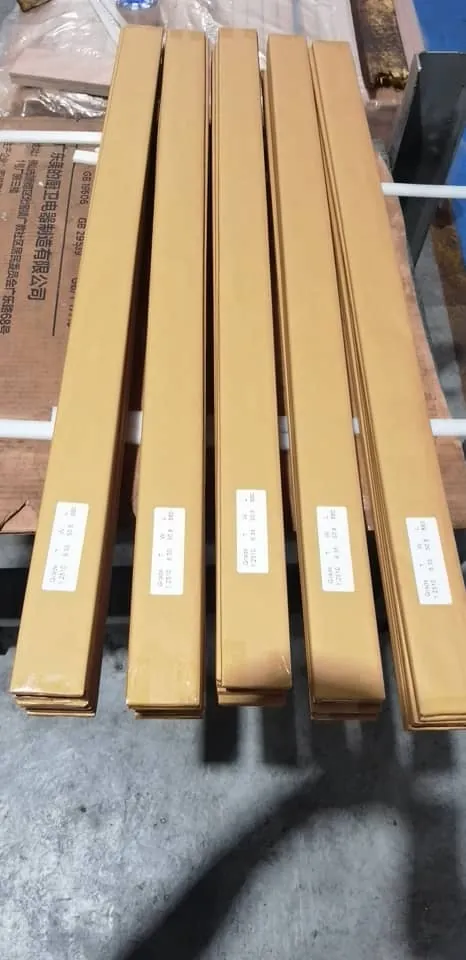
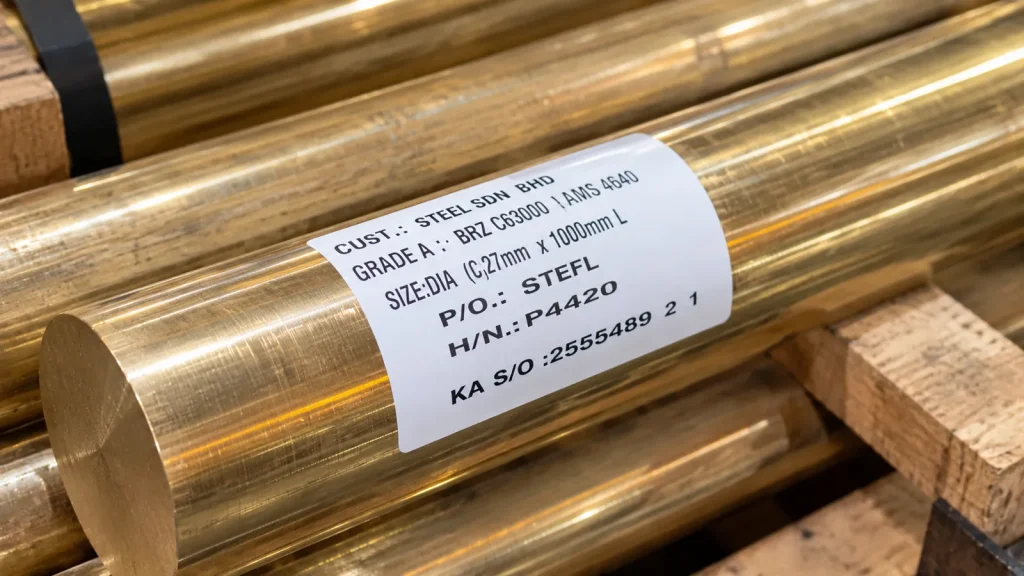
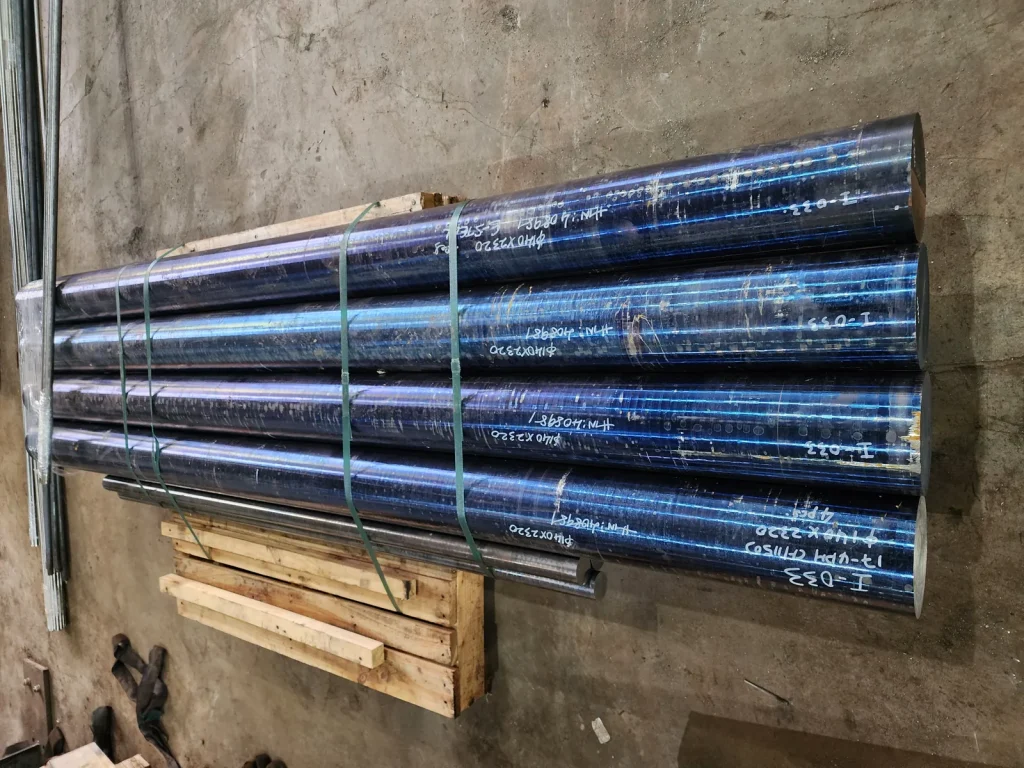
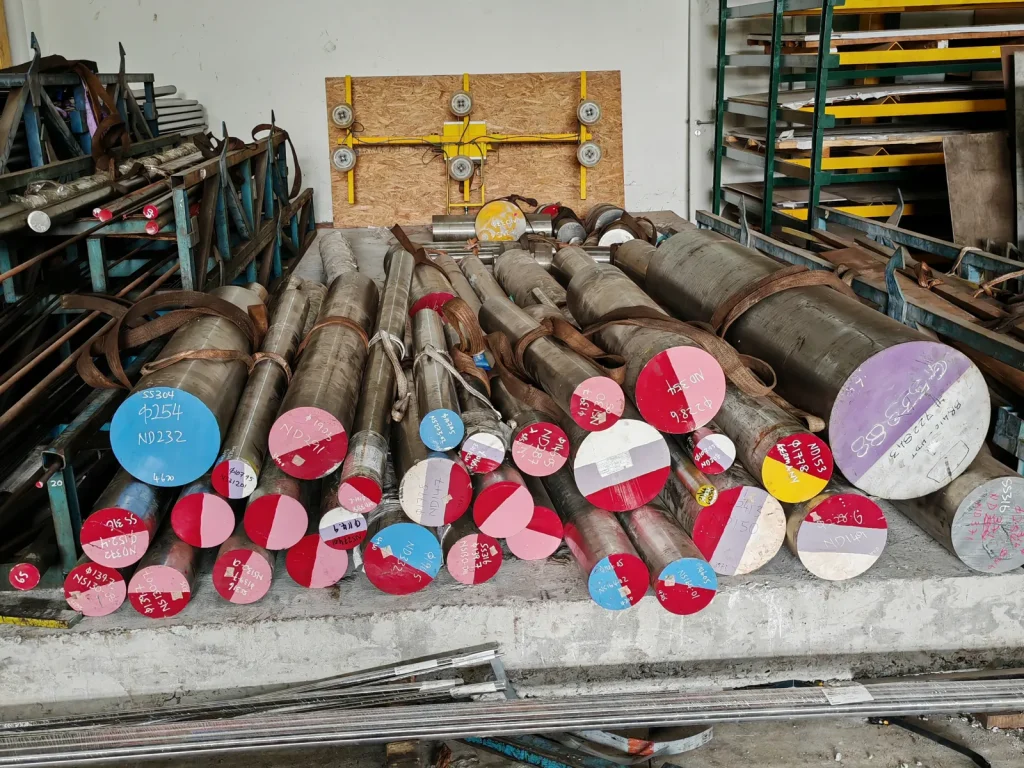
Cut to the size your job needs. No minimum order quantity.
Mill test reports (MTRs) for traceability.
Fast air and sea shipping with real-time tracking.
No MOQ, shipped globally from Malaysia. Send us the size and we will cut it.