
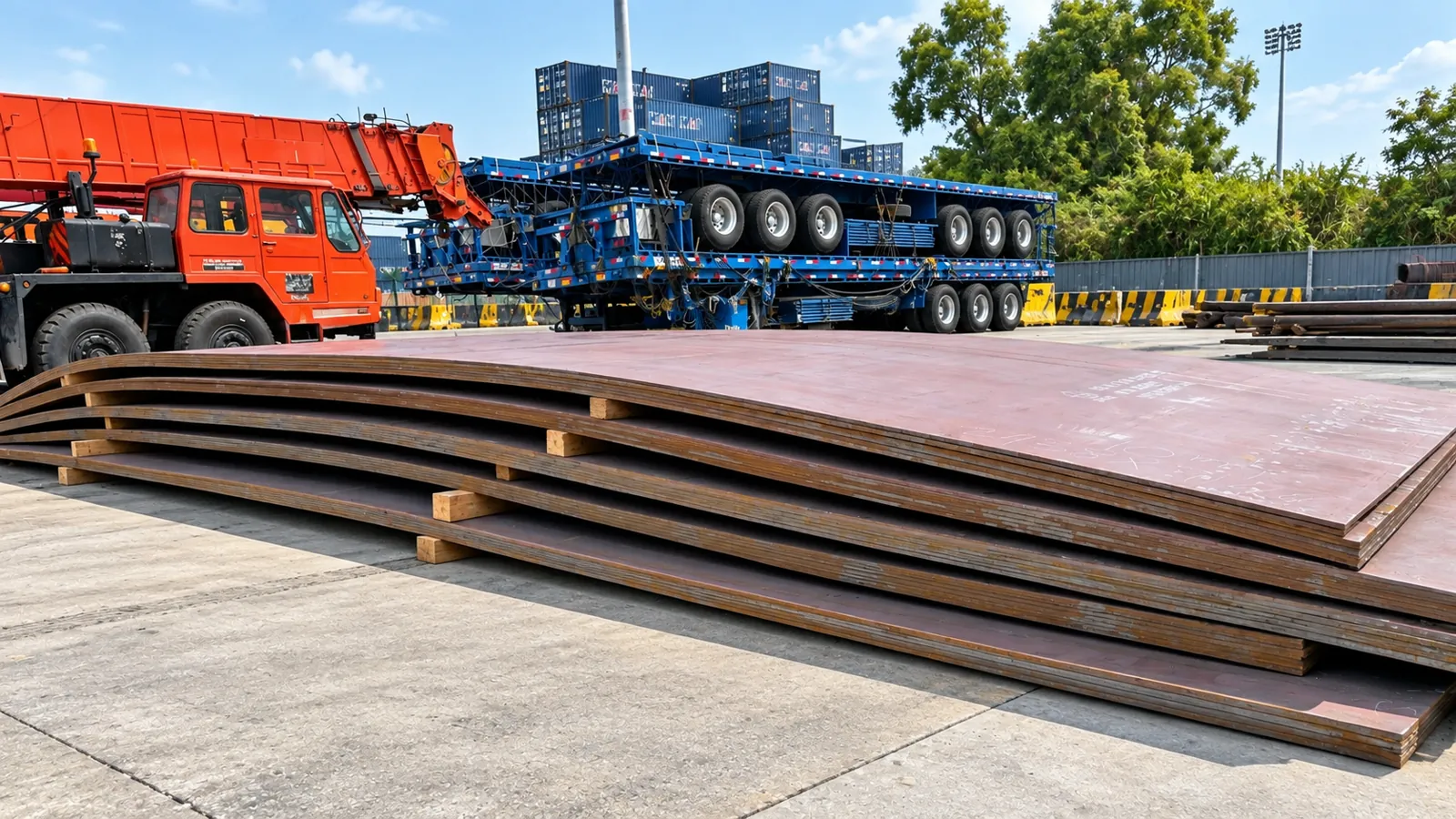
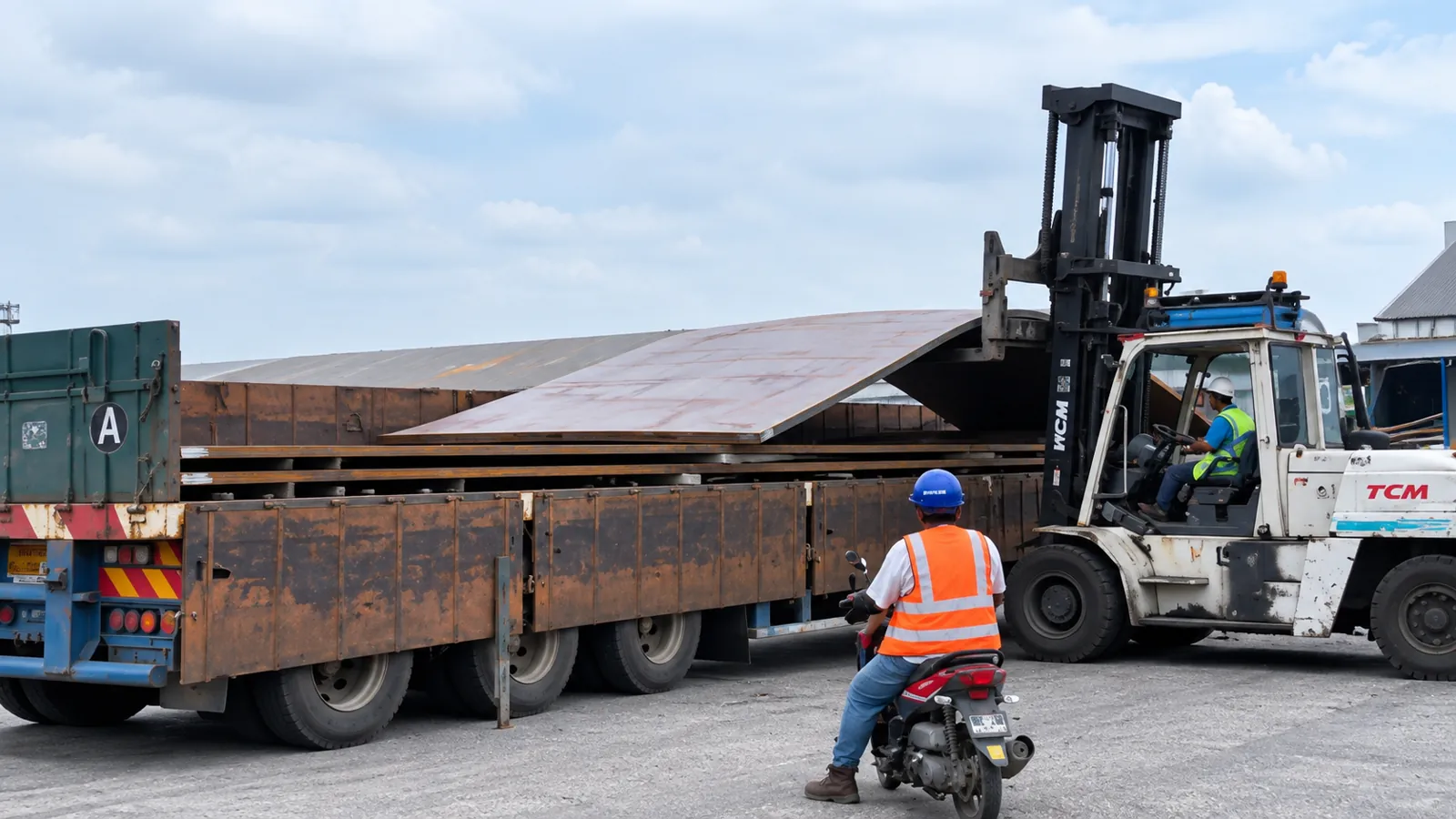
ABS-certified shipbuilding steel plate: ABS Grade A and AH36, DH36 and EH36. Precision bandsaw-cut with no MOQ, shipped globally from Malaysia.
Shipbuilding plate is certified by classification societies such as the American Bureau of Shipping and is specified for hulls, decks and offshore structures. E STEEL SDN BHD supplies ordinary-strength ABS Grade A and higher-strength AH36, DH36 and EH36, cut to size with no MOQ.
ABS Grade A vs. Grade B Shipbuilding Plates: Key Differences for Marine Construction
Navigate your shipbuilding projects with precision—choose the right ABS grade for smooth sailing!
ABS Grade A vs Grade B: Learn the differences in strength, composition, and marine applications. E STEEL SDN BHD supplies certified ABS steel plates for hulls, decks, and offshore platforms. Request a quote today!
In the shipbuilding industry, selecting the right steel grade is critical to ensure structural integrity, safety, and compliance with marine standards. Two of the most commonly used grades for marine construction are ABS Grade A and ABS Grade B steel plates. While both are certified by the American Bureau of Shipping (ABS), their differences in strength, composition, and application suitability are vital for engineers and procurement teams.
As a trusted supplier of ABS-certified marine steel plates, E STEEL SDN BHD breaks down the distinctions between Grade A and Grade B to help you choose the right material for your vessel or offshore project.
| Element | ABS Grade A | ABS Grade B |
|---|---|---|
| Carbon (C) | ≤0.23% | ≤0.21% |
| Manganese (Mn) | ≥2.5×Carbon | ≥2.5×Carbon |
| Silicon (Si) | 0.10–0.35% | 0.10–0.35% |
| Phosphorus (P) | ≤0.035% | ≤0.035% |
| Sulfur (S) | ≤0.035% | ≤0.035% |
Key Insight:
| Property | ABS Grade A | ABS Grade B |
|---|---|---|
| Yield Strength | ≥235 MPa (34 ksi) | ≥265 MPa (38 ksi) |
| Tensile Strength | 400–520 MPa (58–75 ksi) | 400–530 MPa (58–77 ksi) |
| Elongation | ≥22% (50mm gauge) | ≥22% (50mm gauge) |
| Impact Toughness | Tested at 0°C | Tested at 0°C |
Why It Matters:
Conclusion ABS Grade A and Grade B steel plates are both indispensable in marine construction, but their suitability depends on the project’s structural demands. Grade B excels in high-stress applications, while Grade A offers a cost-effective solution for less critical components.
At E STEEL SDN BHD, we stock grades A in ready-to-ship quantities, ensuring your vessels meet ABS standards without compromise.
AH36, DH36, EH36 Ship Plate
ABS A and ABS B are types of structural steel that are used for shipbuilding. These steel grades are defined as ordinary strength and these grades are certified by the American Bureau of Shipping (ABS) so that they can be used in shipbuilding.
Mission : To ensure right quality, matching specifications, assurance of delivery time and convenience for our customer purchase.
AH36, DH36, EH36 steel plate for Shipbuilding
Shipbuilding steel plate refers to the carbon and alloy steel plate used in offshore and marine constructions, common grades are A, B, D, E, AH32/36/40, DH32/36/40, and EH32/36/40 which ranged from different strength. The plates usually used to manufacture ship hulls, bulkheads, upper decks and hatch covers for tankers, bulk carriers, container ships and LNG carriers.
AH36, DH36, EH36 Steel – Common Use High Strength Steel in Offshore & Marine
For the high strength shipbuilding plates like AH36, DH36, EH36 steel plate, they have been widely used in high stress areas of ships, comparing with general strength steel, they are offering the same strength with the smaller thickness.
Shipbuilding steel material in carbon and alloy steel, compatible with high strength, low temperature and high heat input soldering.
Grades: A, B, D, E, AH32/36/40, DH32/36/40, EH32/36/40
According to its yield strength, shipbuilding plate of can be divided into below grades:
| Elements | C | Mn | Al | Si | P | S |
|---|---|---|---|---|---|---|
| AH32 | ≤0.18 | 0.7~1.60 | ≥0.015 | 0.10~0.50 | ≤0.04 | ≤0.04 |
| DH32 | ≤0.18 | 0.90~1.60 | ≥0.015 | 0.10~0.50 | ≤0.04 | ≤0.04 |
| EH32 | ≤0.18 | 0.90~1.60 | ≥0.015 | 0.10~0.50 | ≤0.04 | ≤0.04 |
| AH36 | ≤0.18 | 0.7~1.60 | ≥0.015 | 0.10~0.50 | ≤0.04 | ≤0.04 |
| DH36 | ≤0.18 | 0.90~1.60 | ≥0.015 | 0.10~0.50 | ≤0.04 | ≤0.04 |
| EH36 | ≤0.18 | 0.90~1.60 | ≥0.015 | 0.10~0.50 | ≤0.04 | ≤0.04 |
C (carbon) is an indispensable strengthening element in steel, but the increase in C content reduces the low-temperature impact toughness
of steel and deteriorates the weldability of steel. Therefore, it is necessary to control the C content in the steel.
According to the experience of producing aluminium-containing steel, in order to ensure the aluminium content in the steel and the fluidity of the molten steel, the method of pre-deoxidation is strictly to control the carbon content of the end point and the alloying of the large-pack alloy to control the oxidation of the molten steel. The way of adding aluminium.
The general strength of grade A and B shipbuilding steel plates can meet the requirements of process and mechanical properties through ordinary rolling, so the production process is relatively simple.
Grade D and E series ( including AH32/36, DH32, DH36, EH32, EH36) shipbuilding steel plates require good low temperature toughness and good welding performance. The production high-strength shipbuilding steel plate needs to be normalized by means of controlled rolling and controlled cooling or heat treatment processes with more complete equipment. At the same time, the internal steel purity of the supplied billets is required to be high, especially the content of S, P, N, 0 and H in the steel should be strictly controlled.
In order to ensure the performance of high-strength ship plates, micro-alloying technology is adopted. By adding Nb, V, Ti and other alloying elements to the steel, combined with the controlled rolling process, the grain is refined and the toughness is improved.
In order to ensure good low temperature impact toughness of the steel grade, the rolling of the 355MPa class ship plate adopts a strict type II controlled rolling process.
| Steel Grade | Thickness/mm | Yield point/ MPa | Tensile strength/ MPa | Elongation/ % | V-type impact test | ||
|---|---|---|---|---|---|---|---|
| Temperature/ ℃ | Average impact absorption workAkv/J | ||||||
| Vertical | Horizontal | ||||||
| A | ≤50 | ≥235 | 400~490 | ≥22 | – | – | – |
| B | ≤50 | ≥235 | 400~490 | ≥22 | 0 | ≥27 | ≥20 |
| D | ≤50 | ≥235 | 400~490 | ≥22 | -10 | ≥27 | ≥20 |
| E | ≤50 | ≥235 | 400~490 | ≥22 | -40 | ≥27 | ≥20 |
| AH32 | ≤50 | ≥315 | 440~590 | ≥22 | 0 | ≥31 | ≥22 |
| DH32 | ≤50 | ≥315 | 440~590 | ≥22 | -20 | ≥31 | ≥22 |
| EH32 | ≤50 | ≥315 | 440~590 | ≥22 | -40 | ≥31 | ≥22 |
| AH36 | ≤50 | ≥355 | 490~620 | ≥22 | 0 | ≥34 | ≥24 |
| DH36 | ≤50 | ≥355 | 490~620 | ≥22 | -20 | ≥34 | ≥24 |
| EH36 | ≤50 | ≥355 | 490~620 | ≥22 | -40 | ≥34 | ≥24 |
E STEEL SDN BHD supply & distribute ABS Grade Marine steel, These steel grades are defined as ordinary strength and these grades are certified by the American Bureau of Shipping (ABS) so that they can be used in shipbuilding.
Mission : To ensure right quality, matching specifications, assurance of delivery time and convenience for our customer purchase.
Vision : To become Asia’s top industrial 4.0 metal central hub with the only supply chain management expertise that customers need
Bandsaw technology ensures minimal kerf loss and clean, burr-free edges.
Cut to the size your job needs. No minimum order quantity.
Mill test reports (MTRs) for traceability.
Fast air and sea shipping with real-time tracking.
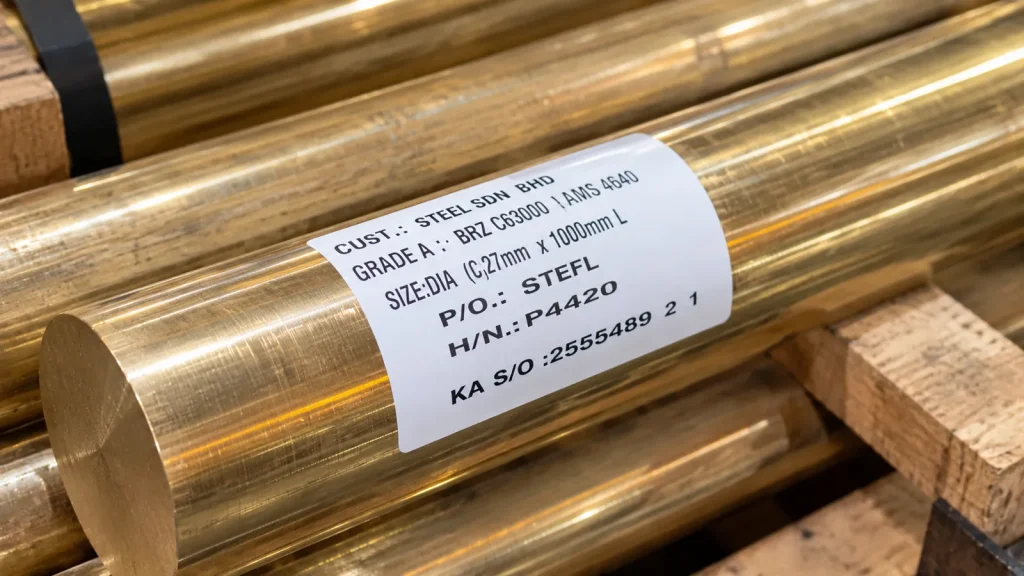
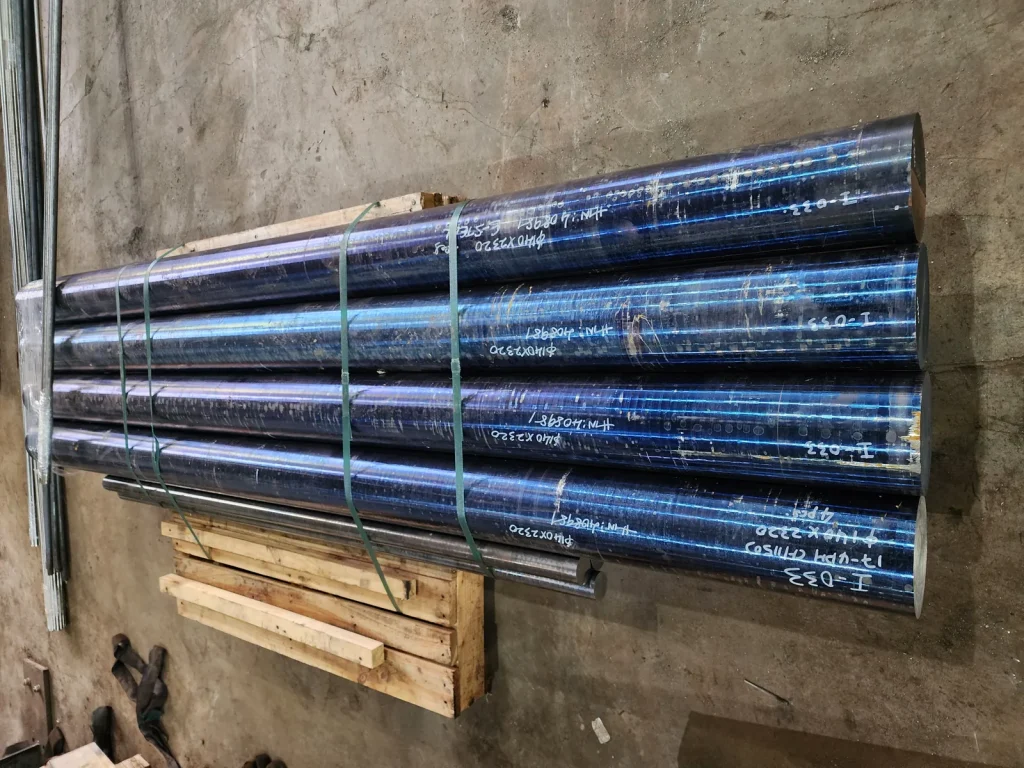
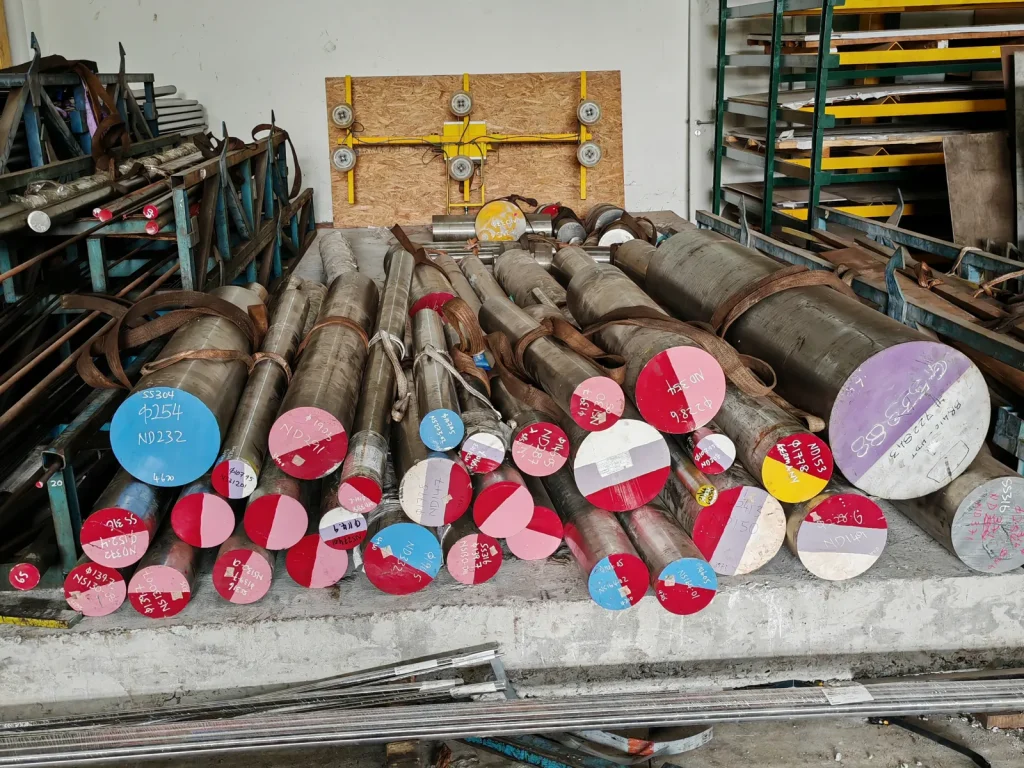
No MOQ, shipped globally from Malaysia. Send us the size and we will cut it.