
Description
Stainless Steel 316 Supplier Malaysia
SS316 | SUS316 | UNS S31600 | EN 1.4401 | Austenitic Stainless Steel
E Steel Sdn Bhd supplies SS316 stainless steel plate, sheet, round bar, flat bar and other stainless steel products in Malaysia for engineering, fabrication, food-processing, chemical, pharmaceutical, coastal and industrial applications.
SS316 contains molybdenum, giving it better resistance to chloride-induced pitting and crevice corrosion than SS304.
Cut-to-size services are available for selected products and dimensions.
What Is Stainless Steel 316?
Stainless steel 316 is an austenitic chromium-nickel-molybdenum stainless steel commonly identified as SS316, SUS316, UNS S31600 and EN 1.4401.
It typically contains 16–18% chromium, 10–14% nickel and 2–3% molybdenum.
The addition of molybdenum gives SS316 better resistance to pitting and crevice corrosion than SS304, particularly in environments containing chlorides.
For this reason, SS316 is widely selected for:
- Coastal environments
- Food-processing equipment
- Chemical-processing equipment
- Pharmaceutical equipment
- Tanks and vessels
- Industrial piping
- Architectural applications
- General engineering exposed to corrosive environments
SS316 Quick Specification
| Property | SS316 |
|---|---|
| Stainless steel family | Austenitic |
| Common designation | SS316 / SUS316 |
| UNS number | S31600 |
| EN material number | 1.4401 |
| Common EN designation | X5CrNiMo17-12-2 |
| Main alloying elements | Chromium, Nickel, Molybdenum |
| Chromium | 16.00–18.00% |
| Nickel | 10.00–14.00% |
| Molybdenum | 2.00–3.00% |
| Maximum carbon | 0.08% |
| Typical density | Approximately 8.0 g/cm³ |
| Magnetic when annealed | Normally non-magnetic / weakly magnetic |
| Weldability | Excellent |
| Formability | Very good |
| General corrosion resistance | Very good |
| Chloride resistance | Better than SS304 |
| Coastal applications | Commonly selected subject to service conditions |
Important: Actual chemical composition, mechanical properties and dimensional requirements depend on the applicable material specification, product form, thickness and condition.
For supplied material, always verify the actual batch against the material test certificate or mill certificate.
Why Does SS316 Contain Molybdenum?
Molybdenum is the principal alloying addition that distinguishes SS316 from SS304.
SS316 normally contains approximately 2–3% molybdenum.
Molybdenum improves resistance to localized corrosion, particularly:
- Pitting corrosion
- Crevice corrosion
- Chloride-containing environments
- Salt-contaminated surfaces
- Certain chemical environments
This is why SS316 is frequently selected instead of SS304 for coastal or more aggressive industrial applications.
What SS316 Products Are Available?
E Steel supplies SS316 stainless steel in different product forms depending on stock and project requirements.
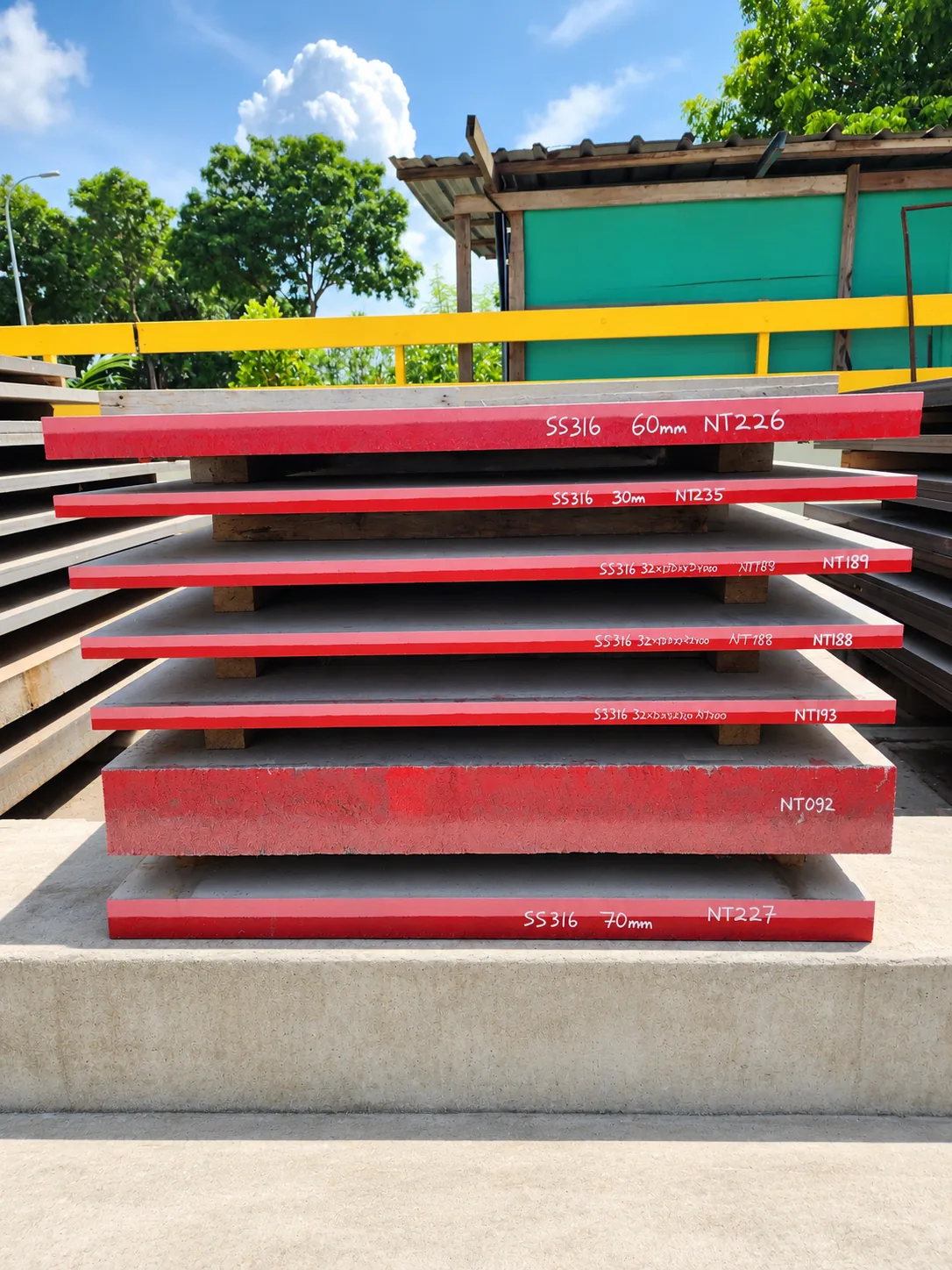
SS316 Stainless Steel Plate
SS316 stainless steel plate is commonly used for:
- Tanks
- Vessels
- Chemical-processing equipment
- Food-processing machinery
- Pharmaceutical equipment
- Machinery components
- Industrial fabrication
- Coastal equipment
- Structural fabrication
- Process equipment
Cut-to-size services may be available according to the required thickness, width and length.
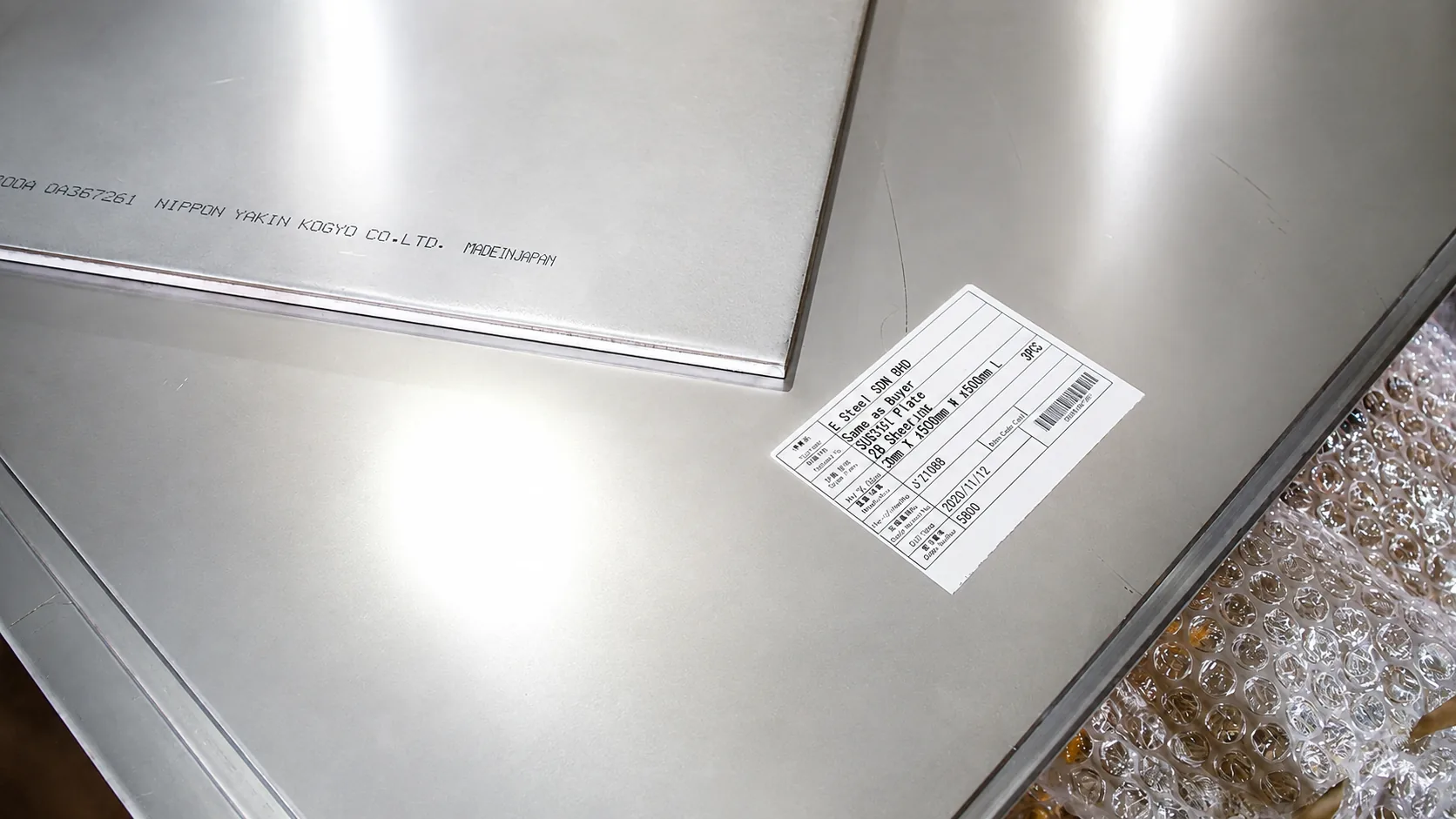
SS316 Stainless Steel Sheet
SS316 stainless steel sheet is used where corrosion resistance, cleanability and formability are important.
Common applications include:
- Food-processing equipment
- Kitchen equipment
- Pharmaceutical equipment
- Laboratory equipment
- Architectural panels
- Equipment covers
- Electrical enclosures
- Industrial fabrication
- Coastal installations
Different surface finishes may be available depending on material thickness and stock.
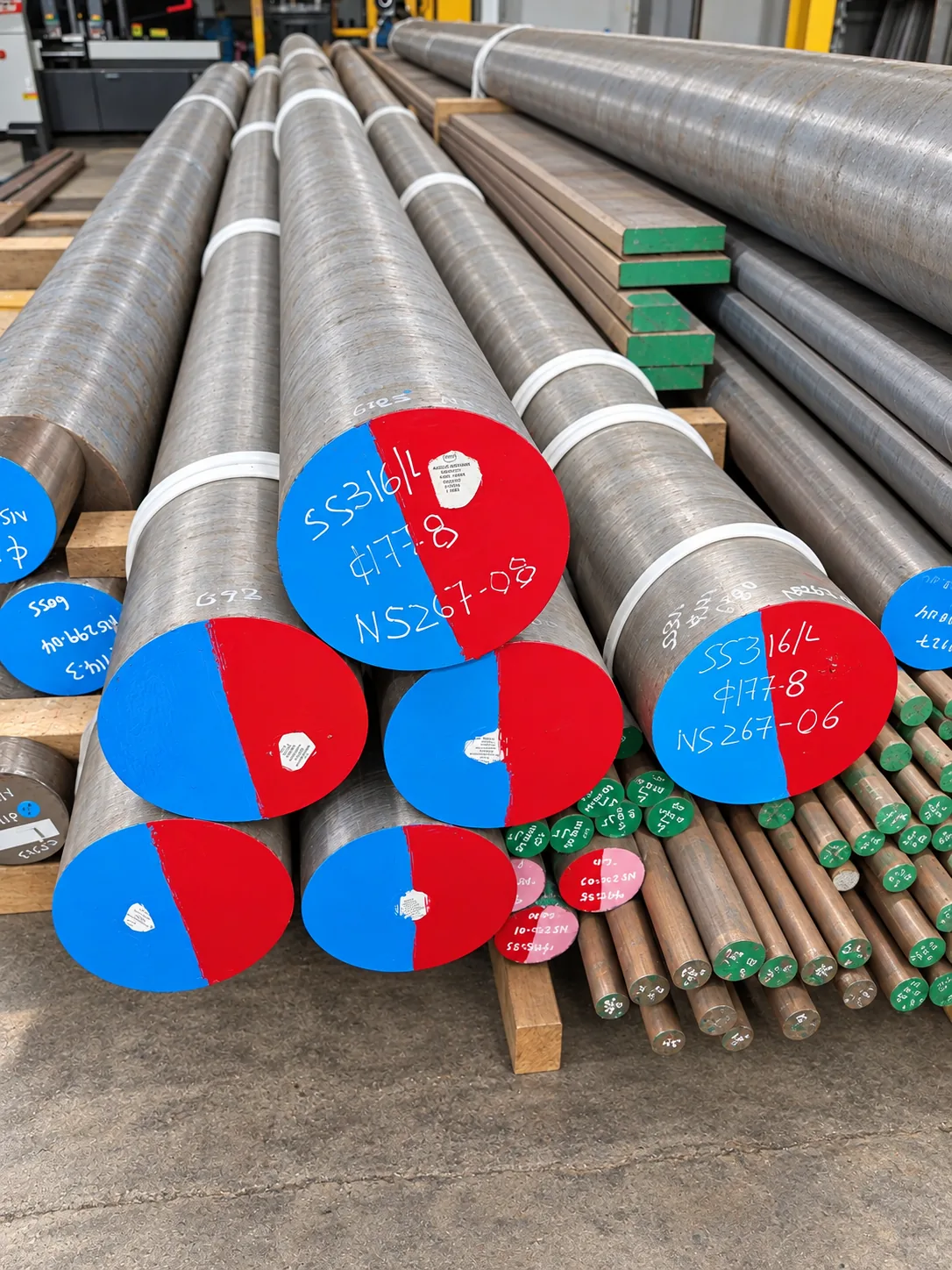
SS316 Stainless Steel Round Bar
SS316 round bar is widely used for machining corrosion-resistant engineering components.
Typical applications include:
- Shafts
- Pins
- Bushes
- Fasteners
- Valve components
- Pump components
- Marine-related components
- Food-processing machinery
- Chemical-processing equipment
- General engineering parts
Material condition, diameter and applicable bar specification should be confirmed when ordering.
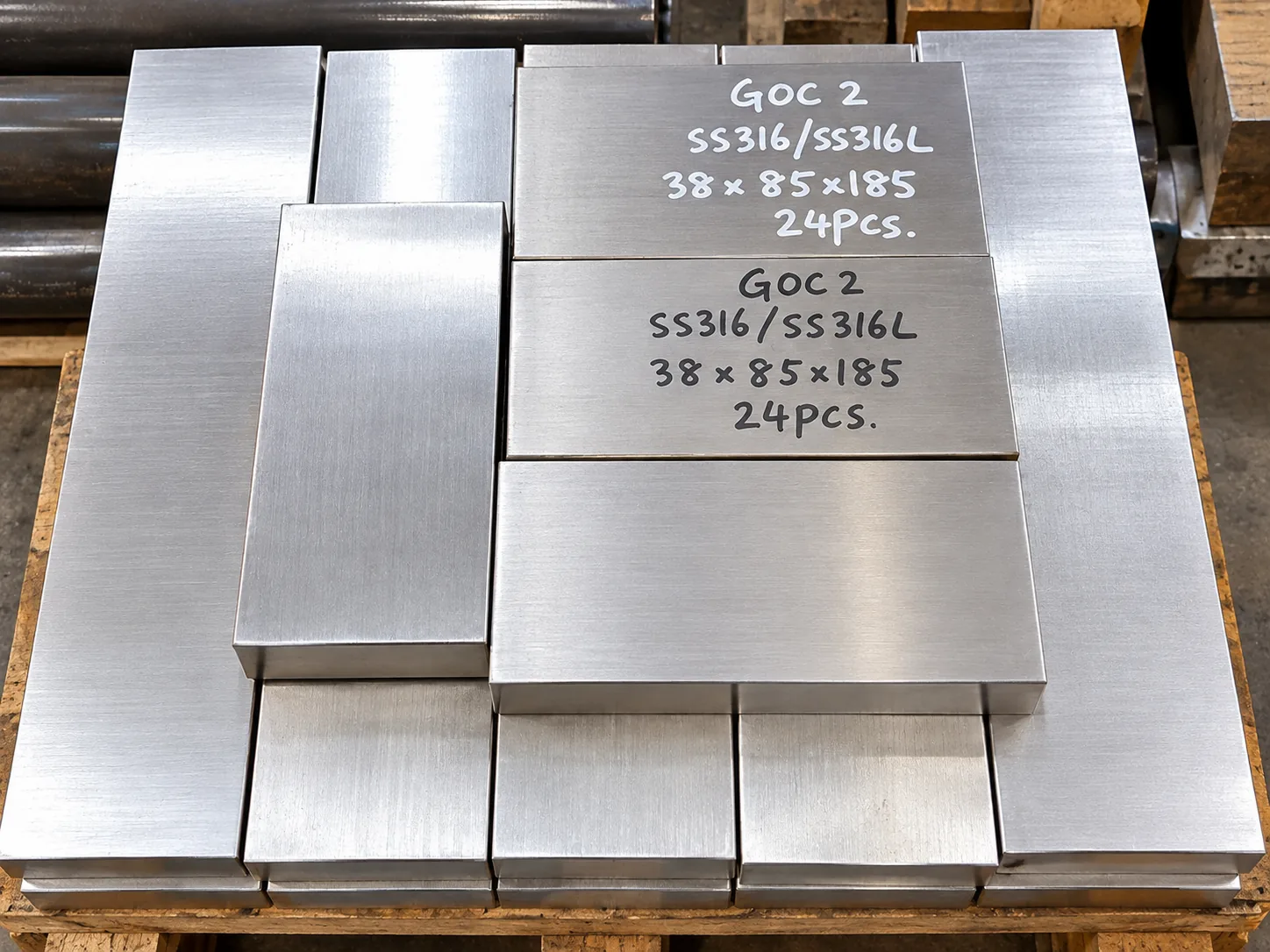
SS316 Stainless Steel Flat Bar
SS316 flat bar can be used for:
- Brackets
- Frames
- Supports
- Equipment fabrication
- Coastal structures
- Food equipment
- Pharmaceutical equipment
- Architectural components
- General industrial fabrication
What Is the Chemical Composition of SS316?
The commonly specified chemical composition for UNS S31600 includes:
| Element | SS316 Composition |
|---|---|
| Carbon (C) | 0.08% max |
| Manganese (Mn) | 2.00% max |
| Silicon (Si) | 0.75% max |
| Phosphorus (P) | 0.045% max |
| Sulfur (S) | 0.030% max |
| Chromium (Cr) | 16.00–18.00% |
| Nickel (Ni) | 10.00–14.00% |
| Molybdenum (Mo) | 2.00–3.00% |
| Nitrogen (N) | 0.10% max |
| Iron (Fe) | Balance |
Chemical limits should always be checked against the applicable material standard and supplied material certificate.
What Does Chromium Do in SS316?
Chromium is responsible for stainless steel’s ability to form a thin protective oxide film on its surface.
This passive film helps protect the underlying metal against corrosion.
If properly maintained and exposed to sufficient oxygen, the passive layer can reform after minor surface damage.
What Does Nickel Do in SS316?
Nickel helps stabilize the austenitic microstructure of SS316.
It contributes to:
- Ductility
- Toughness
- Formability
- Weldability
- Corrosion resistance
What Does Molybdenum Do in SS316?
Molybdenum increases SS316’s resistance to localized corrosion.
Its most important benefit is improved resistance to:
- Chloride pitting
- Crevice corrosion
- Salt-containing environments
This gives SS316 an important advantage over SS304 in many coastal and chloride-containing applications.
What Are the Mechanical Properties of SS316?
For common annealed SS316 products, typical minimum specification values may include:
| Mechanical Property | SS316 |
|---|---|
| Tensile strength | Approximately 515 MPa minimum |
| 0.2% yield strength | Approximately 205 MPa minimum |
| Elongation | Approximately 40% minimum |
These figures should not be assumed to apply to every SS316 product.
Mechanical properties may change according to:
- Product form
- Thickness
- Diameter
- Material condition
- Cold working
- Applicable standard
- Testing direction
- Purchase specification
The actual material test certificate should be used to confirm the mechanical properties of supplied material.
What Are the Physical Properties of SS316?
Typical engineering reference values for annealed SS316 include:
| Property | Typical Value |
|---|---|
| Density | Approximately 8.0 g/cm³ |
| Elastic modulus | Approximately 193 GPa |
| Thermal conductivity | Approximately 16 W/m·K at room temperature |
| Specific heat capacity | Approximately 500 J/kg·K |
| Electrical resistivity | Approximately 0.74 μΩ·m |
These are typical reference values and should not be treated as guaranteed batch-specific properties.
Is SS316 Magnetic?
SS316 is normally non-magnetic or only weakly magnetic in its fully annealed condition.
However, some magnetism can develop after:
- Cold working
- Rolling
- Bending
- Drawing
- Machining
- Forming
This occurs because cold working can transform a small portion of the austenitic structure.
Therefore:
A magnet test alone should not be used to identify whether stainless steel is SS316.
For material verification, use the appropriate certificate, PMI testing or chemical analysis.
Can SS316 Be Welded?
Yes. SS316 has excellent weldability and can be welded using common stainless steel welding processes.
Typical processes include:
- TIG / GTAW
- MIG / GMAW
- Resistance welding
- Other approved stainless welding processes
For extensive welded fabrication, SS316L is commonly preferred because its lower carbon content reduces the risk of sensitisation and intergranular corrosion associated with welding.
The correct welding procedure and filler metal should be selected according to the applicable welding code and service conditions.
Can SS316 Be Hardened by Heat Treatment?
SS316 cannot normally be hardened by conventional heat treatment.
Like other common austenitic stainless steels, SS316 gains strength and hardness mainly through cold working.
This is different from martensitic stainless grades such as:
- SS410
- SS420
- SS420J2
- SS440C
which can be hardened through suitable heat treatment.
What Is SS316 Used For?
SS316 is widely selected when greater corrosion resistance is required than conventional SS304 can provide.
Chemical-processing equipment
SS316 is commonly used for:
- Tanks
- Vessels
- Piping
- Valves
- Pump components
- Process equipment
Chemical compatibility should always be checked against the actual chemical, concentration, temperature and operating conditions.
Food-Processing Equipment
SS316 is widely used for food-processing applications where improved corrosion resistance is needed.
Typical applications include:
- Tanks
- Mixers
- Process vessels
- Food-contact equipment
- Piping
- Pumps
- Fittings
SS316 may be especially useful where salt or chloride-containing products are handled.
Pharmaceutical Equipment
SS316 and SS316L are widely used in pharmaceutical and hygienic-processing equipment.
Applications can include:
- Tanks
- Process vessels
- Piping
- Fittings
- Mixers
- Equipment frames
The exact grade, surface finish and fabrication procedure depend on the applicable hygiene and process requirements.
Coastal and Outdoor Applications
SS316 is often chosen for:
- Coastal buildings
- Exterior fittings
- Handrails
- Fasteners
- Architectural components
- Equipment installed near the sea
Its molybdenum content provides improved resistance to chloride-induced localized corrosion compared with SS304.
However, SS316 is corrosion-resistant, not corrosion-proof.
Surface finish, cleaning, exposure, design and maintenance remain important.
Marine-Related Applications
SS316 is commonly described as a marine-grade stainless steel because it offers better chloride resistance than SS304.
However, this description needs to be used carefully.
SS316 is not immune to corrosion in seawater.
Continuous immersion, stagnant seawater, crevices, elevated temperatures and high chloride concentrations can still cause corrosion.
More highly alloyed stainless steel, duplex stainless steel or other corrosion-resistant alloys may be required for demanding seawater applications.
Does SS316 Rust?
Yes, SS316 can corrode under sufficiently aggressive conditions.
It offers very good corrosion resistance but should not be described as completely rust-proof.
Potential corrosion conditions include:
- High chloride concentrations
- Continuous seawater exposure
- Stagnant water
- Crevices
- Salt deposits
- Certain strong chemicals
- High temperatures
- Poor surface condition
- Carbon-steel contamination
Correct material selection, fabrication, surface treatment, cleaning and maintenance are important.
Can SS316 Be Used Outdoors in Malaysia?
Yes. SS316 is well suited to many outdoor applications in Malaysia and generally offers better resistance to chloride contamination than SS304.
Malaysia has:
- High humidity
- Frequent rainfall
- High ambient temperatures
- Long periods of surface moisture
- Extensive coastal areas
- Industrial environments
- Marine salt exposure in some locations
For applications near the coast or exposed to salt-contaminated air, SS316 is often a more suitable starting choice than SS304.
However, performance still depends on the severity of exposure.
Is SS316 Suitable for Coastal Areas in Malaysia?
SS316 is generally preferred over SS304 for many Malaysian coastal applications because its molybdenum content provides better resistance to chloride-induced pitting and crevice corrosion.
This can be particularly relevant for applications near:
- Ports
- Coastal factories
- Seaside buildings
- Marine facilities
- Jetties
- Coastal process plants
- Salt-contaminated environments
Material selection should consider:
- Distance from the coastline
- Direct salt-spray exposure
- Wind direction
- Chloride deposition
- Surface finish
- Cleaning frequency
- Rain washing
- Crevices
- Drainage
- Operating temperature
- Expected design life
More severe marine environments may require materials with greater corrosion resistance than SS316.
Can SS316 Be Used in Seawater?
SS316 can perform better than SS304 in chloride-containing environments, but it is not universally suitable for continuous seawater service.
Seawater can cause:
- Pitting corrosion
- Crevice corrosion
- Under-deposit corrosion
especially where seawater is stagnant or trapped.
For continuous or critical seawater exposure, engineers may consider more highly alloyed materials such as:
- Duplex stainless steel
- Super duplex stainless steel
- 6Mo stainless steel
- Nickel alloys
The appropriate material depends on the actual operating environment.
SS316 vs SS304 — What Is the Difference?
The main alloying difference between SS316 and SS304 is the addition of molybdenum to SS316.
| Property | SS304 | SS316 |
|---|---|---|
| Stainless family | Austenitic | Austenitic |
| Chromium | Approx. 18–20% | Approx. 16–18% |
| Nickel | Approx. 8–10.5% | Approx. 10–14% |
| Molybdenum | No intentional principal addition | Approx. 2–3% |
| General corrosion resistance | Good | Very good |
| Chloride resistance | Moderate | Better |
| Coastal exposure | Application dependent | Generally preferred |
| Weldability | Excellent | Excellent |
| Relative cost | Generally lower | Generally higher |
Which Is Better: SS304 or SS316?
Neither grade is automatically better for every application.
Choose SS304 when:
- General corrosion resistance is sufficient
- Chloride exposure is low
- Indoor use dominates
- Cost is an important consideration
- The environment is relatively mild
Consider SS316 when:
- Chloride exposure is significant
- Salt contamination is possible
- Equipment is installed near the coast
- Better resistance to pitting is required
- Chemical-processing conditions are more aggressive
The final grade should be selected according to the actual service environment.
SS316 vs SS316L — What Is the Difference?
The main difference between SS316 and SS316L is carbon content.
| Property | SS316 | SS316L |
|---|---|---|
| UNS | S31600 | S31603 |
| Common EN number | 1.4401 | 1.4404 |
| Stainless family | Austenitic | Austenitic |
| Maximum carbon | 0.08% | 0.03% |
| Molybdenum | Approximately 2–3% | Approximately 2–3% |
| General corrosion resistance | Very good | Very good |
| Weldability | Excellent | Excellent |
| Welded fabrication | Suitable | Frequently preferred |
| Sensitisation risk | Higher than 316L | Reduced |
Why Is SS316L Commonly Used for Welding?
SS316L has a maximum carbon content of approximately 0.03%, compared with approximately 0.08% maximum for conventional SS316.
Lower carbon reduces the risk of chromium carbide precipitation in the heat-affected zone during welding.
This can help reduce susceptibility to intergranular corrosion following welding.
For this reason, SS316L is widely specified for welded equipment, piping, tanks and process fabrication.
SS316 vs SS316L — Which Should I Choose?
Choose according to the engineering and fabrication requirements.
SS316 may be suitable where:
- Extensive welding is not involved
- The applicable standard permits SS316
- Standard SS316 properties meet the design requirement
SS316L is often preferred where:
- Significant welding is required
- Post-weld heat treatment is impractical
- Resistance to sensitisation is important
- Process or customer specifications require low carbon
Always check the project’s material specification before substituting SS316 for SS316L or vice versa.
SS316 vs SS304 for Malaysia — Which Should I Use?
For Malaysia, environmental exposure can be an important deciding factor.
Inland, controlled or indoor environment
SS304 may often provide sufficient performance.
Outdoor humid environment
Both may be suitable depending on exposure, but SS316 offers increased resistance to chloride-related corrosion.
Coastal environment
SS316 is generally preferred over SS304.
Direct marine or seawater exposure
SS316 should not automatically be assumed adequate. More corrosion-resistant alloys may be necessary depending on the application.
Food-processing equipment
Both grades are widely used, but SS316 may be preferred when salts, chlorides or more aggressive cleaning environments are involved.
SS316 vs Duplex Stainless Steel
Duplex stainless steels such as S31803/S32205 combine austenitic and ferritic microstructures.
Compared with SS316, duplex grades can provide:
- Higher strength
- Better chloride stress-corrosion cracking resistance
- Higher pitting resistance in many environments
- Improved performance for certain marine and chemical applications
However, fabrication procedures, welding control, material availability and cost also need to be considered.
SS316 remains an excellent general-purpose choice where the additional strength and corrosion resistance of duplex stainless steel are unnecessary.
What Standards Apply to SS316?
The applicable standard depends on the product form and intended application.
| Product Form | Common Specification |
|---|---|
| Stainless steel plate | ASTM A240/A240M where applicable |
| Stainless steel sheet | ASTM A240/A240M where applicable |
| Stainless steel strip | ASTM A240/A240M where applicable |
| Stainless steel round bar | ASTM A276/A276M where applicable |
| Stainless bar for pressure applications | ASTM A479/A479M where applicable |
| UNS designation | S31600 |
| European material number | EN 1.4401 |
Other standards may apply depending on the industry and intended use.
The required standard should be stated when requesting a quotation.
ASTM A240 SS316 Plate, Sheet and Strip
ASTM A240/A240M covers stainless steel plate, sheet and strip for pressure vessels and general applications.
When SS316 plate or sheet is purchased to ASTM A240/A240M, the material must satisfy the applicable chemical, mechanical and other requirements of that specification.
Do not assume ASTM A240 applies automatically to round bar.
ASTM A276 SS316 Round Bar
ASTM A276/A276M is commonly used for stainless steel bars and shapes.
It can cover product forms including:
- Round bar
- Square bar
- Hexagonal bar
- Certain shapes
The exact material condition and requirements should be included in the purchase specification.
How Can I Confirm Material Is SS316?
Material should not be identified only by appearance.
Possible verification methods include:
Material Test Certificate
Check:
- Grade
- Heat number
- Chemical composition
- Mechanical properties
- Material specification
- Product dimensions
Positive Material Identification
PMI equipment such as XRF can be particularly useful for distinguishing SS316 from SS304 because XRF can detect the molybdenum content present in SS316.
SS316 normally contains approximately 2–3% molybdenum, whereas conventional SS304 does not contain molybdenum as a principal alloying element.
Instrument calibration, test method and equipment limitations should still be considered.
Laboratory Chemical Analysis
Where detailed or definitive identification is required, suitable laboratory chemical analysis can be performed.
The required analysis method depends on the elements being measured and the applicable quality requirements.
Is SS316 Food Grade?
SS316 is widely used in food-processing equipment because of its corrosion resistance, cleanability and fabrication characteristics.
It can be particularly advantageous where equipment is exposed to:
- Salts
- Chlorides
- Aggressive food products
- Frequent cleaning
- More demanding processing environments
However, calling a material “food grade” does not automatically establish suitability.
Suitability also depends on:
- Surface finish
- Fabrication quality
- Cleaning system
- Food composition
- Temperature
- Regulatory requirements
Is SS316 Suitable for Pharmaceutical Equipment?
SS316 and particularly SS316L are widely used in pharmaceutical and hygienic process systems.
Reasons include:
- Good corrosion resistance
- Good cleanability
- Good weldability
- Availability in hygienic finishes
- Compatibility with many process environments
For pharmaceutical applications, material grade alone is not sufficient.
Surface roughness, weld quality, passivation, documentation and applicable process standards may also need to be specified.
Is SS316 Suitable for Salt Water?
SS316 has better resistance to salt contamination than SS304, but salt water and seawater can still attack SS316.
Risk increases with:
- Higher chloride concentration
- Higher temperature
- Stagnant conditions
- Crevices
- Deposits
- Low oxygen conditions
Continuous seawater applications therefore require careful material selection.
Can SS316 Be Used for Swimming Pools?
SS316 is generally more resistant to chlorides than SS304, but swimming-pool environments can still be aggressive.
Risk may increase because of:
- Chlorine compounds
- Warm temperatures
- Evaporation
- Concentrated chlorides
- Poor ventilation
Particularly aggressive indoor pool environments may require more corrosion-resistant grades.
Material selection should be based on the actual exposure conditions.
What Surface Finishes Are Available for SS316?
Depending on product form and availability, SS316 may be supplied in finishes such as:
- No.1
- 2B
- BA
- Brushed
- Ground
- Polished
- Mill finish
Availability depends on:
- Product type
- Thickness
- Diameter
- Width
- Length
- Required specification
Surface finish can affect appearance, cleanability and corrosion performance.
Why Buy SS316 Stainless Steel From E Steel Sdn Bhd?
E Steel supplies stainless steel and engineering materials for Malaysian industrial customers.
For an SS316 enquiry, provide:
- Required grade
- Product form
- Thickness or diameter
- Width
- Length
- Quantity
- Required ASTM or EN specification
- Surface finish
- Cutting requirements
- Certification requirements
- Intended application where relevant
This information helps E Steel identify a suitable available material for the project.
Request SS316 Stainless Steel in Malaysia
Looking for SS316 stainless steel plate, sheet, round bar or flat bar in Malaysia?
Contact E Steel Sdn Bhd with your required dimensions and quantity.
Information to Include With Your Enquiry
Grade: SS316 / SUS316 / S31600
Product: Plate / Sheet / Round Bar / Flat Bar
Thickness or diameter:
Width:
Length:
Quantity:
Standard required:
Surface finish:
Cutting required: Yes / No
Certification required:
Request a quotation from E Steel Sdn Bhd.
Frequently Asked Questions About SS316
What is SS316 stainless steel?
SS316 is an austenitic chromium-nickel-molybdenum stainless steel. Its UNS designation is S31600, and its commonly corresponding European designation is EN 1.4401.
What makes SS316 different from SS304?
The most important difference is the addition of approximately 2–3% molybdenum to SS316. This improves resistance to chloride-induced pitting and crevice corrosion compared with SS304.
Does SS316 rust?
Yes. SS316 is highly corrosion-resistant but not corrosion-proof. It can still pit, stain or corrode under aggressive chloride, chemical or marine conditions.
Is SS316 magnetic?
SS316 is normally non-magnetic or only weakly magnetic when fully annealed. Cold working can cause some magnetism to develop.
Can SS316 be welded?
Yes. SS316 has excellent weldability. For significant welded fabrication, SS316L is frequently preferred because of its lower carbon content.
Can SS316 be hardened by heat treatment?
No. SS316 cannot normally be hardened significantly through conventional heat treatment. Strength and hardness can instead be increased through cold working.
What is the difference between SS316 and SS316L?
The main difference is carbon content. SS316 permits a higher maximum carbon level, while SS316L is limited to approximately 0.03% maximum carbon. The lower-carbon grade is commonly preferred for welded fabrication.
Is SS316 better than SS304?
SS316 provides better resistance to chloride-induced corrosion than SS304, but it is also generally more expensive. SS304 can be a more economical choice where chloride exposure is low.
Is SS316 suitable for Malaysia’s coastal environment?
SS316 is generally preferred over SS304 for many coastal applications because its molybdenum content improves chloride resistance. Severe marine exposure may require higher-alloy stainless steel.
Is SS316 marine grade?
SS316 is commonly referred to as marine-grade stainless steel because of its improved chloride resistance compared with SS304. However, this term does not mean SS316 is immune to seawater corrosion.
Can SS316 be used in seawater?
SS316 can be used in some marine environments, but continuous or stagnant seawater exposure can cause pitting and crevice corrosion. More highly alloyed stainless steels may be required for demanding service.
What is the density of SS316?
The typical density of SS316 is approximately 8.0 g/cm³.
What is the molybdenum content of SS316?
SS316 commonly contains approximately 2.0–3.0% molybdenum.
What is the UNS number for SS316?
The UNS designation for SS316 is S31600.
What is the EN number for SS316?
The commonly corresponding European material number for SS316 is 1.4401.
Does E Steel supply SS316 cut to size?
E Steel provides cutting services for selected stainless steel products and dimensions. Provide the required product, thickness or diameter, width, length and quantity when requesting a quotation.
Technical Disclaimer
The information on this page is provided as a general engineering reference.
It should not replace:
- Project-specific engineering calculations
- Applicable codes
- Customer specifications
- Current material standards
- Regulatory requirements
- Material test certificates
Chemical composition, mechanical properties, dimensions, tolerances and certification requirements can vary according to:
- Product form
- Thickness
- Diameter
- Material condition
- Applicable specification
For critical applications, always verify requirements against the current applicable standard and the actual material test certificate supplied with the material.
Reviews
There are no reviews yet.