
Description
Stainless Steel 304 Supplier Malaysia
SS304 | UNS S30400 | EN 1.4301 | Austenitic Stainless Steel
E Steel Sdn Bhd supplies SS304 stainless steel plate, sheet, round bar, flat bar and shim in Malaysia, with material available for general engineering, fabrication, food-processing, machinery, architectural and industrial applications.
Cut-to-size services are available for selected products and dimensions.
What is Stainless Steel 304?
Stainless steel 304 is an austenitic chromium-nickel stainless steel containing approximately 18–20% chromium and 8–10.5% nickel. It is commonly identified as SS304, SUS304, UNS S30400 and EN 1.4301.
SS304 combines good corrosion resistance, excellent formability, good weldability and ease of fabrication, making it one of the most widely used stainless steel grades for general industrial applications.
For applications involving significant chloride exposure, salt spray or marine environments, SS316 or SS316L is generally preferred because the addition of molybdenum provides better resistance to chloride-induced pitting and crevice corrosion.
SS304 Quick Specification
| Property | SS304 |
|---|---|
| Stainless steel family | Austenitic |
| Common designation | SS304 / SUS304 |
| UNS number | S30400 |
| EN number | 1.4301 |
| Common EN designation | X5CrNi18-10 |
| Main alloying elements | Chromium and Nickel |
| Chromium | 18.00–20.00% |
| Nickel | 8.00–10.50% |
| Maximum carbon | 0.08% |
| Typical density | Approximately 7.9 g/cm³ |
| Magnetic in annealed condition | Normally non-magnetic / weakly magnetic |
| Weldability | Excellent |
| Formability | Excellent |
| Corrosion resistance | Good for general environments |
| Marine / high-chloride service | SS316/316L generally preferred |
Important: Chemical and mechanical requirements depend on the applicable specification, product form, thickness and material condition. Always confirm final requirements against the applicable standard and the material test certificate supplied with the material.
What Products Are Available in SS304?
E Steel supplies SS304 in a range of forms for engineering, manufacturing and fabrication applications.
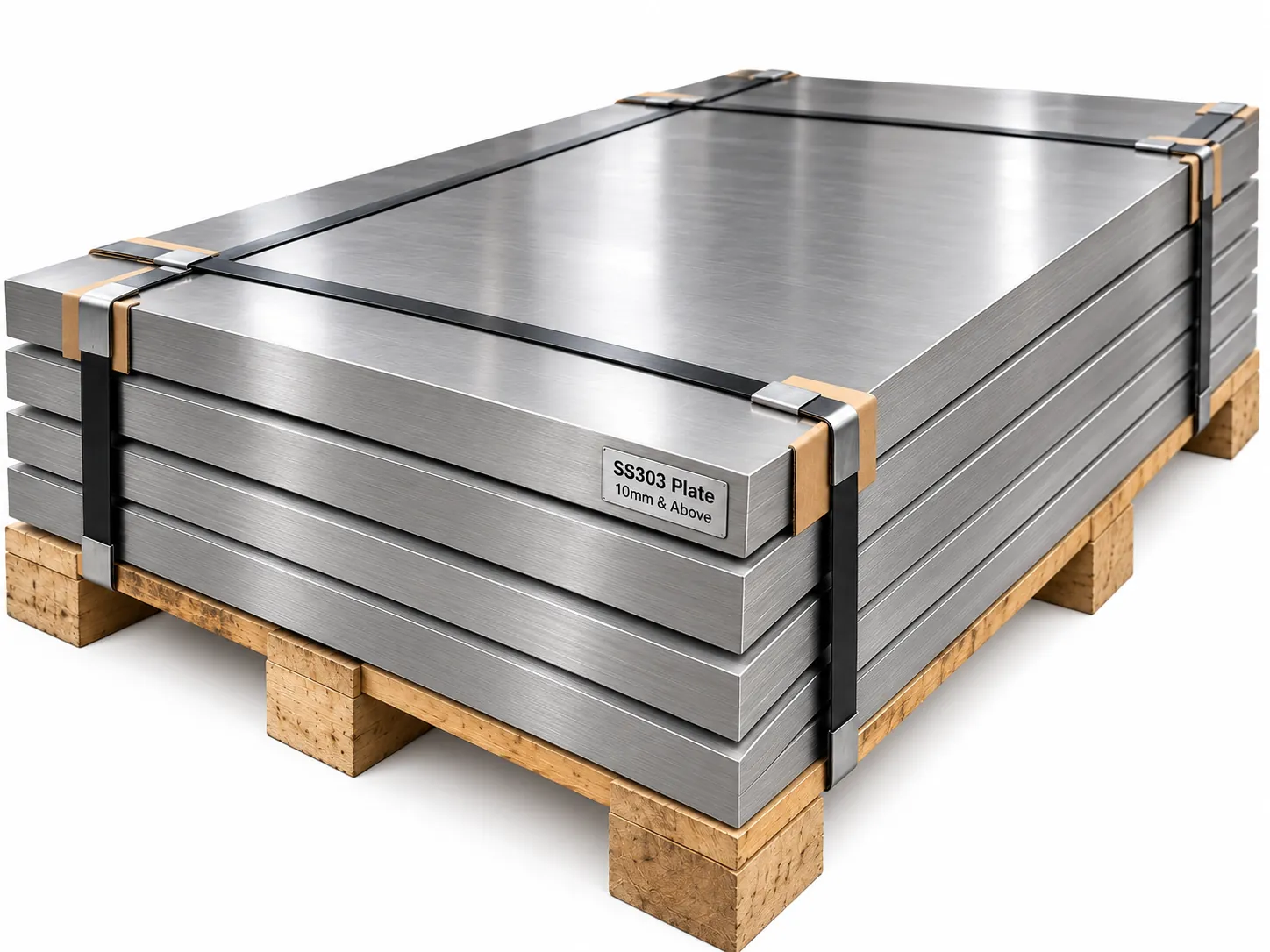
SS304 Stainless Steel Plate
SS304 stainless steel plate is widely used for fabricated equipment, tanks, machine components, food-processing equipment, structural fabrication and industrial applications.
E Steel can supply stainless steel plate in various thicknesses and dimensions, with cut-to-size service available according to project requirements.
Typical applications
- Tanks and vessels
- Machine components
- Food-processing equipment
- Industrial fabrication
- Platforms and covers
- Structural components
- General engineering
SS304 Stainless Steel Sheet
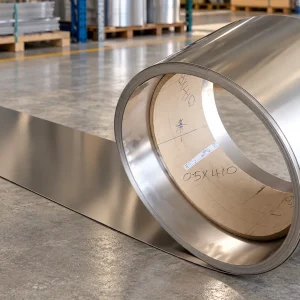
SS304 stainless steel sheet is commonly selected where good surface finish, corrosion resistance and forming characteristics are required.
Typical applications include:
- Kitchen equipment
- Food-processing equipment
- Equipment covers
- Electrical enclosures
- Architectural panels
- Fabricated components
- General sheet-metal work
Different surface finishes may be available depending on stock and sourcing requirements.
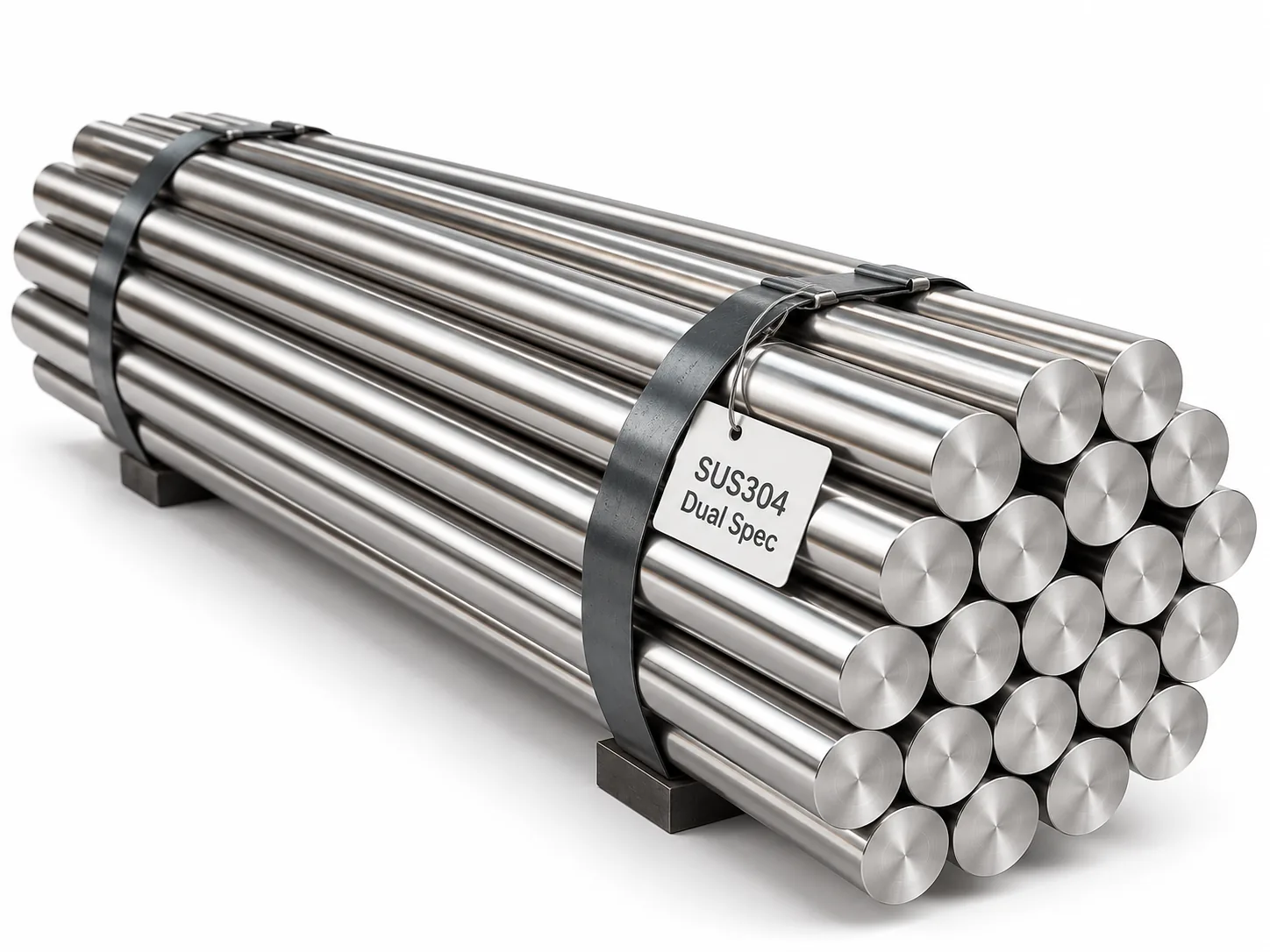
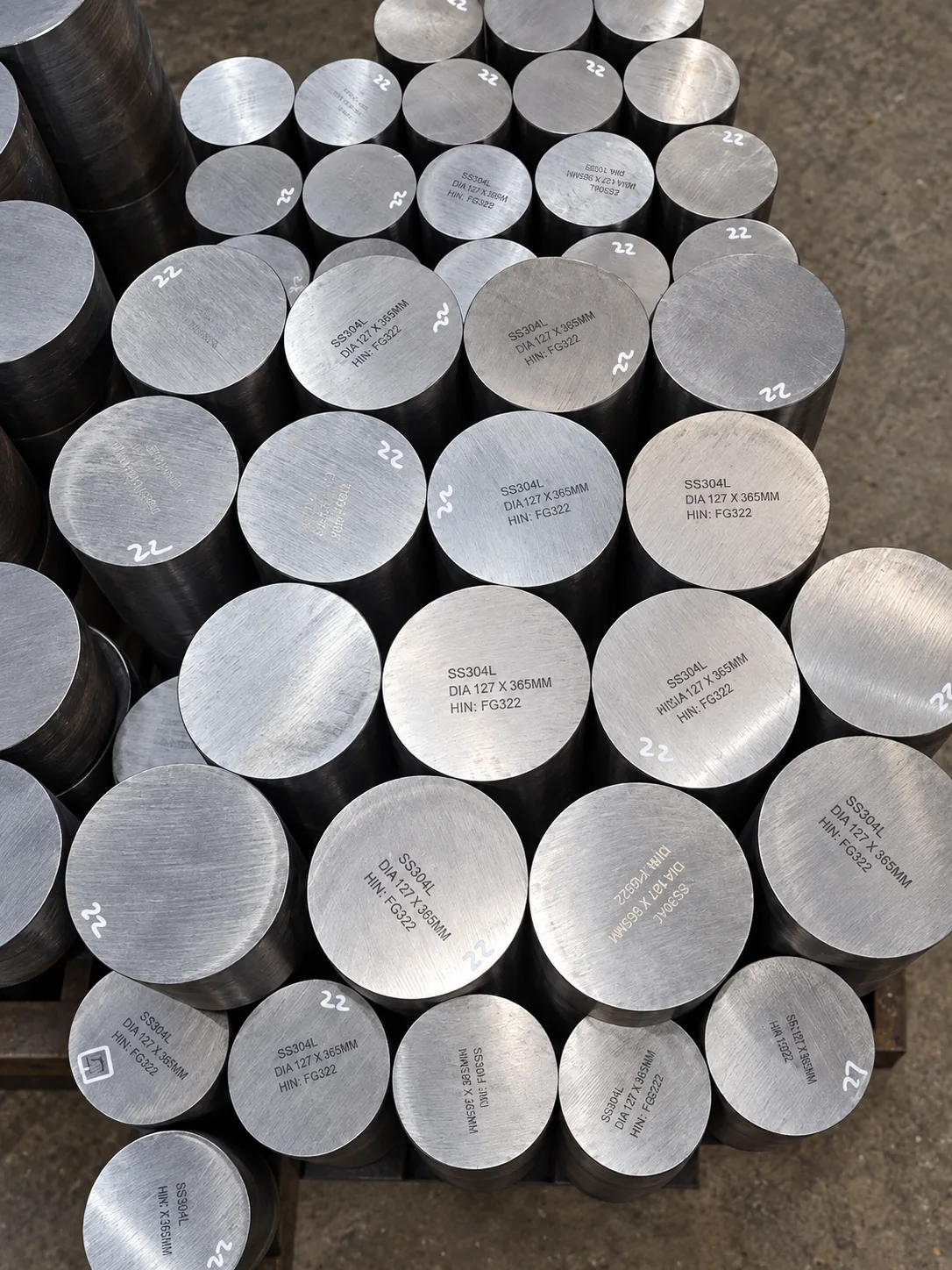
SS304 Stainless Steel Round Bar
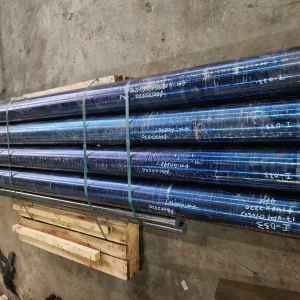
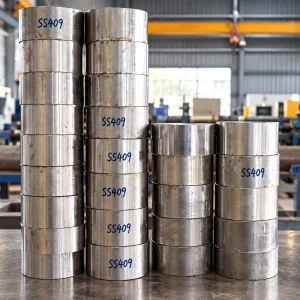
SS304 round bar is commonly used for machining and manufacturing mechanical components requiring good corrosion resistance.
Typical applications include:
- Shafts
- Pins
- Bushes
- Fasteners
- Machine components
- Food-processing machinery
- General engineering components
SS304 provides good corrosion resistance and fabrication characteristics, although machining performance differs from free-machining stainless grades such as SS303.
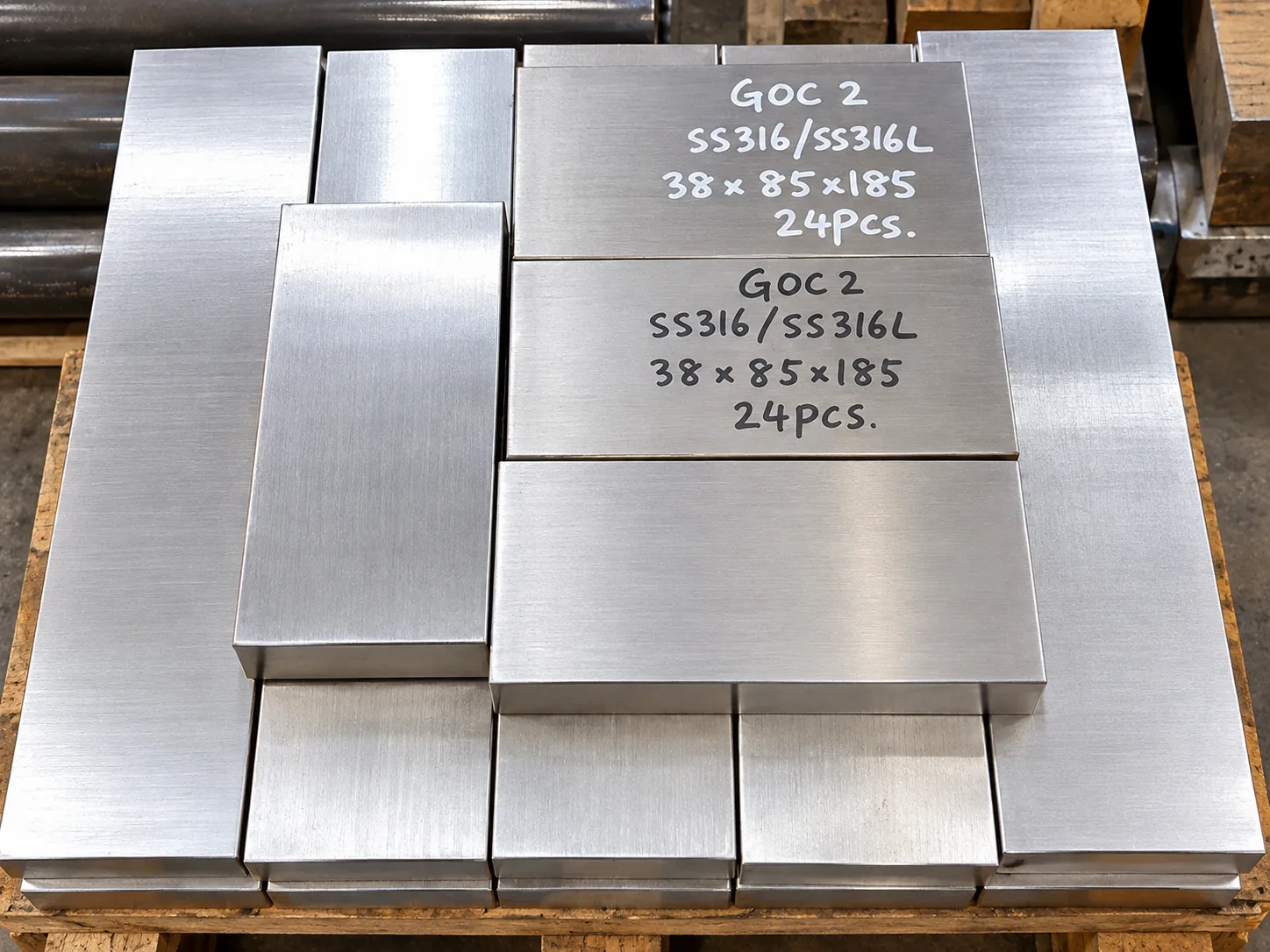
SS304 Stainless Steel Flat Bar
SS304 flat bar is suitable for:
- Frames
- Supports
- Brackets
- Fabricated structures
- Food equipment
- Architectural work
- General engineering
Custom cutting may be available depending on size and quantity.
SS304 Stainless Steel Shim
SS304 stainless steel shim is used where accurate spacing, alignment or adjustment is required.
Typical uses include:
- Machine alignment
- Equipment installation
- Bearing adjustment
- Tooling
- Maintenance
- Engineering assemblies
What Is the Chemical Composition of SS304?
The commonly specified chemical composition for UNS S30400 stainless steel is:
| Element | Composition |
|---|---|
| Carbon (C) | 0.08% max |
| Manganese (Mn) | 2.00% max |
| Silicon (Si) | 0.75% max |
| Phosphorus (P) | 0.045% max |
| Sulfur (S) | 0.030% max |
| Chromium (Cr) | 18.00–20.00% |
| Nickel (Ni) | 8.00–10.50% |
| Nitrogen (N) | 0.10% max |
| Iron (Fe) | Balance |
Why does SS304 contain chromium?
Chromium forms a thin, self-repairing passive oxide layer on the surface of stainless steel. This passive layer provides SS304 with its characteristic corrosion resistance.
Why is nickel added to SS304?
Nickel helps stabilize the austenitic microstructure and contributes to SS304’s ductility, toughness, formability and corrosion resistance.
What Are the Mechanical Properties of SS304?
For common annealed SS304 material, typical minimum specification values may include:
| Mechanical Property | SS304 |
|---|---|
| Tensile strength | Approximately 515 MPa minimum |
| 0.2% yield strength | Approximately 205 MPa minimum |
| Elongation | Approximately 40% minimum |
Mechanical requirements can change according to:
- Product form
- Material thickness
- Specification
- Heat treatment
- Cold working
- Testing direction
- Purchase requirements
The material test certificate supplied with the material should be used to confirm the actual mechanical properties of a specific batch.
What Are the Physical Properties of SS304?
Typical physical properties of annealed SS304 include:
| Property | Typical Value |
|---|---|
| Density | Approx. 7.9 g/cm³ |
| Elastic modulus | Approx. 193 GPa |
| Electrical resistivity | Approx. 0.72 μΩ·m |
| Thermal conductivity | Approx. 16 W/m·K at room temperature |
| Specific heat capacity | Approx. 500 J/kg·K |
These figures are typical engineering reference values rather than acceptance criteria for a particular batch of material.
Is SS304 Magnetic?
SS304 is normally non-magnetic or only weakly magnetic when fully annealed.
However, SS304 can become partially magnetic after:
- Cold rolling
- Bending
- Forming
- Drawing
- Machining
- Other cold-working processes
Cold working can transform part of the austenitic structure into magnetic martensite.
Therefore:
A magnet test alone cannot reliably confirm whether a stainless steel material is SS304.
When positive material identification is required, appropriate material verification methods and documentation should be used.
Can SS304 Be Welded?
Yes. SS304 has excellent weldability and can be welded using common stainless steel welding processes.
Common processes include:
- TIG / GTAW
- MIG / GMAW
- Resistance welding
- Other suitable stainless steel welding processes
For heavily welded structures or applications where resistance to intergranular corrosion after welding is particularly important, SS304L may be preferred because of its lower carbon content.
The welding procedure, filler metal and post-weld treatment should be selected according to the application and applicable welding code.
Can SS304 Be Hardened by Heat Treatment?
No. SS304 cannot be significantly hardened by conventional heat treatment in the same way as martensitic stainless steels.
SS304 is primarily strengthened through cold working.
This is an important difference between austenitic stainless steels such as SS304 and martensitic grades such as SS410, SS420 or SS440C.
What Is SS304 Used For?
SS304 is commonly used where a combination of corrosion resistance, cleanability, fabrication ability and mechanical strength is required.
Food and beverage equipment
SS304 is widely used for:
- Food preparation equipment
- Processing equipment
- Kitchen equipment
- Work tables
- Tanks
- Containers
- General food-contact fabrication
Material selection must still consider the specific food product, cleaning chemicals, temperature and chloride concentration.
General engineering
Typical components include:
- Brackets
- Covers
- Frames
- Shafts
- Fasteners
- Machine components
- Fabricated assemblies
Architectural applications
SS304 may be used for:
- Indoor architectural components
- Decorative panels
- Railings
- Fittings
- Building components
Outdoor suitability depends strongly on atmospheric conditions.
Chemical and process equipment
SS304 can be suitable for many mild process environments, but compatibility should always be checked against the actual chemical, concentration, operating temperature and contamination conditions.
Does SS304 Rust?
SS304 is corrosion-resistant, but it is not completely corrosion-proof.
SS304 can stain, pit or corrode when exposed to aggressive conditions such as:
- Chlorides
- Salt deposits
- Sea spray
- Certain acids
- High temperatures
- Contaminated surfaces
- Poor drainage
- Crevices
- Carbon-steel contamination
Correct material selection, fabrication, surface finishing, cleaning and maintenance all affect corrosion performance.
Can SS304 Be Used Outdoors in Malaysia?
Yes. SS304 can be used for many outdoor applications in Malaysia, particularly in less aggressive inland environments.
However, Malaysia’s humid tropical climate, frequent rainfall, high temperatures and long periods of surface moisture can increase the importance of material selection, surface condition, drainage and regular cleaning.
SS304 may perform well where:
- Chloride contamination is low
- The surface is regularly washed by rain or cleaned
- Water does not remain trapped
- The design avoids severe crevices
- Surface contamination is controlled
For more aggressive environments, SS316 or SS316L may offer better long-term corrosion resistance.
Is SS304 Suitable for Coastal Areas in Malaysia?
SS304 should be selected carefully for coastal applications because airborne chlorides and salt deposits can increase the risk of staining and localized corrosion.
Locations near the sea, ports or areas regularly exposed to salt spray represent a more aggressive environment than typical inland conditions.
For applications exposed to significant chloride contamination, SS316 or SS316L is generally preferred over SS304 because its molybdenum content improves resistance to chloride-induced pitting and crevice corrosion.
Material selection should consider:
- Distance from the coastline
- Direct sea-spray exposure
- Surface finish
- Rain washing
- Cleaning frequency
- Temperature
- Crevices
- Drainage
- Expected service life
For demanding coastal engineering applications, material selection should be evaluated according to the actual service environment rather than grade name alone.
SS304 vs SS304L — What Is the Difference?
The principal difference between SS304 and SS304L is carbon content.
| Property | SS304 | SS304L |
|---|---|---|
| UNS | S30400 | S30403 |
| Austenitic | Yes | Yes |
| Maximum carbon | 0.08% | 0.03% |
| Corrosion resistance | Good | Good |
| Weldability | Excellent | Excellent |
| Welded fabrication | Suitable | Often preferred |
| Sensitisation risk after welding | Higher than 304L | Reduced |
The lower carbon content of SS304L helps reduce the risk of chromium-carbide precipitation during welding.
Which should I choose: SS304 or SS304L?
For general fabrication, SS304 may be suitable.
For substantial welded fabrication where post-weld heat treatment is not practical, SS304L is frequently selected.
Always confirm the design requirement and material specification before substituting one grade for another.
SS304 vs SS316 — What Is the Difference?
The main difference is that SS316 contains molybdenum, while standard SS304 does not intentionally rely on molybdenum as a principal alloying addition.
| Property | SS304 | SS316 |
|---|---|---|
| Stainless family | Austenitic | Austenitic |
| Chromium | Approx. 18–20% | Approx. 16–18% |
| Nickel | Approx. 8–10.5% | Approx. 10–14% |
| Molybdenum | No intentional principal addition | Approx. 2–3% |
| General corrosion resistance | Good | Very good |
| Chloride resistance | Moderate | Better |
| Coastal suitability | Application dependent | Generally preferred |
| Relative cost | Generally lower | Generally higher |
Which is better for Malaysia: SS304 or SS316?
There is no single answer for every application.
SS304 is often suitable for general indoor applications and many inland environments.
SS316 is generally preferred where the material will experience substantial chloride exposure, salt spray, coastal atmosphere or more aggressive process conditions.
Choosing the more expensive grade is not always necessary. The correct grade depends on the actual environment and service conditions.
SS304 vs SS303 — What Is the Difference?
SS303 is a free-machining austenitic stainless steel developed for improved machinability.
Compared with SS304:
| Property | SS303 | SS304 |
|---|---|---|
| Machinability | Excellent | Moderate |
| Formability | Lower | Better |
| Weldability | Limited compared with 304 | Excellent |
| General corrosion resistance | Slightly lower | Better |
| Typical use | Machined components | Fabrication and general engineering |
Which should I choose?
Choose SS303 when machinability is a major priority.
Choose SS304 when better general corrosion resistance, welding and forming characteristics are required.
What Standards Apply to SS304?
The applicable standard depends on the product form.
Do not assume that one specification covers every SS304 product.
| Product Form | Common Specification |
|---|---|
| Stainless plate | ASTM A240/A240M where applicable |
| Stainless sheet | ASTM A240/A240M where applicable |
| Stainless strip | ASTM A240/A240M where applicable |
| Stainless bar | ASTM A276/A276M or other applicable bar specification |
| Pressure-related bar | ASTM A479/A479M where applicable |
| UNS designation | S30400 |
| European material number | EN 1.4301 |
Other standards may apply according to:
- Customer specification
- End-use industry
- Pressure requirements
- Product dimensions
- Country
- Inspection requirements
- Certification requirements
Always confirm the required specification before ordering.
How Can I Confirm That Material Is SS304?
Material identification should not rely only on appearance or magnetism.
Verification methods may include:
Material Test Certificate
Review the chemical composition, mechanical properties, heat number and applicable specification shown on the material certificate.
Positive Material Identification
PMI equipment such as XRF or other suitable analytical equipment can help identify alloy chemistry.
However, users should understand the capability and limitations of the instrument being used.
Laboratory chemical analysis
Laboratory testing can be used where more detailed or definitive chemical analysis is required.
Is SS304 the Same as 18/8 Stainless Steel?
SS304 is commonly associated with the term “18/8 stainless steel” because it contains approximately 18% chromium and 8% nickel.
However, “18/8” is a general descriptive term rather than a complete material specification.
For engineering purchases, the required grade and specification should be clearly stated, for example:
ASTM A240 Type 304 / UNS S30400
rather than relying only on the term “18/8 stainless”.
Is SS304 Food Grade?
SS304 is widely used for food-processing and food-equipment applications because of its corrosion resistance, cleanability and fabrication characteristics.
However, calling a material “food grade” should not be based on the grade number alone.
Suitability also depends on:
- Food composition
- Salt concentration
- Cleaning chemicals
- Operating temperature
- Surface finish
- Fabrication quality
- Hygiene requirements
- Applicable regulations
For applications involving high salt or chloride concentrations, SS316 or another alloy may be more appropriate.
Is SS304 Suitable for Seawater?
SS304 is generally not the preferred stainless steel for continuous seawater exposure.
Seawater contains chlorides that can cause localized pitting and crevice corrosion in SS304.
SS316 offers improved chloride resistance compared with SS304, although demanding seawater service may require even more highly alloyed stainless steels, duplex stainless steels or other corrosion-resistant alloys.
Material selection should be based on the actual seawater conditions and engineering requirements.
What Surface Finishes Are Available for SS304?
Depending on product form and availability, SS304 may be supplied in different finishes.
These can include:
- Mill finish
- No.1 finish
- 2B finish
- BA finish
- Brushed finish
- Polished finish
- Ground finish
Availability depends on thickness, product type, dimension and stock.
Contact E Steel with your required grade, product form, dimension, thickness and surface finish.
Why Buy SS304 From E Steel Sdn Bhd?
E Steel supplies stainless steel and engineering materials to Malaysian industrial customers.
For an SS304 enquiry, provide:
- Required grade
- Plate / sheet / bar / shim
- Thickness or diameter
- Width
- Length
- Quantity
- Required specification
- Required surface finish
- Cutting requirements
- Certification requirements
- Application, where material-selection advice is needed
This allows our team to identify the most suitable available material for your requirement.
Request SS304 Stainless Steel in Malaysia
Looking for SS304 stainless steel plate, sheet, round bar, flat bar or shim in Malaysia?
Contact E Steel Sdn Bhd with your required dimensions and quantity.
Information to include in your enquiry
Grade: SS304 / SUS304 / S30400
Product: Plate / Sheet / Round Bar / Flat Bar / Shim
Thickness or diameter:
Width:
Length:
Quantity:
Standard required:
Surface finish:
Cutting required: Yes / No
Certification required:
Request a quotation from E Steel Sdn Bhd.
Frequently Asked Questions About SS304
What does SS304 mean?
SS304 refers to Type 304 austenitic stainless steel. Its UNS designation is S30400, and the commonly corresponding European material designation is EN 1.4301.
Is SS304 better than SS316?
Neither grade is better for every application. SS304 is widely used for general environments and normally costs less, while SS316 provides better resistance to chloride-induced corrosion and is generally preferred for more aggressive coastal or chloride-containing environments.
Is SS304 magnetic?
SS304 is normally non-magnetic or weakly magnetic when annealed, but it can become magnetic after cold working, forming or machining.
Can SS304 rust?
Yes. SS304 has good corrosion resistance but can stain, pit or corrode under aggressive conditions, particularly where chlorides, contamination, crevices or persistent moisture are present.
Can SS304 be welded?
Yes. SS304 has excellent weldability and can be welded using common stainless steel welding processes.
Can SS304 be hardened?
SS304 cannot be hardened substantially by conventional heat treatment. Its strength and hardness can be increased through cold working.
Is SS304 suitable for outdoor use in Malaysia?
Yes, SS304 can be suitable for many Malaysian outdoor applications, particularly where chloride exposure is limited. For coastal, salt-spray or chloride-rich environments, SS316 or SS316L is generally preferred.
What is the difference between SS304 and SS304L?
SS304L has lower carbon content than SS304. The lower carbon level reduces susceptibility to sensitisation during welding, making 304L particularly useful for welded fabrication.
What is the difference between SS303 and SS304?
SS303 is designed for better machinability, while SS304 generally offers better welding, forming and corrosion-resistance characteristics.
Does E Steel supply SS304 cut to size?
E Steel offers cutting services for selected SS304 products and dimensions. Provide the required thickness or diameter, width, length and quantity when requesting a quotation.
Technical Disclaimer
The information on this page is provided as a general engineering reference and should not be treated as a substitute for project-specific engineering calculations, the applicable material standard, regulatory requirements or the manufacturer’s material test certificate.
Chemical composition, mechanical properties, dimensions, tolerances and certification requirements can vary according to product form, thickness, material condition and specification.
For critical applications, confirm all requirements against the current applicable standard and the actual material test certificate before use.
Reviews
There are no reviews yet.