
Description
Stainless Steel 303 Supplier Malaysia
SS303 | SUS303 | UNS S30300 | EN 1.4305 | Free-Machining Austenitic Stainless Steel
E Steel Sdn Bhd supplies SS303 stainless steel round bar and other machinable stainless steel forms in Malaysia for precision machining, fasteners, shafts, fittings, bushes, valve parts and general engineering components.
SS303 is a free-machining modification of the 18Cr-8Ni austenitic stainless steel family. Its increased sulfur content improves chip breaking and machining performance compared with SS304.
For applications where welding, forming or maximum corrosion resistance is more important than machinability, SS304 may be the better choice.
What Is Stainless Steel 303?
Stainless steel 303 is an austenitic free-machining stainless steel commonly identified as SS303, SUS303, UNS S30300 and EN 1.4305.
It is derived from the 18Cr-8Ni family of stainless steels and contains added sulfur to improve machinability.
SS303 is especially suitable for components produced by:
- CNC machining
- Turning
- Automatic screw machining
- Drilling
- Milling
- Threading
The sulfur addition improves machining performance but reduces corrosion resistance, weldability and formability compared with SS304.
SS303 Quick Specification
| Property | SS303 |
|---|---|
| Stainless steel family | Austenitic |
| Type | Free-machining stainless steel |
| Common designation | SS303 / SUS303 |
| UNS number | S30300 |
| EN material number | 1.4305 |
| Common EN designation | X8CrNiS18-9 |
| Main alloying elements | Chromium, Nickel, Sulfur |
| Chromium | 17.00–19.00% |
| Nickel | 8.00–10.00% |
| Sulfur | 0.15% minimum in common ASTM chemistry |
| Maximum carbon | 0.15% |
| Typical density | Approximately 8.0 g/cm³ |
| Machinability | Excellent |
| Weldability | Poor compared with SS304 |
| Formability | Lower than SS304 |
| General corrosion resistance | Good, but lower than SS304 |
| Marine / chloride environments | Generally not recommended |
| Typical product form | Round, square and hexagonal bar |
Important: Exact chemical composition and mechanical requirements depend on the applicable product specification and material condition.
For supplied material, always verify the grade and actual properties against the material test certificate or mill certificate.
Why Is SS303 Easy to Machine?
SS303 is designed specifically to improve machining performance.
The principal reason is its increased sulfur content.
Sulfur forms manganese sulfide inclusions within the steel. These inclusions improve machinability by helping:
- Break machining chips
- Reduce long stringy chips
- Improve cutting action
- Reduce machining forces
- Improve productivity
- Improve tool life in many machining operations
- Produce better surface finishes under suitable conditions
This makes SS303 a popular stainless steel for high-volume machining and precision components.
What SS303 Products Are Available?
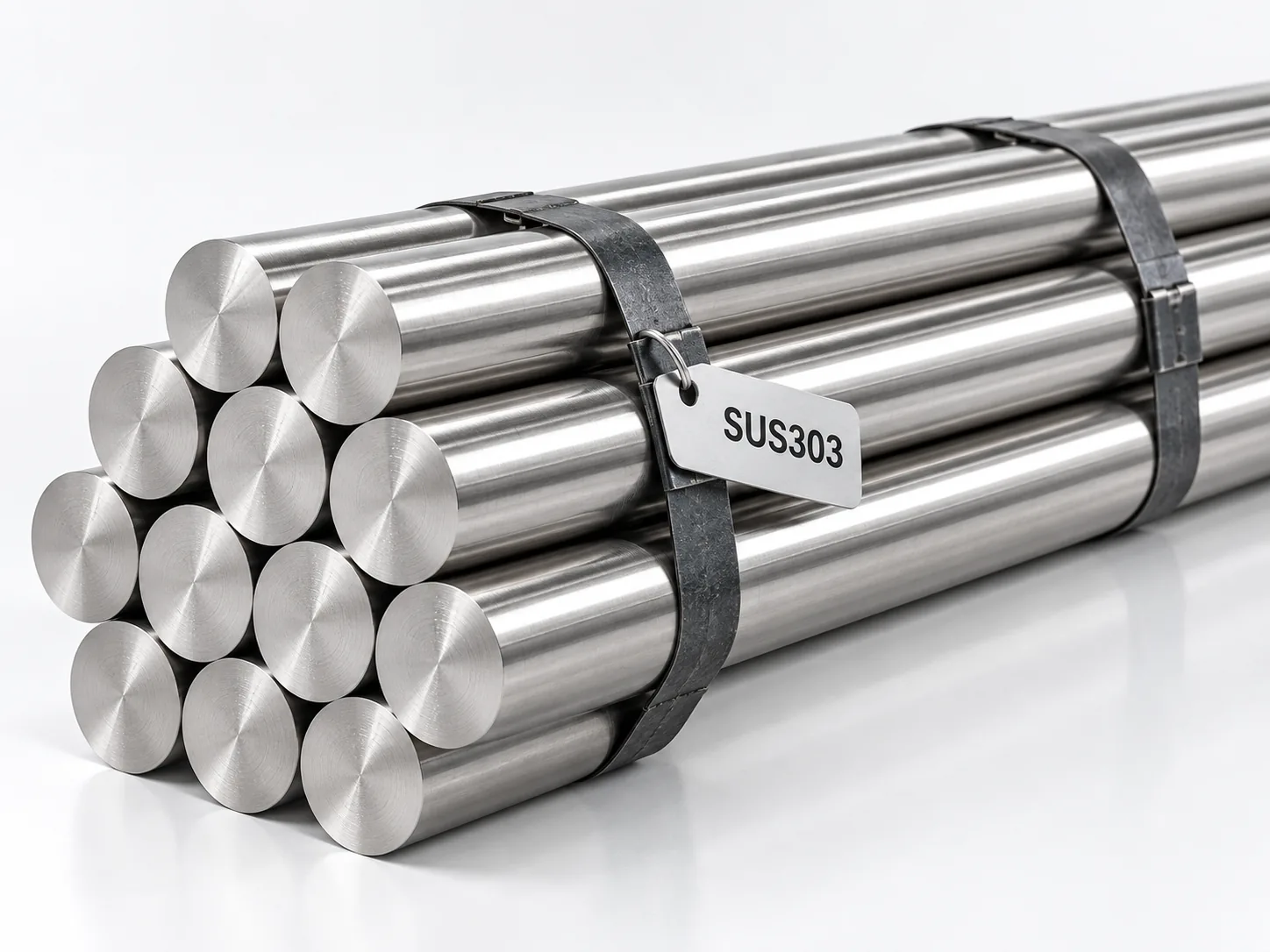
SS303 is primarily supplied as a long product, especially bar.
SS303 Stainless Steel Round Bar
SS303 round bar is one of the most common forms of this grade.
It is widely used for CNC machining and automatic turning operations.
Typical applications include:
- Shafts
- Pins
- Bushes
- Fittings
- Fasteners
- Spacers
- Valve components
- Machine parts
- Couplings
- Instrument components
- Threaded components
E Steel can supply SS303 round bar in different diameters depending on stock availability and sourcing requirements.
SS303 Stainless Steel Square Bar
SS303 square bar may be used where components are machined from square stock.
Common applications include:
- Precision fittings
- Machine components
- Fasteners
- Instrument parts
- General machined components
Availability depends on size and stock.
SS303 Stainless Steel Hexagonal Bar
SS303 hexagonal bar is particularly useful for producing:
- Nuts
- Fittings
- Connectors
- Fasteners
- Valve components
- Threaded parts
- Precision turned components
The free-machining characteristics of SS303 make it well suited to high-volume production.
Is SS303 Available as Plate or Sheet?
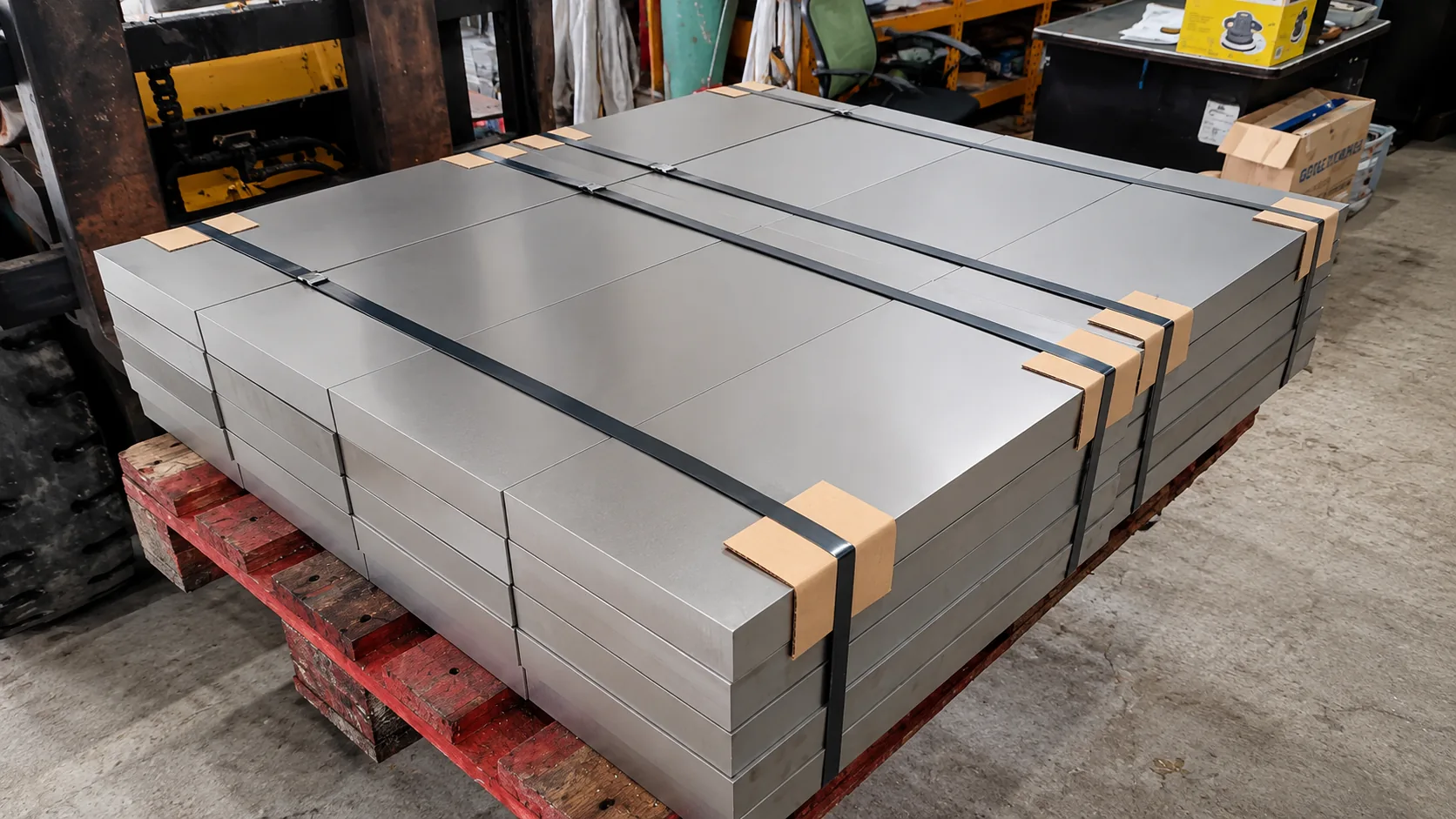
SS303 is primarily a free-machining bar grade rather than a standard flat-rolled plate or sheet grade.
For most applications requiring stainless steel plate or sheet, grades such as SS304 or SS316 are more commonly specified.
SS303 is most commonly associated with:
- Round bar
- Square bar
- Hexagonal bar
- Other machining stock
If a customer requires a plate-like SS303 component, the final part may sometimes be produced by machining from suitable bar or other specially sourced material, depending on dimensions and specification.
Always confirm product availability with E Steel before specifying SS303 as a plate or sheet material.
What Is the Chemical Composition of SS303?
A commonly specified composition range for UNS S30300 is:
| Element | SS303 Composition |
|---|---|
| Carbon (C) | 0.15% max |
| Manganese (Mn) | 2.00% max |
| Silicon (Si) | 1.00% max |
| Phosphorus (P) | 0.20% max |
| Sulfur (S) | 0.15% min |
| Chromium (Cr) | 17.00–19.00% |
| Nickel (Ni) | 8.00–10.00% |
| Iron (Fe) | Balance |
SS303’s elevated sulfur content is the major feature that distinguishes it from conventional SS304.
Exact limits must be checked against the applicable material standard and supplied material certificate.
What Does Sulfur Do in SS303?
Sulfur is intentionally added to SS303 to improve machinability.
The sulfur forms inclusions in the steel that make chips easier to break during machining.
This is advantageous for:
- Automatic lathes
- CNC turning
- High-volume machining
- Drilling
- Thread cutting
- Precision component manufacturing
However, sulfur also reduces some other properties.
Compared with SS304, SS303 generally has:
- Lower corrosion resistance
- Poorer weldability
- Lower formability
- Reduced resistance to aggressive chloride environments
This trade-off is why SS303 is chosen mainly when machinability is the priority.
What Are the Mechanical Properties of SS303?
Mechanical properties depend strongly on:
- Product form
- Bar diameter
- Finished condition
- Cold working
- Applicable material standard
Typical values should therefore be treated only as engineering reference data.
SS303 generally provides sufficient strength for common machined engineering components while retaining the ductility expected from an austenitic stainless steel.
Always use the material certificate and applicable product standard when mechanical properties form part of the engineering design.
What Are the Physical Properties of SS303?
Typical engineering reference values for SS303 include:
| Property | Typical Value |
|---|---|
| Density | Approximately 8.0 g/cm³ |
| Elastic modulus | Approximately 193 GPa |
| Thermal conductivity | Approximately 16–21 W/m·K depending on temperature |
| Specific heat capacity | Approximately 500 J/kg·K |
| Electrical resistivity | Approximately 0.72 μΩ·m |
These are typical reference values and are not batch-specific acceptance criteria.
Is SS303 Magnetic?
SS303 is normally non-magnetic or weakly magnetic when fully annealed.
However, some magnetism may develop after:
- Cold working
- Drawing
- Machining
- Forming
The degree of magnetism can vary depending on the manufacturing history and material condition.
Therefore:
A magnet test alone should not be used to distinguish SS303 from SS304.
Where positive identification is required, use suitable material documentation or analytical testing.
Can SS303 Be Welded?
SS303 is generally not recommended for welding when SS304 or another more weldable grade can be used instead.
The sulfur that provides SS303 with its excellent machinability also increases the risk of welding problems.
Possible concerns include:
- Hot cracking
- Reduced weld quality
- Reduced corrosion resistance around the weld
- Difficulty achieving reliable welded joints
If welding is an important manufacturing requirement, SS304 or SS304L is normally a better choice.
If SS303 must be welded, a qualified welding procedure and suitable engineering evaluation should be used.
Can SS303 Be Formed or Bent?
SS303 can be formed to some extent, but its sulfur-enhanced composition means it does not have the same forming characteristics as SS304.
For applications involving substantial:
- Bending
- Deep drawing
- Forming
- Pressing
SS304 is generally preferred.
SS303 is best selected when the part will mainly be produced through machining.
Can SS303 Be Hardened by Heat Treatment?
No. SS303 cannot be significantly hardened through conventional heat treatment.
As an austenitic stainless steel, SS303 is strengthened mainly through cold working.
This differs from martensitic stainless steels such as:
- SS410
- SS420
- SS420J2
- SS440C
which can be hardened by suitable heat treatment.
What Is SS303 Used For?
SS303 is primarily used for machined components where high machining productivity is required.
Typical applications include:
Precision Machined Components
- Shafts
- Pins
- Spacers
- Bushes
- Sleeves
- Studs
- Threaded components
Fasteners
SS303 can be used for:
- Nuts
- Bolts
- Screws
- Studs
- Special fasteners
where machining performance is important and the service environment is not excessively corrosive.
Valve and Fitting Components
Typical examples include:
- Fittings
- Valve stems
- Valve components
- Connectors
- Couplings
The actual operating environment should be checked to ensure SS303 provides adequate corrosion resistance.
Instrument and Precision Parts
SS303 is also used for:
- Instrument components
- Small mechanical components
- Precision fittings
- Electrical or electronic hardware
- Machine components
Its machinability makes it particularly attractive where many identical parts must be produced efficiently.
Is SS303 Corrosion Resistant?
Yes. SS303 has good general corrosion resistance in many mild environments, but its resistance is lower than SS304.
The sulfur-containing inclusions that improve machinability can also create areas where localized corrosion begins more easily.
SS303 should therefore be selected carefully for:
- Wet environments
- Chloride-containing environments
- Coastal installations
- Marine applications
- Chemical exposure
Where corrosion resistance is more important than machining speed, SS304 or SS316 may be a better material choice.
Does SS303 Rust?
SS303 is stainless steel, but it is not completely corrosion-proof.
It can stain, pit or corrode under unfavorable conditions.
Risk increases with:
- Salt
- Chlorides
- Sea spray
- Moisture retention
- Surface contamination
- Crevices
- Harsh chemicals
- Poor surface finish
Proper cleaning and passivation may improve corrosion performance after machining.
Is Passivation Recommended for SS303?
Passivation may be beneficial after machining to remove surface contamination and promote a clean passive surface.
Machined stainless steel components can become contaminated with:
- Free iron
- Carbon-steel particles
- Cutting residues
- Shop contamination
Proper cleaning and passivation can help restore the stainless steel surface condition.
The correct procedure should be selected according to the component, specification and end-use requirement.
Can SS303 Be Used Outdoors in Malaysia?
SS303 can be suitable for some outdoor applications in Malaysia, but it is generally less corrosion resistant than SS304 and SS316.
Malaysia’s environment can involve:
- High humidity
- Frequent rainfall
- High temperatures
- Long periods of surface moisture
- Coastal salt contamination
- Industrial pollution
For simple machined components in relatively mild inland conditions, SS303 may be suitable.
For exposed outdoor, coastal or chloride-rich environments, SS304, SS316 or another more corrosion-resistant grade should be considered.
Is SS303 Suitable for Coastal Areas in Malaysia?
SS303 is generally not the preferred stainless steel for Malaysian coastal environments.
Airborne sea salt contains chlorides that can promote localized corrosion.
Because the sulfur additions in SS303 reduce corrosion resistance compared with SS304, the material is better suited to applications where:
- Machining is important
- Chloride exposure is limited
- Environmental conditions are controlled
For coastal exposure, SS316 is generally a better starting choice than SS303 or SS304.
The final selection should still consider the actual service conditions.
Is SS303 Suitable for Marine Applications?
SS303 is generally not recommended for direct marine or seawater exposure.
Although it is stainless steel, its sulfur-enhanced composition reduces its corrosion performance compared with SS304 and SS316.
For marine applications, material selection may move toward:
- SS316 / SS316L
- Duplex stainless steel
- Super duplex stainless steel
- More highly alloyed stainless steels
depending on the severity of the environment.
SS303 vs SS304 — What Is the Difference?
The key difference is that SS303 contains additional sulfur to improve machinability, while SS304 is optimized for better all-round corrosion resistance, welding and forming.
| Property | SS303 | SS304 |
|---|---|---|
| Stainless family | Austenitic | Austenitic |
| UNS | S30300 | S30400 |
| Main advantage | Machinability | General-purpose performance |
| Sulfur | Increased | Low |
| Machinability | Excellent | Moderate |
| Weldability | Poorer | Excellent |
| Formability | Lower | Excellent |
| General corrosion resistance | Good | Better |
| Coastal suitability | Generally poor choice | Better, but application dependent |
| Typical product form | Bar | Plate, sheet, bar and many forms |
Which Is Better: SS303 or SS304?
Neither grade is better for every situation.
Choose SS303 when:
- The component requires extensive machining
- High-volume CNC production is involved
- Chip breaking is important
- Turning productivity is important
- Welding is not required
- The environment is relatively mild
Choose SS304 when:
- Better corrosion resistance is required
- Welding is required
- Significant forming is required
- Plate or sheet is required
- The part will see more demanding environmental exposure
SS303 vs SS316 — What Is the Difference?
SS316 is primarily selected for improved corrosion resistance, while SS303 is selected primarily for machinability.
| Property | SS303 | SS316 |
|---|---|---|
| Stainless family | Austenitic | Austenitic |
| Main advantage | Excellent machinability | Better corrosion resistance |
| Molybdenum | No principal Mo addition | Approx. 2–3% |
| Machinability | Excellent | Lower than SS303 |
| Chloride resistance | Lower | Better |
| Coastal use | Generally not preferred | Generally preferred |
| Weldability | Poorer | Excellent |
| Typical application | Machined components | Corrosive-service components |
For Malaysian coastal applications, SS316 is normally the more appropriate choice.
SS303 vs SS304 for Machining
SS303 is normally easier to machine than SS304.
SS304 tends to:
- Work harden rapidly
- Produce tougher chips
- Generate more machining heat
- Require more careful tooling and machining parameters
SS303’s sulfur additions improve chip breaking and machining performance.
For high-volume turned components, this can provide significant productivity advantages.
Is SS303 Better for CNC Machining?
Yes. SS303 is one of the most commonly selected stainless steel grades when CNC machining performance is a priority.
It is particularly suitable for:
- CNC turning
- Automatic lathes
- Threading
- Drilling
- Milling
- Repetitive production
Its improved machinability can reduce machining time and improve production efficiency compared with conventional SS304.
Is SS303 Suitable for High-Speed Machining?
SS303 was developed specifically for improved machining characteristics and is suitable for high-productivity machining operations.
Actual cutting speed depends on:
- Bar condition
- Tool material
- Machine rigidity
- Coolant
- Component geometry
- Required finish
- Tooling manufacturer’s recommendations
The machining process should be optimized according to the actual production setup.
What Standards Apply to SS303?
The correct standard depends on the product form and manufacturing route.
For SS303, free-machining bar standards are particularly important.
| Product / Requirement | Common Specification |
|---|---|
| Free-machining stainless bar | ASTM A582/A582M |
| Round / square / hex bar under A582 | ASTM A582/A582M where applicable |
| Bar for reforging | ASTM A314 where applicable |
| European stainless bar | EN 10088-3 where applicable |
| UNS designation | S30300 |
| European material number | EN 1.4305 |
SS303 should not automatically be specified using the same plate/sheet standards commonly used for SS304 and SS316.
The applicable standard must be confirmed according to the actual supplied product.
ASTM A582 SS303 Free-Machining Bar
ASTM A582/A582M covers free-machining stainless steel bars suitable for machining processes.
Product forms covered include:
- Round bar
- Square bar
- Hexagonal bar
SS303 is one of the best-known stainless grades used for this type of application.
When purchasing SS303 bar, buyers should specify:
- Grade
- Diameter or size
- Length
- Finished condition
- Required tolerance
- Applicable standard
- Certification requirement
How Can I Confirm Material Is SS303?
Visual appearance alone cannot reliably distinguish SS303 from SS304.
Possible methods include:
Material Test Certificate
Review the:
- Grade
- Heat number
- Chemical composition
- Applicable specification
- Product condition
- Mechanical properties where required
Positive Material Identification
PMI techniques can be useful for stainless steel sorting, but SS303 presents an important consideration.
The defining feature of SS303 is its increased sulfur content.
Some portable analytical instruments, particularly conventional handheld XRF instruments, may not accurately measure light elements such as sulfur depending on instrument design and configuration.
Therefore, an instrument that easily separates SS304 from SS316 by detecting molybdenum may not necessarily identify SS303 versus SS304 with the same confidence.
Always understand the capability of the specific instrument being used.
Optical Emission Spectroscopy
Optical emission spectroscopy, when properly calibrated and operated, can measure a wider range of elements and can be appropriate for differentiating stainless steel grades where sulfur or carbon measurements are important.
The correct calibration, reference standards and testing procedure remain essential.
Laboratory Chemical Analysis
For critical positive identification, laboratory chemical analysis can be used to confirm the composition.
This may be appropriate where:
- Grade verification is critical
- Sulfur content must be confirmed
- Customer specifications require formal testing
Is SS303 Food Grade?
SS303 can be used in some food-related components, particularly machined parts.
However, SS303 generally has lower corrosion resistance than SS304 or SS316 and is not normally the first choice where aggressive food products, salt or frequent chemical cleaning are involved.
Selection should consider:
- Food composition
- Chloride content
- Cleaning chemicals
- Temperature
- Hygiene requirements
- Surface finish
- Regulatory requirements
For many food-processing environments, SS304 or SS316 may be more appropriate.
What Surface Finishes Are Available for SS303 Bar?
Depending on supplier and bar size, SS303 may be available as:
- Hot finished
- Cold finished
- Cold drawn
- Peeled
- Turned
- Ground
- Polished / precision finished
Availability depends on:
- Diameter
- Length
- Tolerance
- Specification
- Required surface condition
Contact E Steel with the required dimension and machining requirement.
Why Buy SS303 Stainless Steel From E Steel Sdn Bhd?
E Steel supplies stainless steel and engineering materials for Malaysian manufacturers, machine shops and industrial customers.
For an SS303 enquiry, provide:
- Required grade
- Round / square / hexagonal bar
- Diameter or size
- Length
- Quantity
- Required tolerance
- Required specification
- Surface condition
- Cutting requirements
- Certification requirements
- Final application where relevant
This information helps E Steel identify suitable material for the machining requirement.
Request SS303 Stainless Steel in Malaysia
Looking for SS303 stainless steel round bar in Malaysia?
Contact E Steel Sdn Bhd with your required size and quantity.
Information to Include With Your Enquiry
Grade: SS303 / SUS303 / S30300
Product: Round Bar / Square Bar / Hex Bar
Diameter or size:
Length:
Quantity:
Tolerance required:
Standard required:
Surface condition:
Cutting required: Yes / No
Certification required:
Request a quotation from E Steel Sdn Bhd.
Frequently Asked Questions About SS303
What is SS303 stainless steel?
SS303 is an austenitic free-machining stainless steel. Its UNS designation is S30300, and its commonly corresponding European material number is EN 1.4305.
Why is SS303 easier to machine than SS304?
SS303 contains additional sulfur, which creates inclusions that improve chip breaking and machining performance. This makes it easier to turn, drill and thread than conventional SS304.
Is SS303 better than SS304?
SS303 is better for machinability, while SS304 generally offers better corrosion resistance, weldability and formability. The correct grade depends on the component requirements.
Is SS303 magnetic?
SS303 is normally non-magnetic or weakly magnetic when annealed, although cold working and machining may create some magnetism.
Can SS303 be welded?
SS303 is generally not preferred for welding because its high sulfur content increases welding difficulties. SS304 or SS304L is normally better where welding is required.
Can SS303 rust?
Yes. SS303 is corrosion-resistant but not corrosion-proof. Its corrosion resistance is generally lower than SS304 because of the sulfur additions used to improve machinability.
Is SS303 suitable for coastal Malaysia?
SS303 is generally not the preferred grade for coastal or salt-contaminated environments. SS316 is usually a better starting choice when chloride exposure is significant.
Can SS303 be used in seawater?
SS303 is generally not recommended for direct or continuous seawater exposure.
Is SS303 good for CNC machining?
Yes. SS303 is specifically designed for excellent machinability and is widely used for CNC turning and other repetitive machining processes.
Is SS303 available as round bar?
Yes. Round bar is one of the principal product forms for SS303.
Is SS303 available as plate?
SS303 is primarily a bar and machining grade rather than a conventional flat-rolled plate grade. For standard stainless plate requirements, SS304 or SS316 is more commonly used.
What is the difference between SS303 and SS316?
SS303 prioritizes machinability, while SS316 prioritizes improved corrosion resistance, particularly in chloride-containing environments.
What is the UNS number for SS303?
The UNS designation for SS303 is S30300.
What is the EN number for SS303?
The commonly corresponding European material number is 1.4305.
Does E Steel supply SS303 cut to size?
E Steel provides cutting services for selected stainless bar sizes. Provide the required diameter, length and quantity when requesting a quotation.
Technical Disclaimer
The information on this page is provided as a general engineering reference.
It should not replace:
- Current material standards
- Customer specifications
- Project engineering requirements
- Applicable regulations
- Manufacturer recommendations
- Material test certificates
Chemical composition, mechanical properties, dimensions, tolerances and material conditions can differ according to the applicable product specification and manufacturing route.
For critical applications, verify all requirements against the current applicable specification and the actual material test certificate supplied with the material.
Reviews
There are no reviews yet.